
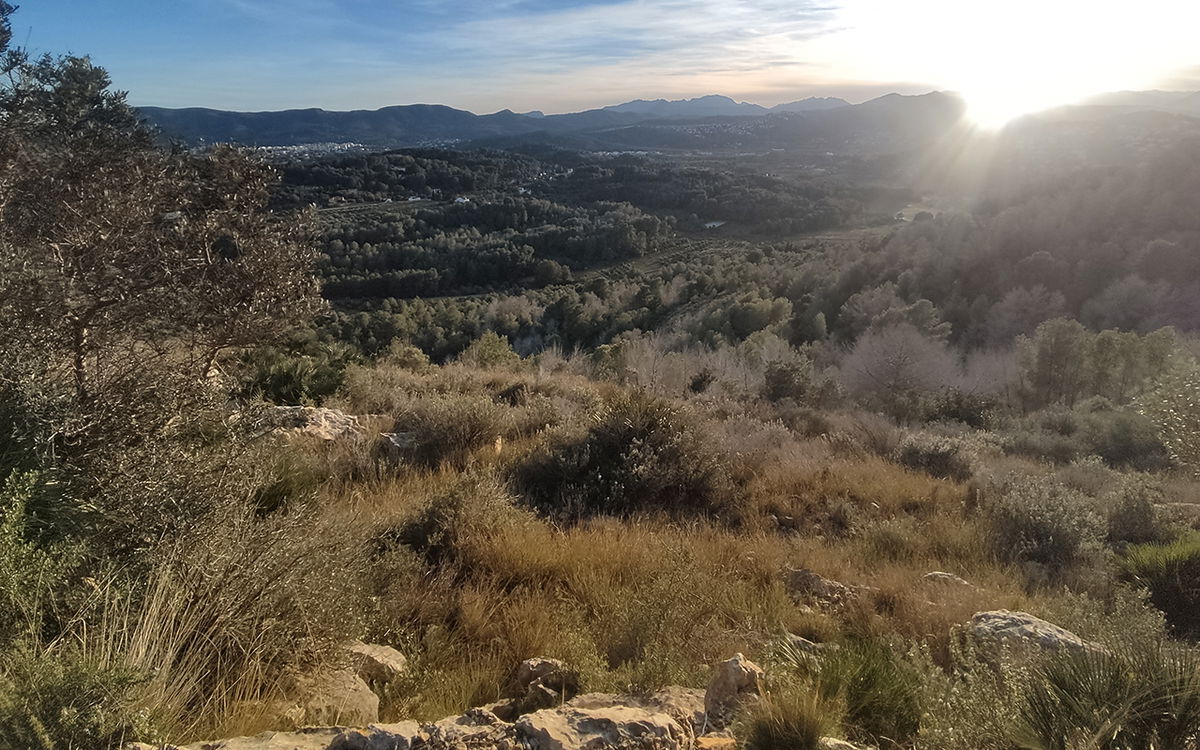
The Montgó Natural Park is one of the most distinctive landmarks on the Costa Blanca. Credit: Santi Carneri
A 46-year-old hiker was airlifted to safety on Saturday November 29 after suffering a fall on the slopes facing the Cova Ampla, one of the most rugged areas of the Montgó massif in Denia. The incident occurred early in the afternoon, prompting an immediate response from the Alicante Provincial Fire Brigade, who deployed the Alpha 01 rescue helicopter together with the Mountain Rescue Group (GER). Watch the video below.
According to emergency sources, the man appeared to have suffered a possible fracture to his arm after slipping on uneven terrain. Once the rescue team located him, specialists secured him with a harness before hoisting him into the aircraft using the helicopter’s winch system. From there, he was flown to the fire station in Denia, where medical personnel were waiting to take charge of his care. The Guardia Civil Mountain Unit also assisted during the operation, which concluded at 17:12.
Montgó’s challenging terrain
The Montgó Natural Park is one of the most distinctive landmarks of the northern Costa Blanca, rising steeply between Denia and Javea. Its cliffs, ravines and narrow paths draw thousands of walkers each year, but the park’s dramatic landscape also makes it a recurrent setting for mountain accidents. The Cova Ampla area, in particular, is known for its rocky ledges, abrupt changes in altitude and slippery surfaces, especially following periods of humidity.
This latest incident adds to a series of recent rescues across the region that highlight both the beauty and the challenges of the local environment. Earlier this year, firefighters were called to assist two young women who had become disoriented on one of the Montgó’s lesser-known trails. They spent several hours stranded in difficult terrain before the Alpha 01 helicopter managed to extract them safely.
Heat and dehydration hazards
In August, the same rescue aircraft was dispatched to the Racó del Bou route, on the Jávea side of the massif, where two hikers were suffering from severe dehydration. The intense summer heat, combined with the steep ascent, left one of them in a serious condition and unable to continue. Firefighters and GER technicians stabilised the pair before airlifting them to a waiting ambulance.
Other operations in the wider Costa Blanca have involved climbers trapped on rock faces, walkers with broken ankles along coastal coves, and tourists who underestimated the difficulty of cliff-top paths. The coastline between Calpe, Altea and Benidorm, with its combination of sea cliffs and narrow hiking routes, remains especially prone to incidents requiring specialist intervention.
Preparation saves lives
Emergency crews continue to emphasise the importance of preparation, particularly in natural areas where paths may be unclear and weather conditions can change abruptly. Adequate footwear, sufficient water, charged mobile phones and informing someone of the planned route are repeatedly cited as basic precautions. Authorities also urge visitors to remain on marked trails and avoid venturing into steep or unstable areas without proper experience.
Saturday’s rescue once again demonstrates the essential role played by the region’s firefighters, air crews and mountain specialists. Their rapid response, technical expertise and familiarity with the Montgó’s most inaccessible corners ensured that what could have been a far more serious incident ended safely.