
A heat burst is a sudden surge of heat and powerful winds. This unpredictable phenomenon caught people by surprise on the tropical coast of Granada, in southern Spain, on Sunday afternoon. The event created 15 minutes of chaos.
Heat burst hits Granada in Spain
On Sunday, August 17, 2025, a sudden and extremely violent weather event surprised residents and beachgoers along Granada’s Costa Tropical, in Spain. Around 7:50 p.m. local time, in towns such as Motril, Salobreña and Torrenueva, a heat burst occurred, causing a rapid temperature spike up to 104.2°F (40.1°C), accompanied by strong wind gusts reaching 53.9 miles per hour (86.8 kilometers per hour). Within minutes, the beach turned into a chaotic scene: the winds launched umbrellas and personal belongings through the air, tore awnings apart and uprooted palm trees. In addition, a waterspout — a kind of tornado over the sea — formed just off the coast.
Due to the sudden violence of the phenomenon, authorities evacuated the beaches as a precaution. The 112 emergency service received numerous calls about flying objects and people in distress in the water. Maritime Rescue teams, the Civil Guard and lifeguards responded quickly, managing to rescue five swimmers who had been dragged out to sea by the strong waves and wind. Fortunately, there were no fatalities, although there was considerable material damage and widespread alarm.
This extreme episode highlighted a weather phenomenon still largely unknown to much of the public: the heat burst.
What are heat bursts?
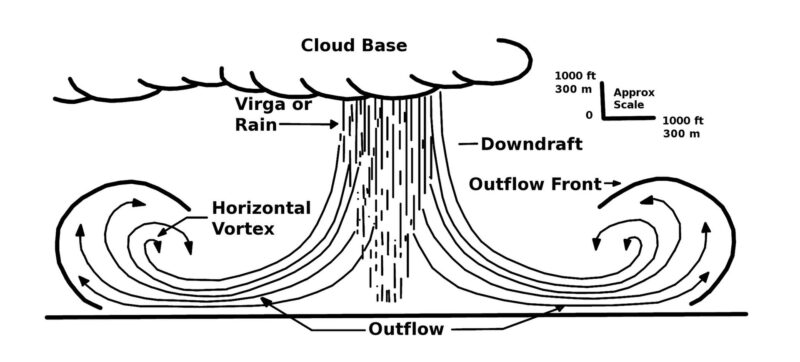
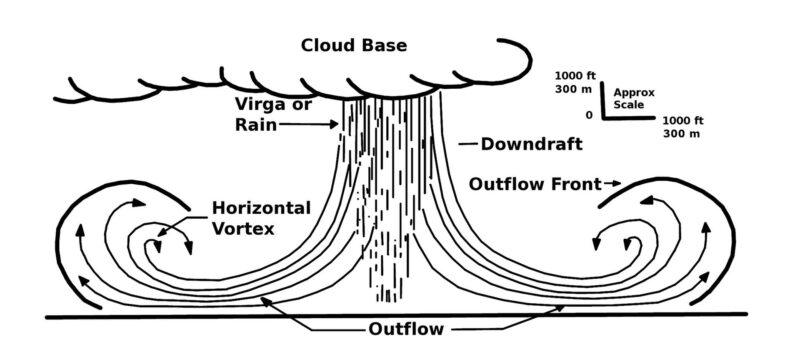
A heat burst is a rare but potentially dangerous meteorological event. It occurs when a mass of air suddenly descends from high levels of the atmosphere. As it falls, the air passes through dry atmospheric layers, causing it to heat up through compression. Upon reaching the ground, it expands violently in all directions, leading to a rapid temperature increase, a sudden drop in humidity and strong gusts of wind.
These winds, which can exceed 49 or even 62 mph (80 or 100 kph), usually last only a few minutes. But they have a localized and unpredictable impact, so they’re extremely difficult to detect or forecast. Their arrival can catch the population completely off guard.
The phenomenon tends to occur in the late afternoon or evening. That’s when there is atmospheric instability at higher levels and a layer of dry air at mid-levels. It’s more common in inland areas or coastal mountain regions, such as Granada’s Costa Tropical, where the terrain favors the acceleration of these descending air currents.
Consequences of the heat burst in Granada
The heat burst on August 17 left a visible mark on several parts of the Granada coastline. The beaches, which were packed with visitors due to the summer weekend, had to be evacuated within minutes. Strong gusts of wind snapped palm trees, moved inflatable pools, destroyed furniture and caused major disturbances at sea.
In Torrenueva, the formation of a waterspout triggered additional panic among beachgoers, who saw the water swirling menacingly near the coast. Emergency services responded swiftly, rescuing three people near La Joya beach and two others who were brought to the port of Motril by a private boat after being swept out to sea.
Local authorities advised people to stay indoors during the heat burst and reinforced lifeguard services. A damage assessment operation confirmed the scale of the impact: fallen trees, damaged vehicles, destroyed materials and a large amount of debris scattered by the wind.
Vendaval en Motril . El reventón térmico que ha dejado toda la Costa Tropical con vientos huracanados pic.twitter.com/zhL8mpOq4Y
— JP Pérez-Padial (@Jp3motril) August 17, 2025
Even heavy objects blew away in the heat burst. It ripped awnings from walls and uprooted trees. People evacuated the beaches of Salobreña, Torrenueva and Motril and took shelter indoors.
What can we do when heat bursts strike?
Although these events are difficult to predict with precision, experts stress the importance of understanding them and being prepared. Heat bursts, despite their short duration, can have devastating effects in highly localized areas. Having evacuation protocols in place, improving weather alert systems and reinforcing beach surveillance on extremely hot days can make the difference between a controlled situation and a tragedy.
Severe heat events, such as heat bursts, are becoming more common with climate change. So, public awareness and institutional preparedness will be key to responding effectively to similar events in the future.
? VÍDEO | Un reventón térmico en Granada sorprende a los bañistas y obliga a rescatar a cinco personas social.elpais.com/ll66d6
[image or embed]
— EL PAÍS (@elpais.com) August 18, 2025 at 3:30 PM
During the Granada heat burst, several people paddle surfing called for help as the wind dragged them away from shore. Thanks to the heroes aboard motorboats and jet skis, these lives were saved. Emergency services also rescued 3 people who ended up adrift, and a private boat saved 2 more. Despite the short duration of the event, many people will likely remember the chaos for a long time.
Bottom line: Have you heard of a heat burst? It happens when a spike in temperatures and strong winds hit a localized area. Read about the heat burst in Granada, Spain, on Sunday.
Millions under extreme heat threat across the U.S.