
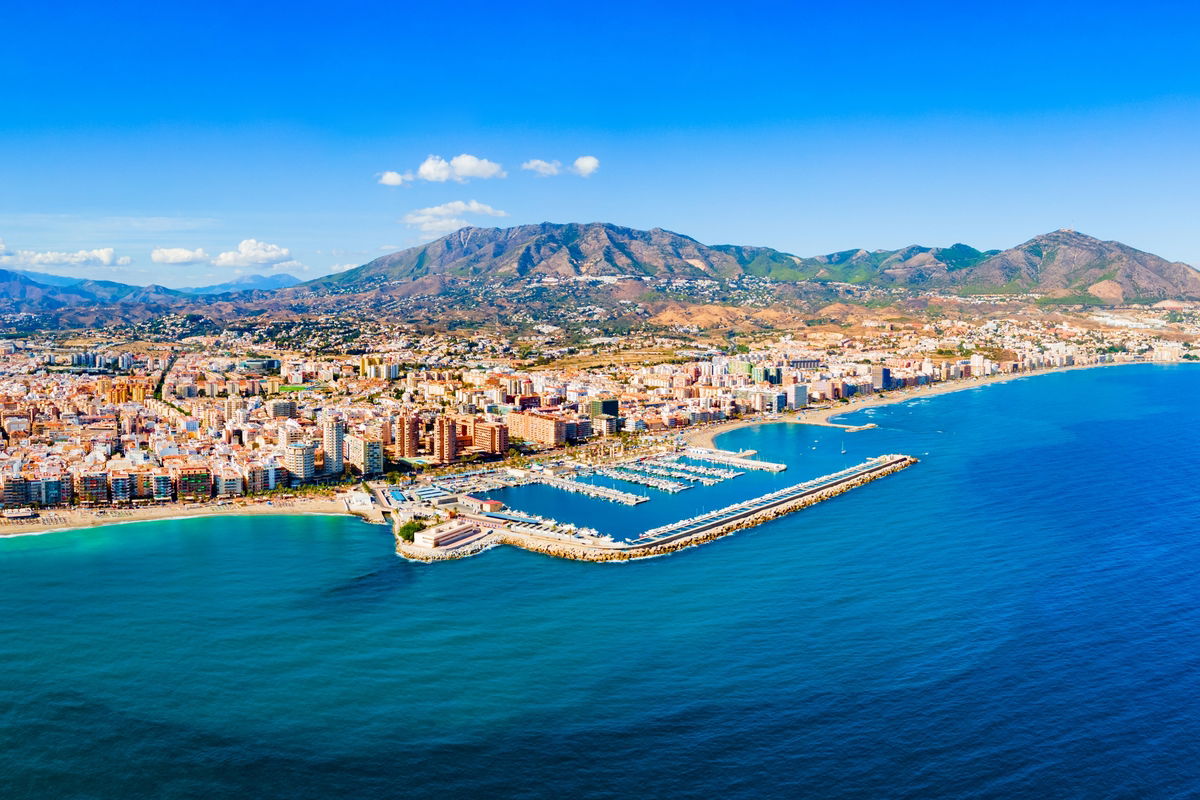
The earth certainly moved as it registered a quake at a magnitude of 4.9 and rattled the Costa del Sol across large parts of Southern Spain on the morning of Friday, December 5. The tremor, one of the strongest recent seismic events in the region, had its epicentre just off the coast of Fuengirola, Malaga.
The seismic event occurred at 10.38am local time at a depth recorded between 77 and 79 kilometres. While the initial report pegged the magnitude at 4.2, the official confirmation from the Instituto Geográfico Nacional (IGN) set it at 4.9. Despite the powerful magnitude, authorities have confirmed there were no immediate reports of personal injuries or serious material damage, just a lot of nervous residents.
Immediate impact and emergency response
The initial earthquake intensity, meaning it was a weak tremor primarily felt by those indoors, causing slight oscillation of hanging objects. The unexpected shaking, however, led to a rapid response from emergency services.
Andalucia’s emergency number, 112, managed over 40 calls related to the quake from various municipalities across three provinces: Malaga, Seville, and Cordoba. In Malaga, the tremors were felt strongly along the coastline, including Benalmadena, Torremolinos, Marbella, and the capital, as well as inland areas like Ronda and Antequera. Eyewitnesses described a “strong rattling” lasting between two and five seconds.
The event shows how typical continuous seismic activity is in the region; just days earlier, the IGN registered a smaller 3.2-magnitude tremor off the coast of Estepona on December 1st.
The Alboran Fault and official tsunami risk
The province of Malaga sits adjacent to the seismically active Alboran Sea, which is defined by the complex Alboran Fault system. This system marks the boundary between the African and Eurasian tectonic plates and is known to be capable of generating both major earthquakes and the occasional tsunami.
The potential for a tsunami on the Malaga coast is officially acknowledged in Spain’s State Civil Protection Plan for Tsunami Risk (the Plan Estatal de Protección Civil ante el Riesgo de Maremotos), approved by the central government in 2021. This document designates Malaga as one of the areas that could face severe consequences following a major offshore earthquake.
The plan estimates that a tsunami generated by the Southern Alboran Fault could potentially cause sea level elevations greater than five metres, reaching the Malaga coast in approximately 20 minutes. This risk profile is supported by studies, including a 2021 finding from the Consejo Superior de Investigaciones Científicas (CSIC) which concluded that strike-slip faults like the Averroes fault in the Alborán Sea have a greater tsunami-generating potential than previously assumed.
Historical precedents of major Malaga earthquakes
While the 4.9 tremor is the strongest felt in the province since 2022, Malaga has experienced several devastating seismic events throughout its history. Data compiled by the Andalusian University Institute of Geophysics and Seismic Disaster Prevention notes:
- 1494: An estimated magnitude 6.5 earthquake, with its epicentre in Malaga.
- 1680: A calculated magnitude 6.2 quake, also epicentred in the city, which tragically resulted in the deaths of around 100 people and caused widespread infrastructural damage, though the Cathedral remained notably intact.
- 1884: Known as the Granada Earthquake, this tremor was one of the most destructive in Southern Spain’s recorded history, causing major devastation in the eastern part of the Malaga province.
Aftershocks, and repeat quakes
Here are the official earthquake safety recommendations published by Spain’s Instituto Geográfico Nacional (IGN) and the Spanish Civil Protection authorities (Dirección General de Protección Civil y Emergencias), which the IGN always references and promotes:
BEFORE an earthquake
- Identify safe spots in every room (under sturdy tables, next to interior load-bearing walls, away from windows and heavy furniture).
- Secure heavy furniture, appliances, water heaters, and shelves to the wall.
- Know where and how to shut off electricity, gas, and water.
- Prepare an emergency kit (water, food, medicines, radio, flashlight, whistle, etc.).
- Agree on a family meeting point in case you get separated.
DURING an earthquake (the famous “Crouch – Cover – Hold On” triangle)
If you are indoors:
- Drop to the floor.
- Cover: get under a sturdy table or desk (protect your head and neck).
- Hold on until the shaking stops.
- If there is no table nearby → crouch next to an interior wall, protect your head with your arms.
If you are outdoors:
- Move to an open area away from buildings, power lines, trees, and streetlights.
- Drop to the ground and protect your head.
- If you are driving:Slow down and stop in a safe, open place (away from bridges, overpasses, and buildings).
- Stay inside the vehicle until the shaking stops.
AFTER the earthquake
- Check yourself and others for injuries.
- Expect aftershocks (they can be strong).
- Do NOT use elevators.
- If you smell gas or see fallen power lines → evacuate and alert emergency services (dial 112 in Spain).
- Only use the phone for real emergencies.
- Listen to the radio or official sources (IGN, Civil Protection, 112) for updates.
Official IGN/Civil Protection sources (in Spanish and English versions) www.ign.es