
Tuesday, 4 November 2025, 09:20
Andalucía has cemented its position as one of Europe’s most accessible regions, with Malaga Airport leading an impressive network of air, rail, sea and road connections that link southern Spain to destinations across five continents.
According to the regional government’s October report, 81.1 per cent of international visitors to Andalucía arrive through Malaga Airport, which this winter season will offer a record 10.3 million seats, with strong growth driven in part by demand from the UK market.
According to airport operator Aena, the UK remains Malaga’s most important international market after Spain, with airlines scheduling 17.8 million seats to and from the country this winter – a 5.7 per cent increase on last year. Germany follows with 10.8 million seats, while Italy, France and the Netherlands also show moderate growth.
Between late October and March, the airport’s air capacity will rise by 6.1 per cent. In fact, having added 14 new routes this winter, Malaga is the third Spanish airport with the largest increase in air connectivity after Madrid and Barcelona.
Overall, the prominence of budget carriers has made Malaga the third-busiest Spanish airport for international passengers, behind only Barcelona and Palma de Mallorca.
Growing international reach
While European connections remain strong, particularly from the UK and Nordic countries, Malaga has significantly expanded its long-haul and regional networks. Qatar Airways now operates year-round flights to its Doha hub, supplemented by summer services from Etihad and Saudia, plus daily Turkish Airlines connections to Istanbul.
United Airlines’ direct New York service, which resumed two years ago, has proved highly successful, while Norwegian Air has added multiple routes from Norway and Sweden, making Malaga a primary gateway for Scandinavian sun-seekers.
The airport has also recorded remarkable growth in private aviation, with up to 60 business jet movements daily during peak summer periods.
In total, the airport is on track to handle 27 million passengers this year – a figure approaching the maximum capacity it was designed for following upgrades just over a decade ago.
Ambitious expansion plans
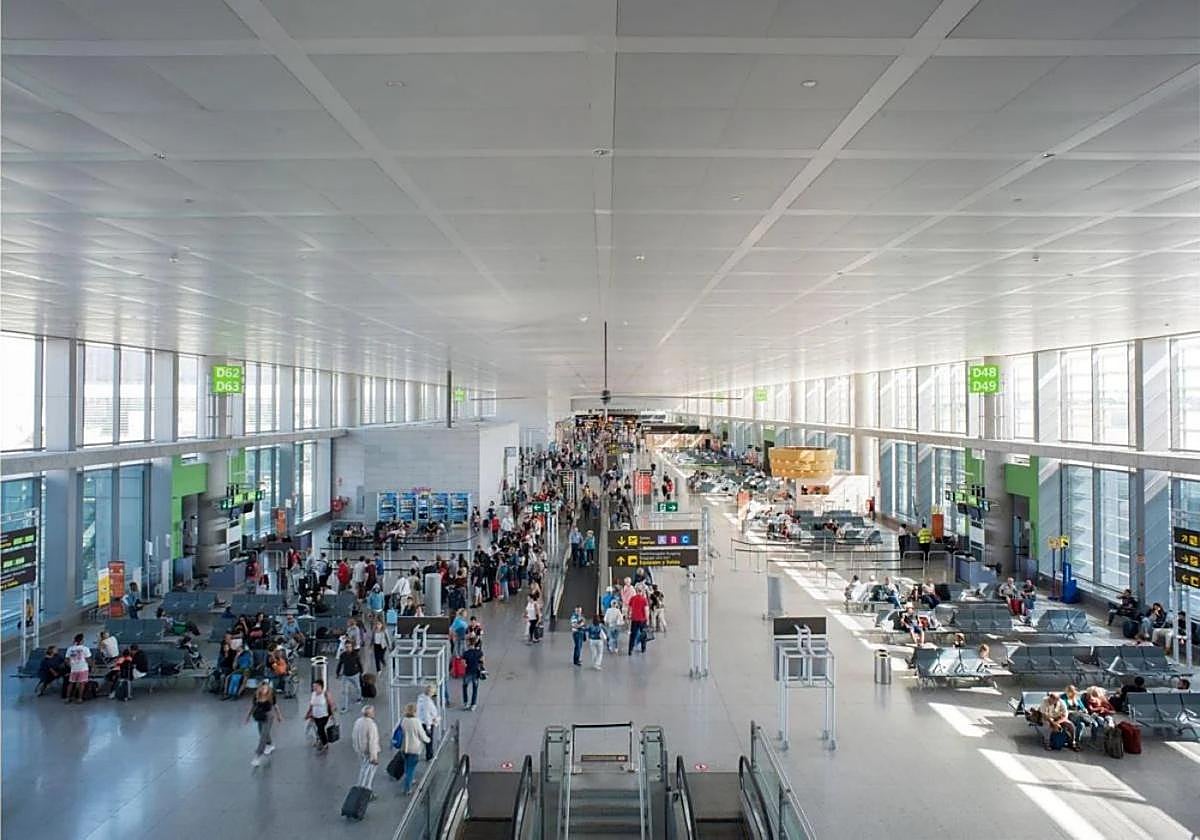
In light of this massive growth in visitor numbers, an ambitious 1.5-billion-euro expansion project for Malaga Airport has recently been announced. According to its managing director, Pedro Bendala, the aim of the expansion is to almost double the airport’s current footprint from 80,000 to 140,000 square metres and connect the Costa del Sol with 200 cities worldwide within the next decade.
Work on the expansion is expected to begin in late 2028 following tendering and design phases, with completion forecast within eight years. The project will proceed in stages, including a new pier for non-Schengen flights (destinations outside the European border-free zone), an extension of Terminal 2, and significant upgrades to passport control and security areas.
“Imagine investing 1.5 billion euros over five years – that’s almost a million euros per day,” Bendala said of the scale of the investment.
The vision includes increasing the number of boarding gates from 26 to 48, enabling the airport to handle well over 36 million passengers annually. In addition, it will become a fully digital airport where passengers can check in, pass through security and board flights with complete autonomy.
Sustainability features prominently in the design, with bioclimatic technology (systems that use natural climate conditions for heating and cooling) and natural lighting throughout. Plans also include a hotel, logistics zone, rooftop terrace, additional VIP lounges and expanded retail facilities.
Beyond the airport
Although air travel dominates, Andalucía’s connectivity extends across multiple transport modes. High-speed AVE trains link Malaga with Madrid, Cordoba and Seville, with the Madrid journey taking under three hours. Competition between operators including Iryo, Renfe’s budget brand Avlo and Ouigo has made rail travel increasingly affordable.
The ‘Cercanías’ (local commuter train service) runs every 20 minutes between Malaga Airport and coastal resorts including Torremolinos, Benalmádena and Fuengirola, providing convenient access for visitors exploring the area.
Sea and road networks
Maritime connections also strengthen Andalucía’s role as a Mediterranean crossroads. Algeciras, one of Europe’s busiest ports, operates frequent ferry services to Tangier and Ceuta in North Africa. Tarifa offers crossings to Tangier in just over an hour, while Almeria serves Melilla and Nador. Malaga port also runs ferries to Melilla, supporting both tourism and trade.
Back on land, the region’s motorway network has made it Europe’s most popular car hire destination, with Malaga Airport topping the continent’s rental collection points.
The A-7 coastal motorway connects Malaga with Marbella, Estepona and Nerja, while the parallel AP-7 toll road offers faster travel during busy periods.
Inland, the A-45 provides direct access to Cordoba, with Seville and Granada both within a few hours’ drive.
With infrastructure continuing to expand and passenger numbers climbing, Andalucía’s position as a globally connected destination shows no signs of slowing.