
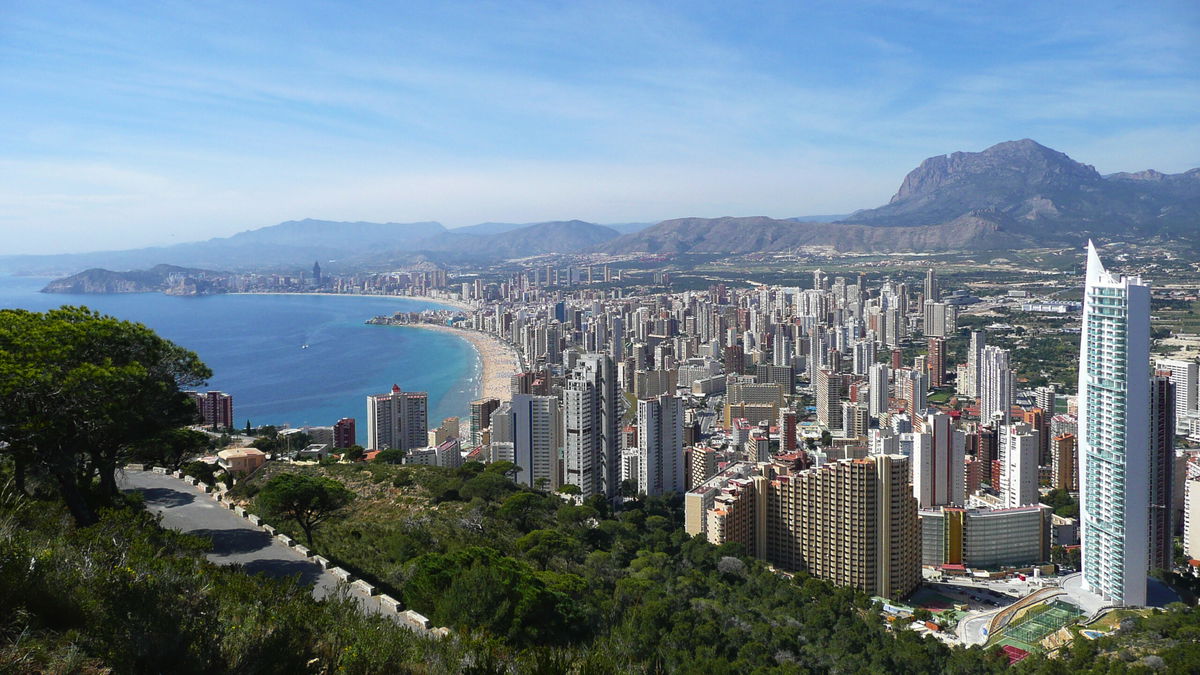
Costa Blanca cities dominate national rankings. Credit: Siocaw / Creative Commons
Spain has experienced one of its strongest demographic increases in recent years, welcoming 508,602 new residents over the past 12 months. The latest annual population figures released by the National Statistics Institute reveal a country growing at a steady pace, shaped by internal migration, international arrivals and the rising appeal of Mediterranean regions. At the centre of this growth stands the Comunitat Valenciana, the autonomous region that has expanded the most both in absolute and proportional terms, adding 105,897 new residents—a rise of 2%.
Shifting population patterns across the country
This national increase reflects significant demographic changes. Inland provinces continue to face stagnation or decline, while coastal and metropolitan areas are experiencing remarkable growth. The Costa Blanca has become a leading destination for individuals and families seeking a warmer climate, high-quality services, safer communities and strong transport links. Its combination of affordability, international-friendly infrastructure and a well-connected coastline has positioned the region as one of the most attractive in Spain.
Costa Blanca cities dominate national rankings
Among the fifteen Spanish cities with the highest population growth, six belong to the Comunitat Valenciana, three of them on the Costa Blanca and occupying the top national positions. Torrevieja tops the list as Spain’s fastest-growing city, expanding by 4.92% with 4,710 new residents. Its international character and extensive residential areas continue to attract both European families and Spaniards relocating from inland regions.
Strong coastal appeal drives continued expansion
Gandia, with its blend of tourism and a growing year-round community, posts an impressive 3.63% rise, adding 2,908 new inhabitants. Just behind, Benidorm records a 3.54% increase, a significant achievement for one of Spain’s most internationally recognised coastal destinations. Ongoing redevelopment projects, residential demand and a unique mix of long-term living and tourism continue to strengthen its appeal.
Growth extends beyond major tourist hubs
Further north, Sagunto ranks ninth nationwide with a 2.31% rise, supported by industrial expansion and improved transport links. Among Spain’s provincial capitals, Castellón stands out with 2.14% growth, adding nearly 4,000 residents. The region’s main urban centres also show strong momentum: Valencia welcomes 17,218 new residents, a 2.09% increase, confirming its role as a thriving Mediterranean hub.
Urban centres consolidate their demographic strength
Meanwhile, Alicante records a 1.95% rise, adding 6,978 inhabitants and reinforcing its position as one of the most desirable cities on Spain’s Mediterranean coast. Together, these figures highlight the sustained attraction of the Costa Blanca, not only for foreign nationals but also for Spaniards seeking opportunity and improved quality of life.
National trends reflect wider European patterns
At a national level, Spain’s population surge is being fuelled by the combination of international migration, economic confidence and internal mobility. Many newcomers are drawn by Spain’s stability, climate and expanding opportunities, while younger Spanish professionals are increasingly moving from inland areas to vibrant coastal cities.
Costa Blanca emerges as a long-term magnet for growth
This demographic shift mirrors broader European patterns, where coastal belts continue to grow due to lifestyle preferences, mobility and the rise of remote work. As Spain evolves, the Comunitat Valenciana—and especially the Costa Blanca—is positioning itself as one of the country’s most attractive places to live, work and invest.