
Published on
July 16, 2025
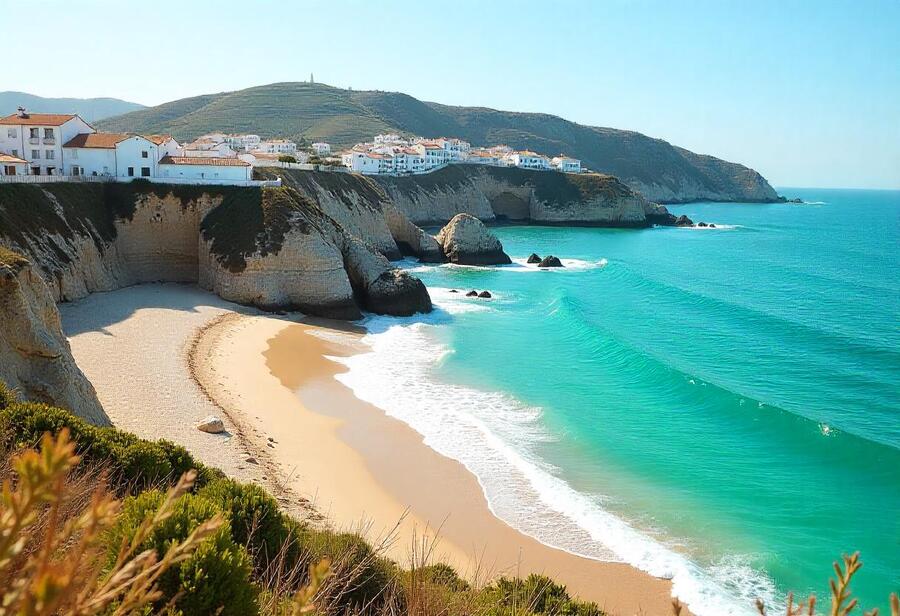
The Spanish domestic tourism market is in crisis as upward hotel price pressures force Spanish people out of holidaying in Spain and into exploring cheaper, off-the-beaten path areas. At the same time, overseas visitors keep pouring into the landmark site, further widening the divide between residents and international tourists.
New statistics show that Spain’s tourism dynamics are changing drastically and that Spaniards are increasingly struggling to take trips in their own country. The situation comes on the back of a marked drop in domestic tourism, according to official data cited by inAtlas and reported by Reuters. In 2024, 800,000 fewer Spaniards went to the country’s top 25 coastal destinations, and there were 400,000 fewer visitors to large Spanish cities than in the previous year.
This decrease in internal tourism is in contrast to the increase in foreign tourists in Spain. The country saw its numbers of foreign visitors soar, with 1.94 million more international tourists flocking to its coast than in 2023. In other words, 3 million additional tourists went to Spanish cities, which indicates Spain’s increasing attractiveness on the world stage. These numbers have helped ensure it remains the second most visited country in the world, behind France.
One of the main forces behind the change in domestic tourism habits is the surge in lodging prices. The cost of a night’s stay in a Spanish hotel has increased by 23 percent over the last three years to an average price of 136 euros (\$159), data from Mabrian shows. Short-term rental prices along the coast have also skyrocketed, increasing 20.3% since 2023, according to Tecnitasa, a property valuation company. With summer drawing near, beach rentals are quickly disappearing, and more rental options are already rented out by March. While its prices continue to soar, many consider traditional holidays on the Spanish beachfront out of reach for holidaymakers in Spain.
That, in turn, seems to be driving Spanish families elsewhere in search of value. Popular, and typically more expensive, regions like Catalonia and the Balearic Islands are attracting fewer Spaniards, while the southern region of Andalucía and the interior northern region of Castile and León have been inundated with domestic tourists AFP via Getty Images Popular, and typically more expensive, regions like Catalonia and the Balearic Islands are attracting fewer Spaniards, while the southern region of Andalucía and the interior northern region of Castile and León have been inundated with domestic tourists The relative ease in reaching some of the country’s more remote spots has prompted an exodus from heavily populated areas AFP via Getty Images […] Popular, and typically more expensive, regions like Catalonia and the Balearic Islands are attracting fewer Spaniards, while the southern region of Andalucía and the interior northern region of Castile and León have been inundated with domestic tourists The relative ease in reaching some of the country’s more remote spots has prompted an exodus from heavily populated areas AFP via Getty Images […] These areas are not as developed and are more agricultural, as well as having lower numbers of international tourists. But as prices soar in some of the high-traffic coastal hot spots and droves of Spaniards are priced out of stays in those places, these less touristy stretches of the coast are resurfacing as an option for summer vacations.
Aware of how crowded the country’s beaches are, the Spanish administration is battling to steer international tourism away from the overrun coastline. On June, the Minister of Tourism Jordi Hereu appeared for the very first time in a campaign to invite tourists to travel around the most unknown areas of Spain. “If we want to continue leading in international tourism, we need to spread the visitors out more among our destinations,” Hereu added. The government wants to show Europeans, and tourists from other continents, a different Spain, the Spain that is home to the less-visited rural and inland areas.
Government has sought to de-centralize tourism, but accessibility of local holidays remains a recurring problem. While there have been demonstrations in Spain about overtourism, they have mostly been motivated by concerns about overcrowding, the overtourism-related commercialization of local villages and towns and the exhaustion of local resources. Far less attention has been paid to the effect on Spanish nationals who can no longer afford to holiday at home. For instance, one Irish expatriate in Moraira said that most of the houses in his community are empty for most of the year. When let out, these homes are usually filled with foreign holidaymakers—whether Dutch, German, British etc. It is estimated that during the high season, as much as 70% of people on the local beaches are non-Spanish. Meanwhile, 1.7 million more Spaniards vacationed domestically in 2024, opting for cheaper inland destinations instead of popular coastal resorts.
This is not only Spain. In the UK, increasing cost of holidays has also made travelling at home unobtainable to many Brits. And more travelers are trying out holiday destinations abroad – some reporting that trips to, say, Turkey are cheaper than staying in the U.K. Others too, have commented that the off season is the only time that holidays can be had for a reasonable price in the UK since weekend prices have risen so much in the UK over the past handful of years. British tourists CThe seven-day holiday abroad now costs less than a three-day weekend of intramural rest.”
Increasing costs for UK breaks has also led many families to think about places such as Spain and Greece, which can sometimes be cheaper than the equivalent UK resorts. The trend is indicative of wider issues engulfing the tourism industry, with prices growing year on year and local residents being forced out of well-liked tourist spots in exchange for international travellers.
Spain has pursued an “aggressive” promotional campaign for decades, and today tourism is responsible for 13% of the GDP of the entire country. But the economic fruits of this achievement have not been shared with local communities. Seasonal workers within the hotel and restaurant business, who, generally, only earns a basic wage which is about €1,000 per month, are the most hit. So, too, with the workers who look after tourists in previously unspoiled resort cities, as they too live farther from their jobs, hashing out basement apartments and low-cost suburban housing off in the hinterlands. The inflation in these areas have led to huge gaps between local inhabitants and tourists.
Increasingly, high lodging costs are forcing Spanish locals to less traveled areas, while foreign tourists pour into Spain’s top destinations — in what has become a domestic tourism crisis.
This inequality is more and more apparent as those who live here see their incomes plummet while waves of foreign tourists march into Spain. In lockdown the impossibility of affording a domestic holiday in a country that foreigners can afford to visit at half the price is a powerful reminder of the negative impacts of over-tourism. Jurado believed It was possible to have too much of a good thing, and it was a point increasingly hard to argue against as Spain made the most of tourism but its own people found it impossible to enjoy their own history and beauty spots.
Tags: domestic tourism decline, foreign tourism surge, spain tourism, Spain Tourism Industry, Spain travel challenges, Spanish holidaymakers, tourism inequality, Tourism news, travel industry, Travel News, travel trends Spain
