
Thursday, 11 December 2025, 19:34
Malaga province’s Axarquía, which covers the whole of the eastern area from Rincón de la Victoria, to Nerja and mountain villages, is highly diverse, combining sea and mountains. In just 20 kilometres as the crow flies it is possible to go from the beach to the highest point in the province, La Maroma, at an altitude of 2,068 metres.
Its 31 towns and villages also offer great contrasts, from the most populated coastal centres including Rincón de la Victoria, Torre del Mar, Torrox and Nerja, to the smallest villages, like for example Salares, which has a population of just 200 people.
The Axarquía has been trying for some years to promote tourism in a unique way, highlighting the richness of its landscape and environment. The area also faces the threat of mass tourism and ‘tourismophobia’, especially in coastal areas.
In an attempt to combat this and improve its position in the tourism market, the Mancomunidad association of town halls in the Axarquía is moving forward with the digitalisation of its tourism strategy with the support of the University of Malaga (UMA) and the Andalusian Institute for Research and Innovation in Tourism (IATUR).
The president of the Mancomunidad, Jorge Martín, recently welcomed the deputy director of the university institute, Antonio Guevara and the professor and member of the centre, Carlos Rossi, to a meeting aimed at laying the foundations for a collaboration agreement.
Agreement with the UMA
According to Martín, the intention is to sign an agreement that will allow the UMA to advise the Mancomunidad on its digital and ecological transition, through the implementation of new technological tools such as artificial intelligence systems, the digitisation of content and mechanisms to improve the visitors’ experiences in the destination.
“We want to follow the recommendations of IATUR-UMA,” Martín said in a statement, highlighting the importance of forging strong alliances between universities, businesses and public administrations in order to move towards a more sustainable and innovative tourism model.
The president recalled that the regional institution, responsible for the management, planning and promotion of tourism on the Costa del Sol-Axarquía, is immersed in a modernisation process that aims to bring the area “up to the level of destinations that already integrate technologies to offer more personalised and efficient services”.
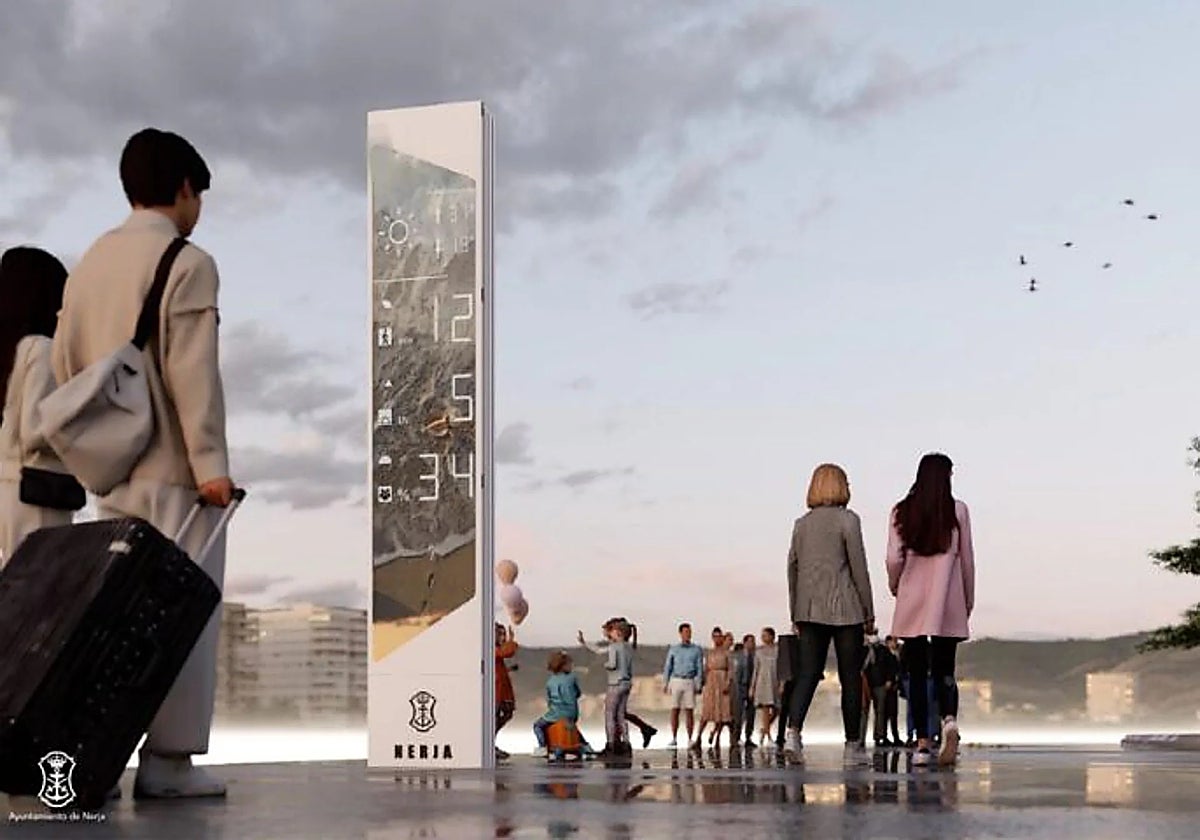
Professor Antonio Guevara, one of Andalucía’s leading figures in tourism research, announced that IATUR has already begun to provide advice. Among the first lines of work are the design of new visitor service tools, including virtual screens, the digitisation of tourism content, interactive guides and the creation of systems to collect and manage digital data to improve decision-making and destination promotion.
IATUR is made up of the universities of Granada, Seville and Malaga and has more than 200 researchers specialising in tourism, making it the leading authority in Andalucía on tourism innovation.
Map
It is also looking at revamping its tourist map, with a more digital format adapted to the habits of today’s visitors, at a time when the town halls of the Axarquía continue to strive to consolidate their position as a leading destination on the eastern Costa del Sol.
Martín presented the new edition of the fold-out map on Tuesday 9 December. The resource includes updated information on the 31 towns and villages and the Axarquía’s five tourist routes,
The new map, measuring 42 by 30 centimetres and folded into a pocket-sized format, comes at a time when tourism fairs and municipal offices have significantly reduced their distribution of printed materials. “We are receiving fewer and fewer requests for brochures and more and more for digital downloads,” explained Martín, who defended the usefulness of the printed format “for those who are lagging behind in technology,” although he insisted that the main objective is to strengthen the area’s digital tourism ecosystem.
The guide incorporates QR codes that link to constantly updated information: opening hours, events, reviews, videos, blogs, and downloadable maps, even for offline use. “It’s no longer enough to simply hand out a brochure; it’s about connecting with the visitor’s motivations and building a narrative before, during, and after their visit,” noted the president, who championed the transition to digital content “as a fundamental tool for the modern tourist.”
Martín emphasised that the creation of this edition was made possible thanks to the contributions of all the town halls, which provided new images, website addresses, QR codes, and updated information. “Public-private partnerships are key to continuing to build a competitive, diverse and innovative destination,” he stated.