
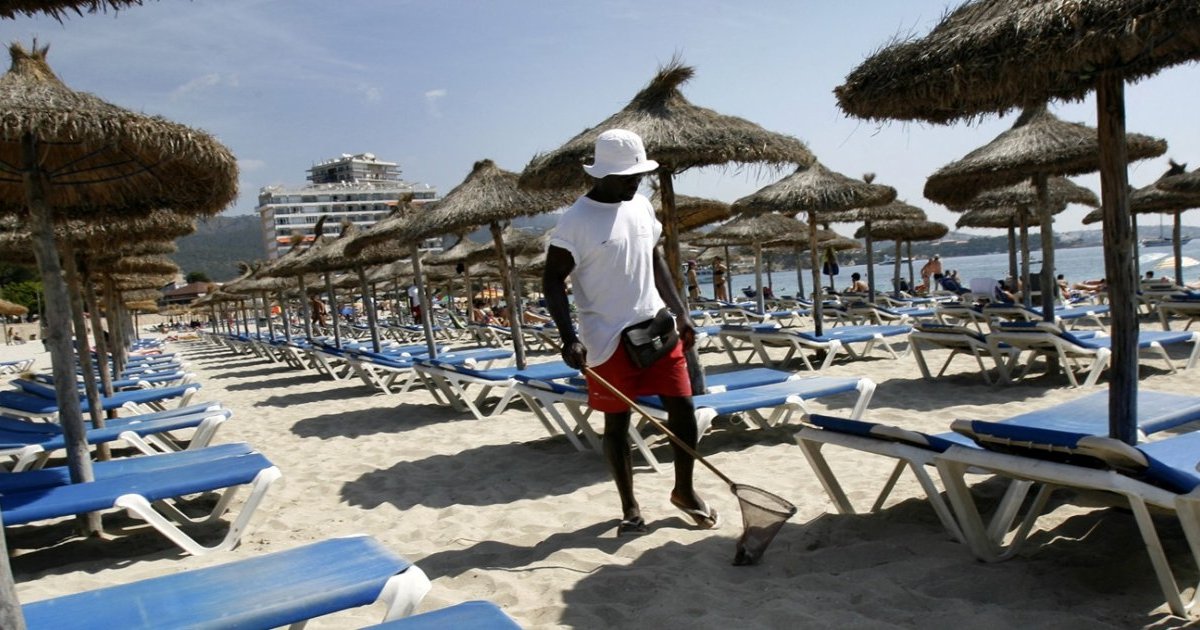
In several regions of Spain, as in other European countries, tourism seems to have reached a turning point. Although the discontent with mass tourism in coastal areas or cities such as Barcelona has been intensifying over the last decade, it was not until in 2024 that historic demonstrations were held in places such as the Canary Islands, Cadiz, Malaga and Catalonia. At the same time, around 50 citizen platforms emerged and, in September 2024, joined forces within the Ciudades y Pueblos para Vivir (Cities and Towns for Living) movement, to combat the socio-environmental damage caused by tourism. What this has highlighted is that, as with other economic activities, there is also a limit to tourism.
It is often argued that the Spanish economy relies on tourism, which accounts for 12.3 per cent of GDP and employs 2.93 million workers, according to the Ministry of Industry and Tourism’s figures for 2024. This represents 13.4 per cent of total employment in the country. But the question is not only how many people work in the sector, but under what conditions.
“Precarious work is rife in the tourism sector,” summarises Ernest Cañada, coordinator of the Alba Sud think tank, specialising in tourism. Indeed, trade union representatives from the service sector repeatedly insist that unemployed people’s refusal to work in the sector (leaving more than a few unfilled vacancies) is due to the “undeniable precariousness”.
“The very nature of the sector means that the demand for labour is not stable; there is no continuity. First, there is the seasonality, whether that be due to the weather, the holiday periods of the visiting population or events such as congresses or macro-concerts”, says Cañada.
“As the workload is not the same every day, nor are the working hours, what employers look for is to reduce their costs by making their workforce as flexible as possible so that they can adjust to their varying labour demands, which generates a pattern of constant precariousness,” explains the researcher.
Then, there is a second factor, in Cañada’s view: “Many of the tasks that are done are relatively easy to do without much training; this does not mean that there is no professionalism or skill involved, but it does mean that costs can be cut, at the expense of the quality of the work done. This has created a business culture built on the fact that there was ample labour available and wages could therefore be pushed down. That was until the problems finding staff started,” as is the case in the hospitality sector, which, according to Spain’s Economically Active Population Survey (EAPS), employed an average of 1.85 million workers in 2024, of which just over 25 per cent were non-nationals.
Moreover, tourism is a much more difficult activity to relocate than other sectors of the economy, since “it sells something that is not its own, which is the environment”, as Cañada reminds us. In other words: the sector requires cheap labour, but located in Spain, not in the low-wage countries where many sectors of the economy have gone to produce. And it is struggling to find workers because, while the pay and working conditions are poor, housing prices are rising rapidly in the places under pressure from touristification. The numbers simply do not add up for the workers.
This is the issue that the Cadiz hospitality employers’ association was hoping to overcome by proposing, in 2023, a hiring at source programme for the sector, a proposal that did not succeed. Hiring at source is a mechanism whereby people are hired in their countries of origin and obtain a permit to work in Spain for a certain period of time.
So far, it has been used in the province of Huelva to secure labour for the berry picking sector, employing workers mainly from Morocco and, more recently, also from Honduras and Ecuador. This model has been heavily criticised by the seasonal workers’ collective in Huelva, Jornaleras de Huelva en Lucha, as well as by academic research.
Cleaning workers are organising
“Employers have grown accustomed to a business management culture in which one of the key objectives is to make labour cheaper, and in their efforts to achieve this they have tried to apply anti-union policies and tough labour relations, and to wipe out any power to organise,” says Cañada.
Despite these business strategies, some groups have managed to organise themselves and expose the conditions in the sector. The hotel room cleaners are a representative case in point.
In 2016, an association called ‘Las Kellys’ (an informal term in Spanish for women who clean) was established in Barcelona, and went on to spread throughout Spain, to represent the interests of the workers in this profession that employs between 100,000 and 150,000 people in the country, 97 per cent of whom are women.
This is how Pilar Cazorla, representative of Las Kellys in Asturias, sums up their working conditions: “They are tough and precarious. We have to cope with excessive workloads, done at an exhausting pace and often under abusive employment contracts. Added to this is the outsourcing, which leaves us with lower wages and fewer rights. What’s more, the health problems resulting from our work, such as muscle injuries and stress, are seldom recognised.”
Conditions are not much better in the case of luxury hotels, as confirmed by the research Estuve aquí y me acordé de nosotros: Una historia sobre turismo, trabajo y clase (I Was Here and I Thought About Us: A Story about Tourism, Work and Class), by Anna Pacheco, published by Anagrama.
The situation has worsened with the rise of the service companies that have propelled the outsourcing of the sector, as Mar Jiménez, spokesperson for Las Kellys in Madrid, explains: “The first and fundamental problem is that we are not paid in line with the hospitality industry collective agreement but the cleaning collective agreement, although we belong to the hospitality one. And the difference in pay is €500 a month, which is a lot of money. In addition, the contracts are for unspecified part-time work, and can be for one, two, three or six hours. Then there is the fact that the intensity of the work is constantly increasing: the number of rooms is always rising. In Malaga, our colleagues are having to do 45 rooms in an eight-hour day.”
Another major problem is the occupational illnesses: “Health problems arising from our work – such as muscle injuries and stress – are hardly recognised,” says Cazorla.
For Jiménez, it is a problem of sexism: “Only men’s work-related illnesses exist. We inhale chemicals all day long, but the damage this causes us is not recognised, because we are not inhaling them in a chemical company,” she says. She knows this from personal experience: “I, at 63 years old, have been on permanent disability leave due to a common illness for two years now. And the problem we most often face is that we don’t get to retire. In the years I’ve been working there, only five per cent of the chambermaids I know have retired at the right age, and most of them receive miserably low pensions.”
That is what prompted Las Kellys, together with Territorio Doméstico, a collective representing domestic and care workers, to launch the “Without us the world cannot move” campaign, to denounce this situation and underline the importance of their work in society: “We have devoted our lives to caring for other people, to cleaning for other people, and we reach the age of 40 or 50 with bodies that can no longer work at the same pace. The failure to recognise our occupational diseases stops us from accessing a decent pension.”
In 2021, Las Kellys launched the Fair Tur label, which certifies those hotels that guarantee good conditions for their workers, as well as respect for the environment.
Exploitation labs
Along with the changes in the sector, there are also significant changes in certain fields of employment. One example is that of the cruises, which are becoming an increasingly common sight in ports such as Cadiz and Barcelona. According to Angela Teberga’s 2021 report Work on Cruises, cruise ship employees work an average of 11.3 hours a day, and often work seven days per week. Eighty per cent of the workers interviewed said that the intensity of the work had increased in recent years. This is all down to the lax legislation in a sector that benefits from the use of “flags of convenience”.
Although the International Labour Organization’s 2006 Maritime Labour Convention establishes international minimum labour standards, enforcement is very limited due to a lack of monitoring, which, as Teberga points out, makes cruise ships a “perfect laboratory” for labour exploitation.
Another sector experiencing ever-faster change is that of tour guides. According to a research report by Ernest Cañada, free tours, in which the only payment consists of a tip, are leading to increasingly precarious work in this scarcely regulated sector.
Can we talk about quality tourism when working conditions are indecent? “We want the quality of tourism to be measured also by how its workers are treated, and not just by the number of stars it gets or the number of tourists it attracts,” concludes Cazorla.