
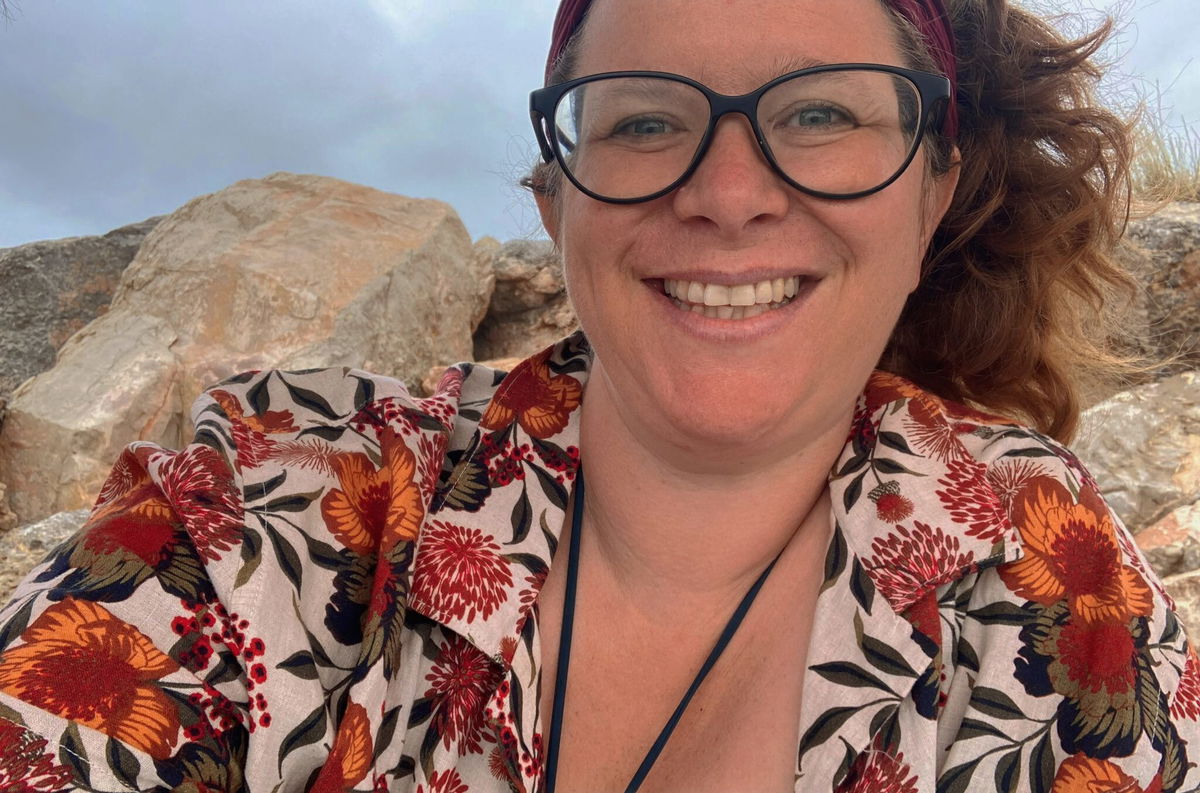
Alongside her teaching, Margharita is actively involved in volunteering. Photo credit: Margharita Bandini
Moving country is rarely a single decision, but rather the result of personal, professional and cultural factors coming together. Spain has long attracted European movers seeking a Mediterranean lifestyle, a relatively accessible cost of living and strong regional identities. This experience is reflected in the story of Margharita, an Italian national whose move to Spain followed years of living and working across Europe.
Margharita relocated to Spain between 2010 and 2011 after spending time in Italy, Norway and Portugal. Originally from Ravenna and later based in Rome, she had already lived in Oslo and Évora before arriving in Spain. Her move was driven by personal circumstances, following a year-long long-distance relationship when her partner relocated to Spain. “I thought it would be beneficial to our relationship to try living together,” she says. Rather than a permanent plan, it was a practical decision to see whether shared daily life in the same country would work.
Living and Working in Spain
Professional Life and Volunteering
Since arriving in Spain, Margharita has lived in several cities, including Madrid, Granada, Córdoba and Barcelona. Each city offered a different perspective on Spanish life, highlighting diverse regional identities. She is now based in Barcelona, where she works as an English teacher.
Alongside her teaching, Margharita is actively involved in volunteering. She works remotely with the IUCN SSC Otter Specialist Group, focusing on media management and networking. In addition, she volunteers with Los Angeles del Raval, an exotic animal rescue in Barcelona supporting abandoned pets and non-protected animals. “Helping the animals and connecting with the local community has become a central part of my life,” she says. Her volunteering reflects a long-standing commitment to conservation and animal welfare.
Adapting to Culture and Daily Life
Challenges and Integration
Adjusting to Spanish life brought its challenges. One of the most immediate was adapting to local timetables. “I was used to having dinner at 08:30pm, and suddenly people were meeting at 10:30pm to decide where to go. Craziness,” Margharita recalls. In Catalonia, she also found social integration more complex, noting that forming close friendships required patience and persistence. “Breaking through the rough shell to become friends with Catalans took time,” she adds.
Despite these challenges, Margharita highlights many positive aspects of living in Spain. “The weather is perfect, living decently is possible and people are generally friendly,” she says. As an Italian, she places particular importance on Mediterranean culture, explaining that living in a country without it would be difficult. Over time, everyday interactions and shared cultural references helped her feel settled.
Staying in Spain, For Now
Experience and Advice for Newcomers
Margharita explains that she has stayed in Spain because life is comfortable at present. “Because we’re comfortable, for now,” she says. Her decision is practical rather than permanent, reflecting stability, quality of life and personal circumstances.
For those considering a move to Spain, she advises arriving with an open mind, eating local food, learning the language and forming connections with the community, including older residents. “Make friends with the abuelas, they will help you feel at home,” she recommends. After years of moving across Europe, Spain has become Margharita’s current home, shaped by gradual adaptation, professional balance and everyday integration.