
1…
min
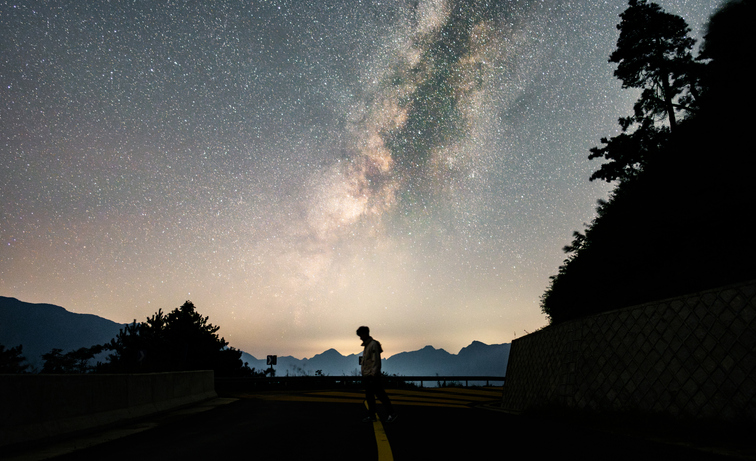
Stargazing has become an increasingly popular way to connect with nature. Astrotourism is growing in Spain, thanks to the clear skies found in some rural areas and because it aligns perfectly with a more responsible approach to travel.
In recent years, more and more people have been looking up at the night sky in search of silence and stars. Stellar tourism, also known as astrotourism, is no longer just a niche activity, but an immersive experience that’s winning fans by bringing together science, nature, and sustainability. And our country is establishing itself as one of Europe’s top destinations for this, thanks to its vast natural spaces and spectacular night skies.
But what exactly is astrotourism? It basically consists of visiting places with minimal light pollution, a key requirement for enjoying the night sky. However, its value extends far beyond the visual spectacle. Astrotourism is a more mindful way to travel with minimal (or even zero) environmental impact. It aligns with the principles of the energy transition and supports rural economies at risk of depopulation: “A starry sky presents an opportunity for sustainable development in rural regions experiencing population loss. These are precisely the areas that tend to have the clearest skies, and it’s in these areas that Fundación Starlight works to promote sustainable economic growth and equality through astrotourism,” states Antonia Varela, director of the foundation.
Spain’s must-see starry skies
Our country boasts some of the clearest and most breathtaking night skies in Europe. Many of these skies have Starlight certification, which guarantees astronomical quality, minimal light pollution, and a commitment to sustainability. At Planet Energy, we’ve picked five must-see destinations from across the country:
- La Palma (Canary Islands): Nicknamed La Isla Bonita (“the beautiful island”), La Palma has been a designated Starlight Reserve since 2012. Its “Sky Law,” which restricts artificial lighting, has made Roque de los Muchachos a world-renowned astronomical haven. In addition to scientific observatories, the island offers scenic viewpoints and accommodations designed with astrotourism in mind.
- Gredos Mountain Range (Ávila, Castile and León): With its high elevation and low population density, this region in the heart of the peninsula offers clear night skies in many towns, such as Hoyos del Espino, Nava del Barco, Solana de Ávila, Navatejares, and Puerto Castilla. Rural accommodations in these towns include telescopes and educational activities for guests.
- Montsec (Lleida, Catalonia): The northeastern region of the peninsula is also home to a stargazing haven. The Montsec Astronomical Park is a top destination for its combination of science, outreach, and tourism. Facilities like its 3D planetarium attract families, students, and amateur astronomers from all across Europe.
- Sierra Morena (Córdoba, Jaén and Seville, Andalusia): this reserve has more than 400 km of astronomical trails across the two provinces. Its offerings focus on nature tourism, cultural heritage, and stargazing interpretation, with guided night tours.
- Guadalupe (Cáceres, Extremadura): the Villuercas-Ibores-Jara Geopark has earned Starlight Destination status for its unspoiled skies and potential to boost the rural economy through science-focused tourism initiatives.
The sky is the best classroom
One of the great advantages of astrotourism is that it doesn’t require large infrastructures or intensive resource use. It’s an activity that’s compatible with sustainable mobility, renewable energy use in rural accommodations, and the protection of nocturnal biodiversity. Astrotourism also supports several of the Sustainable Development Goals — in fact, SDG number 18 specifically addresses this topic. Getting started is easy: all you need is a mobile app like Stellarium, Sky Map, or Star Walk to help you identify constellations, planets, satellites, and other celestial objects. It’s also a good idea to bring a red flashlight (to preserve your night vision), as well as warm clothing and binoculars or a basic telescope, if possible.
Alongside its appeal as a travel experience, astrotourism is also sparking scientific curiosity. That’s why visitors can take part in workshops, talks, and guided sessions in the areas mentioned and many other similar destinations, organized in collaboration with research centers such as the Canary Islands Institute of Astrophysics or the Calar Alto Observatory (Almeria), among others.
In this sense, astrotourism is more than just a trend; it’s a way of looking toward what truly matters, both literally and metaphorically. Set beneath clear skies and surrounded by nature, this experience brings together sustainability, science, and wonder — all while helping rural economies thrive, without leaving a trace on the environment.