

Tuesday, 23 December 2025, 09:38
It’s half past four in the afternoon in December in the capital of the Costa del Sol. From the small square on the corner of Calles Puerta del Mar and Herrería del Rey in Malaga’s old town, you can see a grey sky threatening rain. Even in the city that boasts one of the best climates in Europe, the temperatures can feel chilly. The decorations and lights are evidence that it is Christmas. Many tourists and locals stroll through the narrow streets of the old town, with its beautifully restored turn-of-the-century colonial facades, enjoying an atmosphere that thrives on tradition.
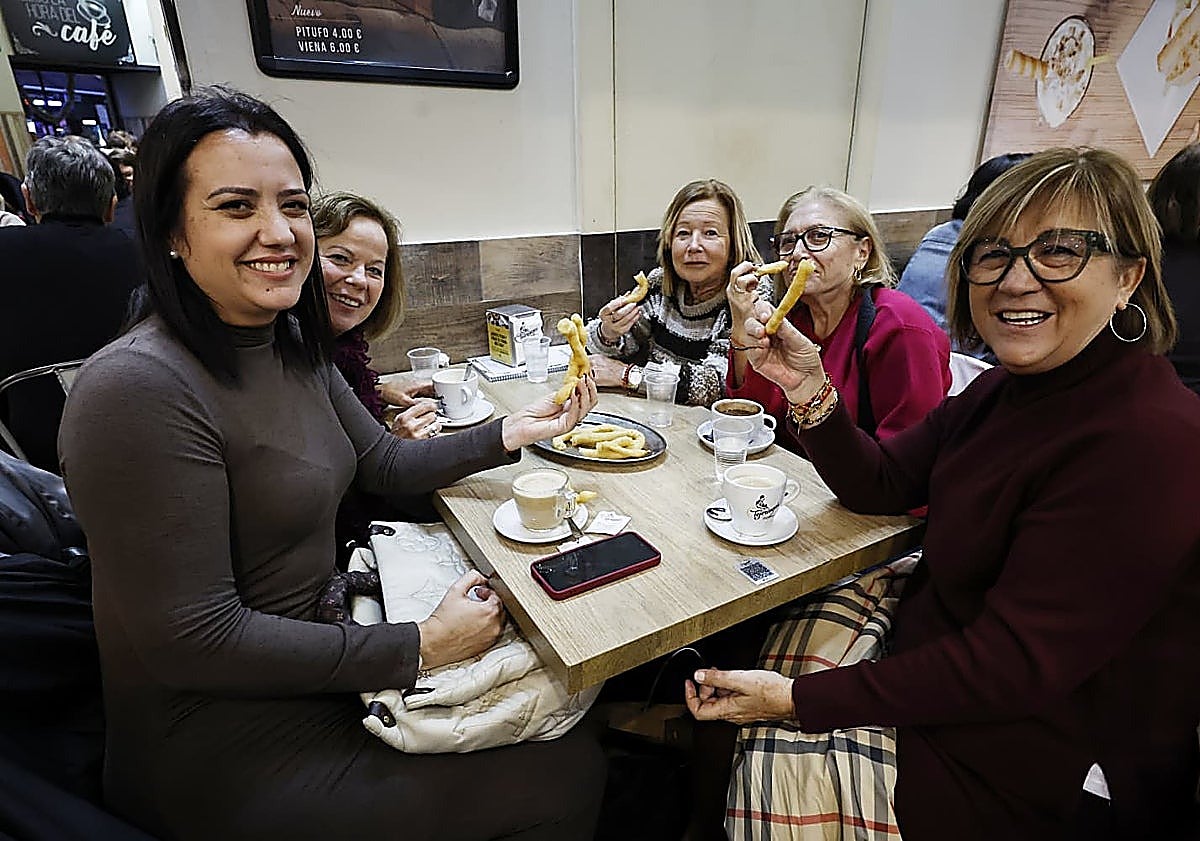
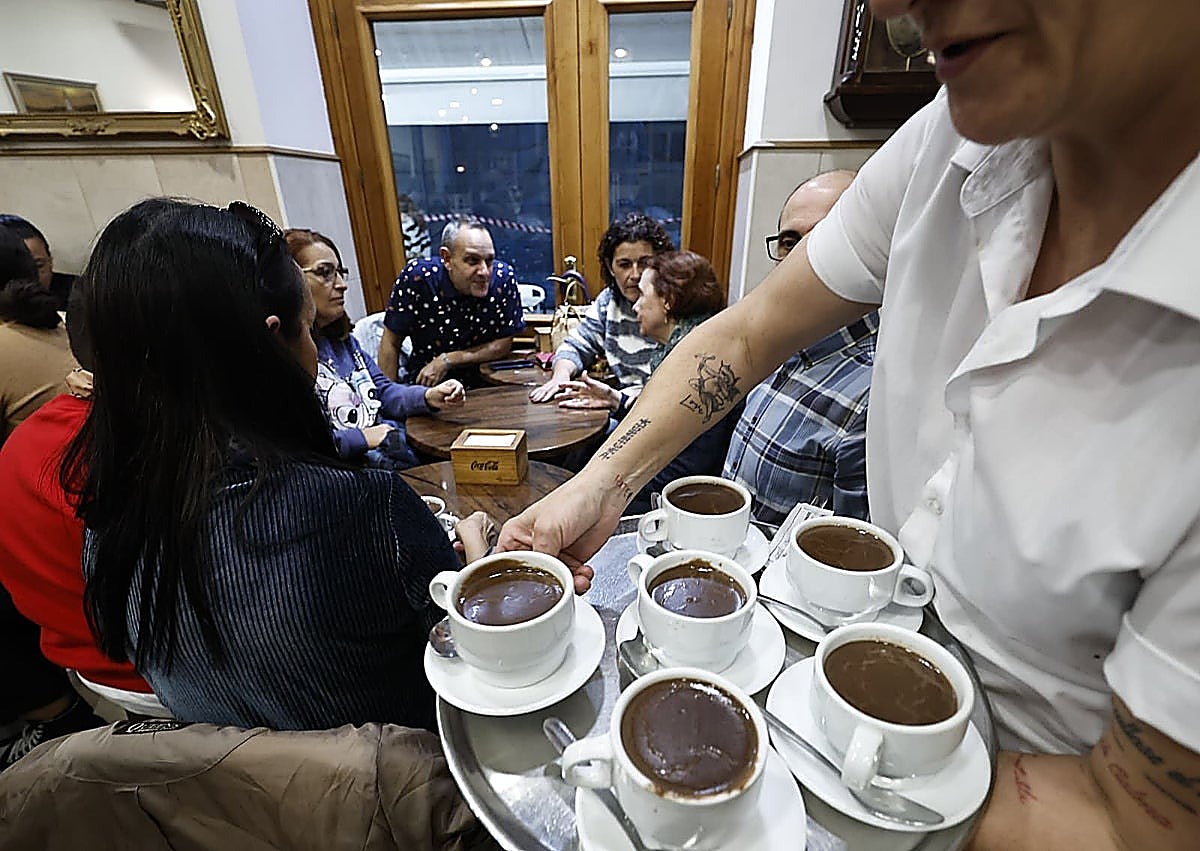
One of these traditions is the following scene: a hundred or more people sitting on aluminium chairs in Casa Aranda, one of the most traditional cafés in the city, almost all of them dipping their churros in hot chocolate. Of course it’s not just the preserve of an afternoon snack or ‘merienda’; churros are just as popular for breakfast .
Ana Berrocal is accompanied by her friend Vicky. The two of them talk to SUR while queuing up for theirs. Churros, vicky says, are not part of her regular diet. “But at Christmas I feel like it”, she says, “I don’t feel like hot chocolate in summer”.
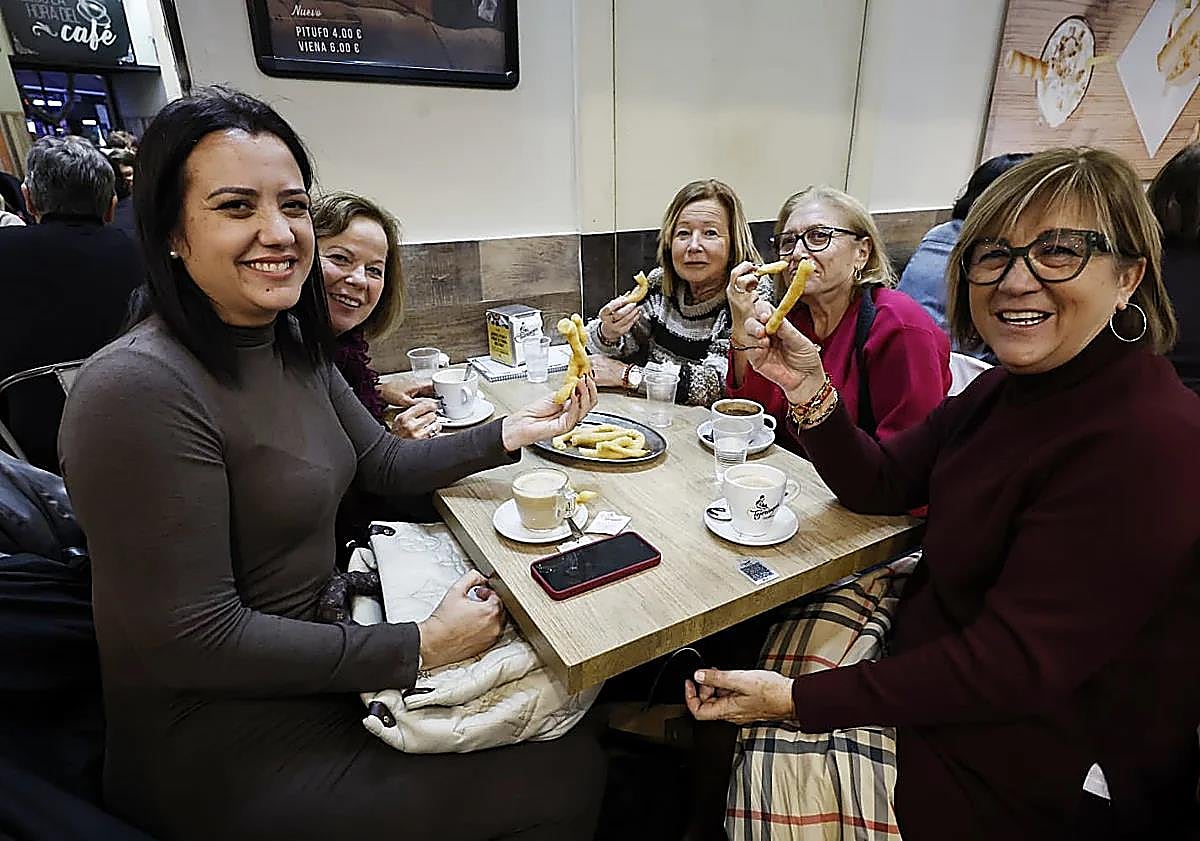
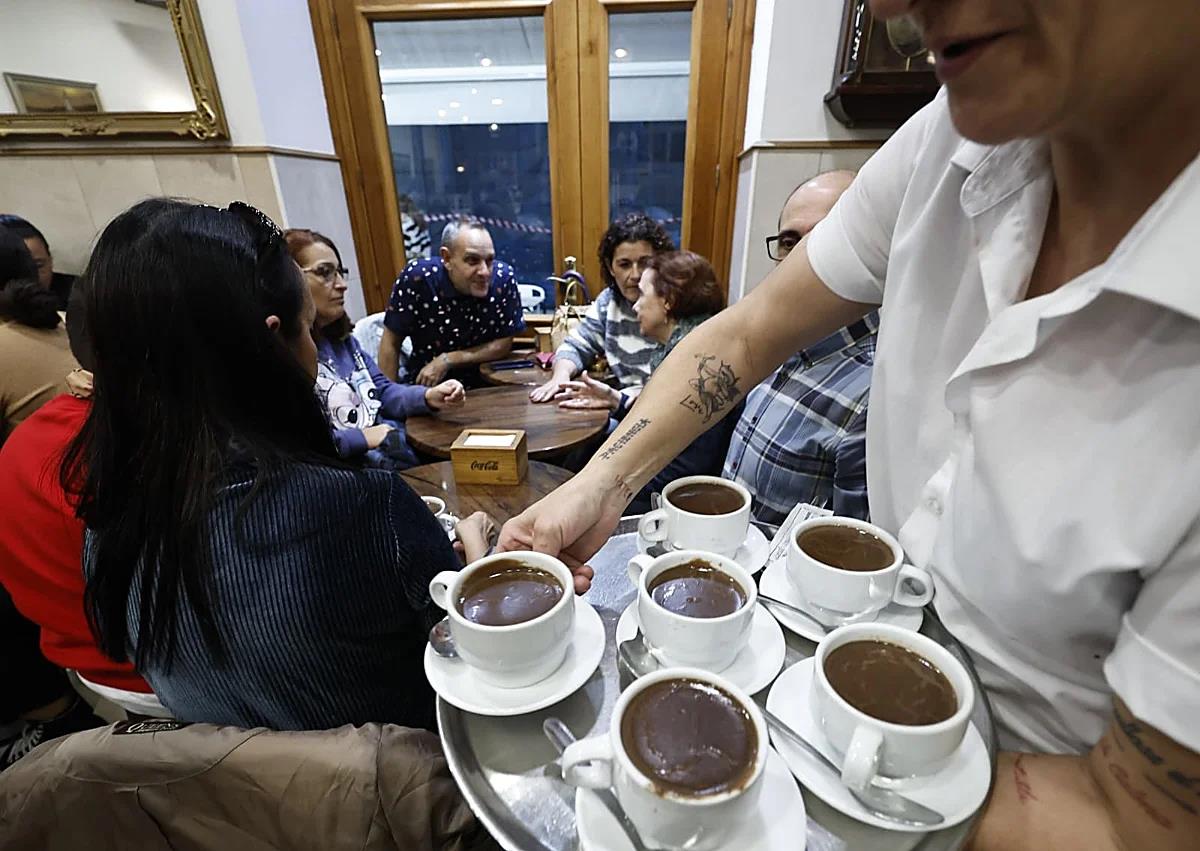
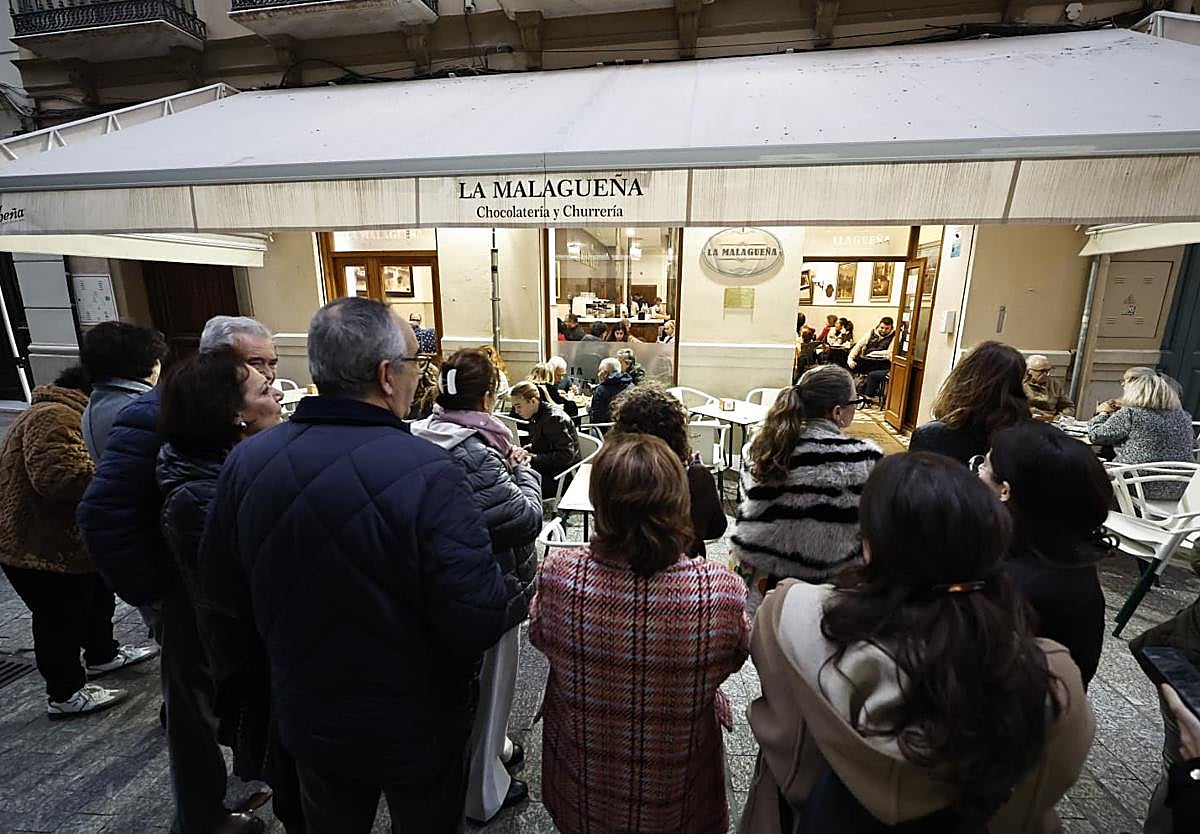
A few metres away, in Calle Sebastián Souvirón street is the churrería and chocolate shop La Malagueña. The scene is identical to the one described in Casa Aranda. The tables inside and on the terrace are all occupied. Waiters come and go with full trays. The one behind the bar wears a Father Christmas hat. “It’s an unbreakable tradition,” one of the waiters explains.
A group of Germans leave the premises. They are in their 20s and are on their way to see the Christmas light and sound show on Calle Larios. Tom confirms that the churro is already an international product. “We knew about churros, of course. In the Christmas markets in Germany you can find them, but here they are better”, he smiles. When they arrived, he says, there was still no queue. Waiting half an hour for a table, he admits, is not something he would have done.
The journey continues. In Cafetería Madrid near Plaza Uncibay, the ritual is repeated and another observation is made. The churro is universal in class and age. Children, young people and adults alike enjoy it. You can see clothes from Primark and other more expensive ones. Churros are enjoyed by all social strata.
Malaga’s obsession with churros and chocolate
Salvador Salas
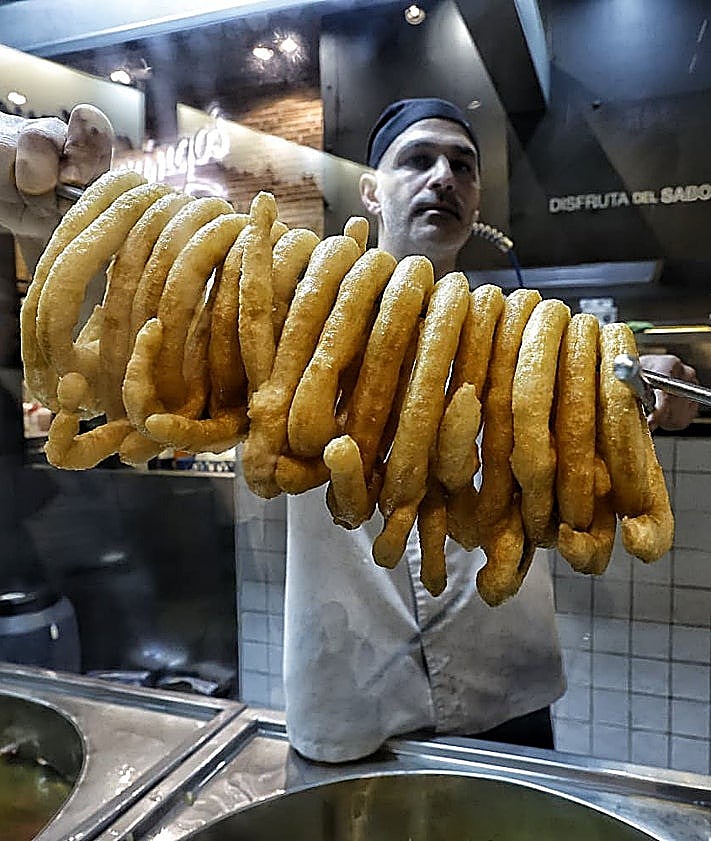
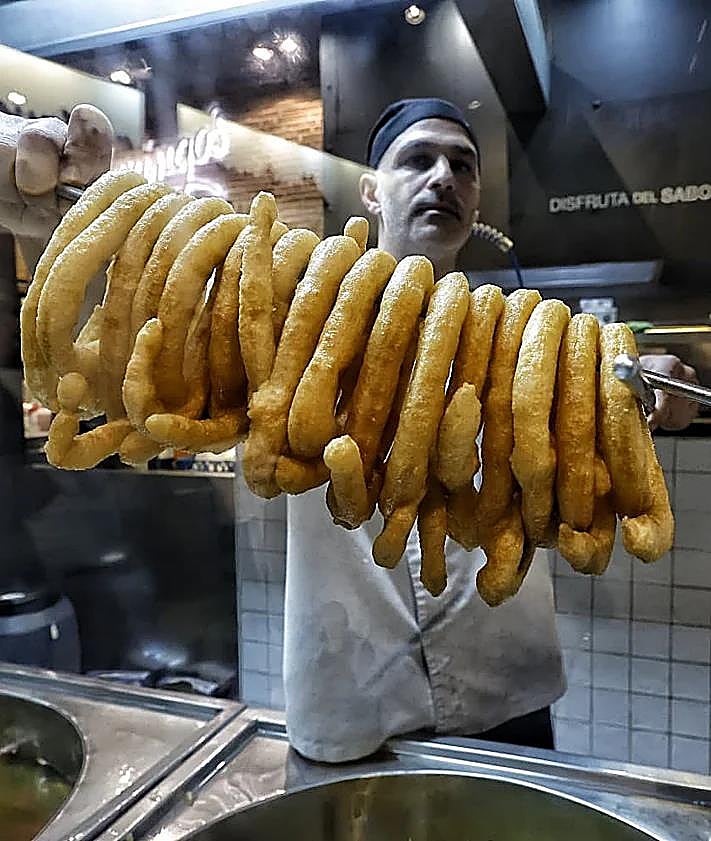
Tejeringo’s Coffee can also be found in the centrally located Calle Méndez Núñez. This chain has expanded throughout the province. José Castillo is one of the churreros and has years of experience. “We can make between 1,000 and 1,500 churros a day,” he says. “Of course, at Christmas there is a greater influx of people”, he confirms. Watching him in action is like watching a craftsman who masters every movement to get the perfect churro.
Churros and their slightly thicker cousins, porras, are found in many parts of Spain. Golden yellow in colour, they are dipped in hot chocolate. With a machine, Castillo carefully injects a dough made of flour, salt and water into the hot oil, at approximately 234 degrees. There is an art to making churros: the dough must be properly mixed and stirred so that no lumps form and it must be dipped into the oil in such a way as to form perfectly round ‘dumplings’. If the churros are perfectly straight, it is a sign that they are industrial.