
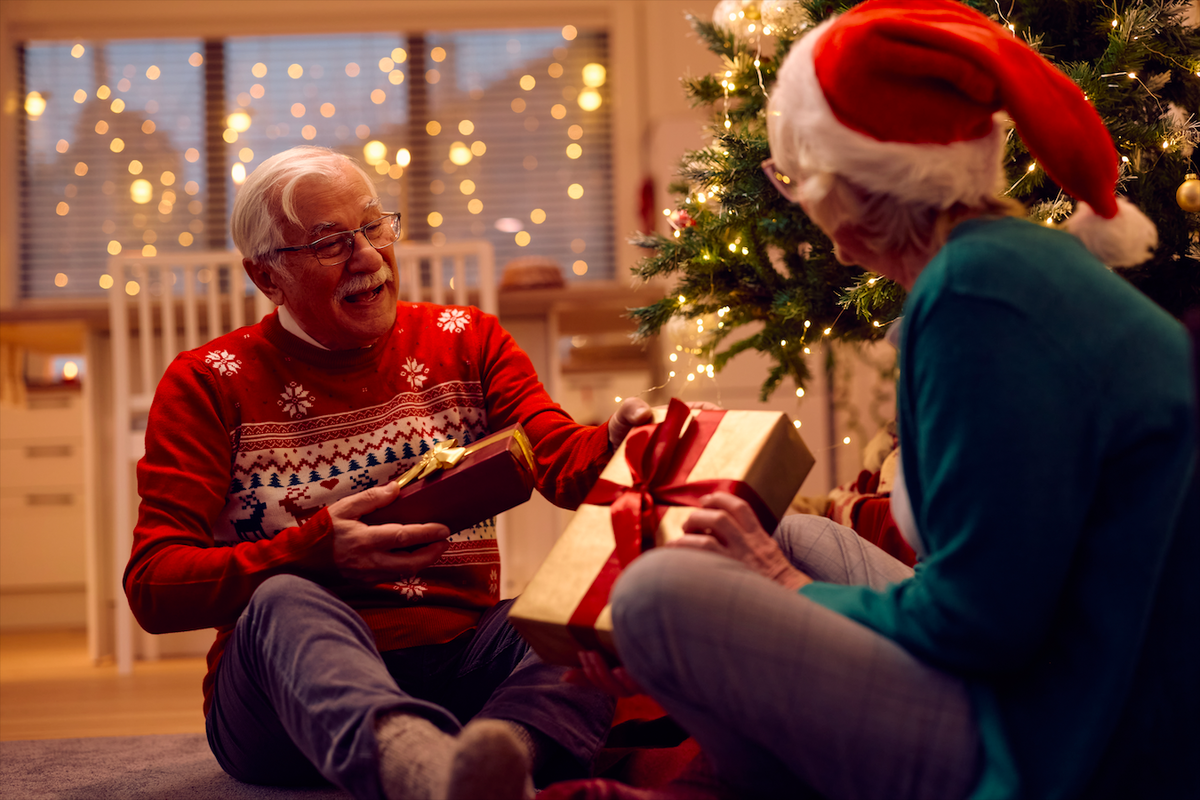
In recent decades, international media, global retail practices and exposure to Anglo-American traditions have begun to reshape Spanish Christmas habits. Photo Credit: Drazen Zigic/Shutterstock
Unlike much of Western culture, where Christmas Day has become the central moment for gift-giving and celebration, countries with a strong Catholic background such as Spain, and historically Italy, have followed a different festive rhythm. The emphasis has traditionally fallen not on December 25, but on Christmas Eve and later religious observances, reflecting a calendar shaped more by faith than by commercial custom.
In Spain, Christmas has long been understood as a season rather than a single day. While December 25 marks the birth of Christ, it has not historically carried the same social or emotional weight as it does in northern Europe or the Anglo-American world. Instead, the most meaningful gathering takes place the night before, when families come together for Nochebuena.
Nochebuena as the emotional centre of Christmas
Family, faith and the late-night table
Nochebuena, celebrated on the evening of December 24, remains the heart of the Spanish Christmas experience. Families traditionally gather for a long, late dinner that often stretches past midnight, placing the focus on shared food, conversation and presence rather than presents. The evening is deeply social, but it is also rooted in religious meaning.
For many households, the night culminates in La Misa del Gallo, the Midnight Mass commemorating the birth of Christ. Its name, which translates as “the Mass of the Rooster,” originates from an old Christian tradition: the rooster was said to be the first to announce the birth of Jesus at midnight, symbolising the transition from darkness to light and the arrival of Christ. The Mass marks the official start of Christmas in Catholic practice, reinforcing why Christmas Eve, rather than Christmas Day, has historically carried greater significance. The emphasis is on waiting, reflection and togetherness, values central to Catholic tradition.
María López, a 52-year-old teacher from Sevilla, explained that her family exchanges gifts late on the 24th because everyone is already together. She added that Christmas Day is traditionally quieter, reserved for rest and visiting relatives. José Martínez, a retired civil servant from Zaragoza, recalled that in his childhood, gifts were modest and symbolic, with the focus on attending La Misa del Gallo and family togetherness.
The role of January 6 and the Three Kings
Gifts traditionally belong to the Epiphany
For centuries, gift-giving in Spain has been closely associated with Día de los Reyes Magos on 6 January, which commemorates the arrival of the Three Wise Men to visit the infant Jesus. Children traditionally write letters to the Kings, attend parades on the eve of the Epiphany and wake up to presents the following morning.
This structure placed anticipation at the centre of the season. Rather than receiving gifts immediately, children were encouraged to wait, reinforcing the religious narrative behind the celebration. For many Spaniards, this made January 6, not December 25, the most magical day of Christmas. Ana Pérez, a mother from Madrid, noted that her children still wait until January 6 for the main gifts, but that modern media and global influences have begun shifting their expectations.
Global influence and shifting customs
Christmas Day grows, but tensions remain
In recent decades, international media, global retail practices and exposure to Anglo-American traditions have begun to reshape Spanish Christmas habits. Many families now exchange some gifts on Christmas Eve or Christmas Day, particularly where younger children are involved or where mixed cultural backgrounds exist.
Some Spaniards have expressed a quiet sadness at the growing prominence of December 25, feeling it has begun to eclipse both Nochebuena and Día de Reyes. Luis Fernández, a 61-year-old from Valladolid, explained that he feels Christmas Day is slowly overtaking the older traditions, reducing the anticipation and cultural meaning he remembers from his youth.
For those who grew up waiting for the Three Kings, the loss is not merely nostalgic but cultural, touching on identity, patience and religious symbolism.
How Spain’s Christmas differs from the Anglo-American model
- Christmas Eve (Nochebuena) remains the primary emotional and social gathering.
- Christmas Day has traditionally been quieter and less gift-focused.
- Gift-giving historically centres on January 6 (Día de los Reyes Magos).
- Globalisation has shifted habits, but has not fully replaced tradition.
- Some Spaniards feel sadness at Christmas Day overshadowing older customs.
A celebration shaped by balance rather than a single day
Tradition adapts without disappearing
Despite these changes, Christmas in Spain remains distinct from the model seen elsewhere. Many families consciously blend old and new traditions, offering small gifts on Christmas Eve while preserving January 6 as the main exchange. Others continue to prioritise Nochebuena above all else, maintaining late dinners, religious observance and extended family gatherings.
What endures is the idea that Christmas is not confined to one moment. In Spain, it unfolds over days and weeks, shaped by faith, family and cultural continuity. Whether gifts are opened on Christmas Eve, Christmas Day or the Epiphany, they remain part of a broader celebration where meaning still outweighs the calendar date.