
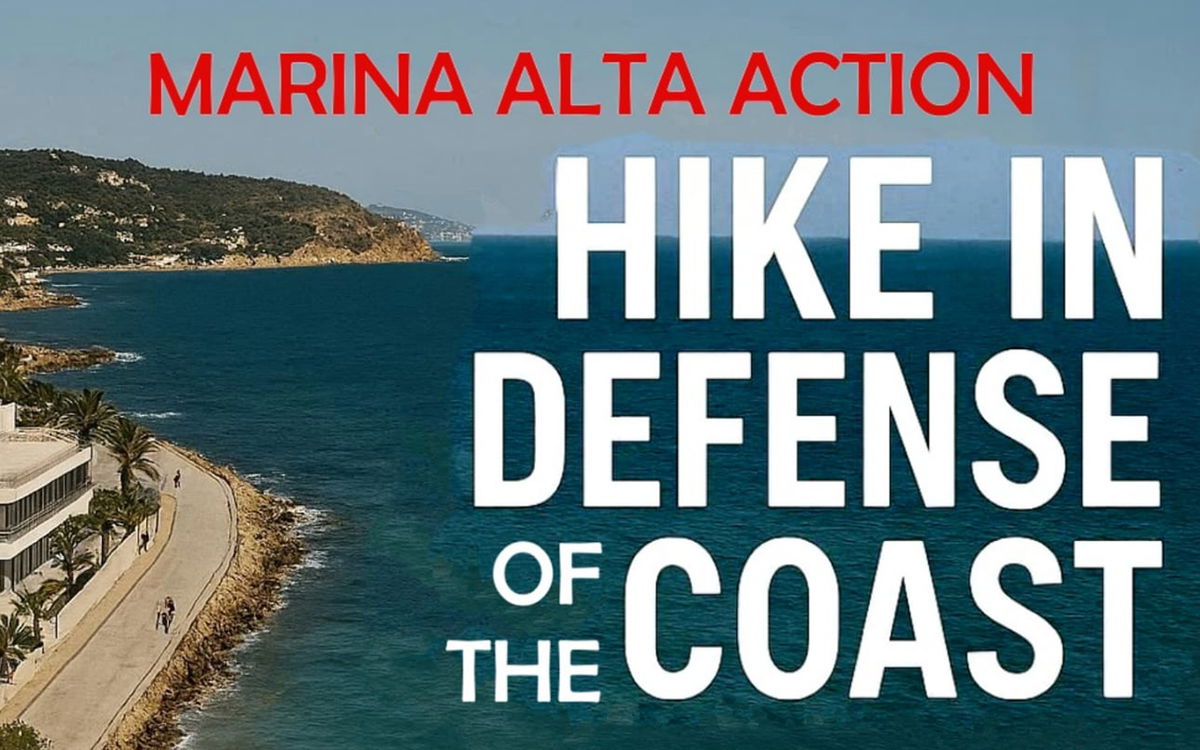
Strong local support and Greenpeace backing. Credit: Cultura Sostenible Denia
For residents of Denia, Tamarindos represents a central leisure area close to El Raset and the port. For Benissa, Patmore is linked to luxury villas and a hotel complex. Environmental groups and local citizens across the Marina Alta have called for a walk-protest to defend the coast “against the threat posed by both large-scale development projects.”
The mobilisation is set to take place on Sunday, February 8, in a town halfway between the two affected areas: Javea. The route will traverse the entire bay of this popular coastal town, where urban pressure is all too familiar. The walk will begin at Avenida del Mediterráneo nº2, at the start of Primer Muntanyar, and end at Playa de l’Arenal, opposite the Red Cross. The itinerary follows a route heavily frequented on Sundays, ensuring maximum visibility for the cause.
Strong local support and Greenpeace backing
The initiative is driven by Cultura Sostenible Denia, Benissa Actúa, and Acción Ecologista Agró, three prominent local organisations. Greenpeace has officially endorsed the walk and is considering attending in person. “This support provides a decisive boost, helping citizens’ concerns reach European authorities,” the organisers said, emphasising their aim of halting both developments.
Beyond the main organisers, the initiative is “supported by numerous local groups, businesses, and citizens’ associations from Denia, Benissa, and across the Marina Alta, who have united to defend the territory.” According to organisers, this collaborative network shows that coastal protection is “a shared cause, deeply rooted in the community.”
A call to the whole Marina Alta
The groups warn that the planned projects in Denia and Benissa pose “a serious environmental, cultural, and social risk, affecting fragile ecosystems, posidonia meadows, marine life, and coastal heritage.”
“This is one of the most important calls in recent years. The coastline faces a real threat, and we need everyone to come together. This is not just a walk: it is an act of collective defence,” said to Euro Weekly News Jeane Feitosa, legal representative of the organisers.
Designed for maximum impact
The walk is designed to engage both residents and visitors, taking advantage of the high footfall along Xàbia’s promenade. The action is officially registered as a demonstration in line with current legal frameworks, ensuring participants’ safety and legitimacy.
Organisers have invited environmental associations, cultural groups, sports and hiking clubs, animal protection organisations, parent associations (AMPAs), and media outlets to join and help spread the word. Their message is clear: “We must protect a territory that belongs to all of us.”
Event details
Date: Sunday, 8 February 2026
Time: 13:00–15:00
Start: Bahía de Javea (Av. del Mediterráneo nº2)
Finish: Playa del Arenal (opposite Red Cross)
Organisers: Cultura Sostenible Denia, Benissa Actúa, Acción Ecologista AGRÓ
Support: Greenpeace
A fight for sustainable coastal management
This collective action highlights the increasing tension between tourism, luxury development, and environmental conservation in the Marina Alta. By bringing citizens together for a high-visibility walk, organisers hope to send a strong message to local and European authorities that the community values sustainable coastal management over unchecked urban expansion.
The Tamarindos and Patmore projects have become symbols of a broader debate on the region’s future. Advocates for the coast argue that the environmental and cultural costs far outweigh the economic gains from large-scale construction. Posidonia meadows, which play a critical role in carbon capture and coastal protection, and diverse marine habitats are under threat, alongside historic and recreational spaces cherished by locals and visitors alike.
Community participation is key
As the date approaches, organisers stress the importance of broad participation. “Every voice counts. Every step on this walk is a stand for our coast,” said Feitosa. By mobilising communities across towns and generations, the walk represents not only a defence of specific sites but also a statement of collective responsibility for the Marina Alta’s environmental future.
With Greenpeace’s backing, the walk carries both symbolic and practical weight. The involvement of an internationally recognised environmental organisation could amplify the reach of the protest, potentially influencing decisions at regional, national, and European levels. For the local population, it is a rare opportunity to transform concern into visible action and reinforce the value of shared natural and cultural heritage.