
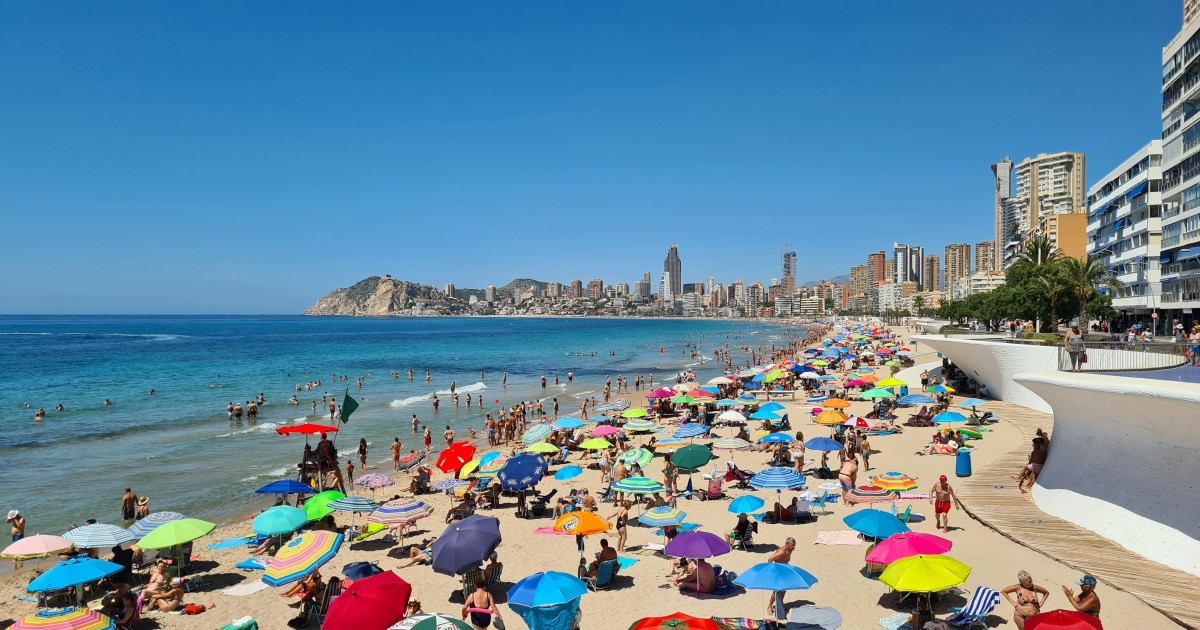
Spain ended 2025 with a record number of tourists visiting the country, consolidating its position as one of the world’s leading holiday destinations. According to the Spanish government’s year‑end tourism balance, the country welcomed 97 million international visitors in 2025, a new all‑time high and an increase of 3.5% on the previous year.
Officials are keen to stress that these Spain tourism 2025 statistics are not just about volume. The sustainable tourism strategy set out by the minister of Industry and Tourism, Jordi Hereu, centres on “triple sustainability” – social, economic and environmental – and on ensuring that prosperity from tourism is spread more evenly across regions and seasons.
Visitor numbers hit a new high but fall short of the 100‑million mark
The 97 million international tourists in Spain in 2025 set a new benchmark, yet fell short of early forecasts that pointed to surpassing 100 million arrivals. The government attributes the gap between projections and the final figure largely to higher prices in key segments and a decline in visitors from France and Germany.
Even so, the Spanish tourism record in 2025 underscores the country’s enduring appeal to UK and European holidaymakers and a growing base of long‑haul visitors. Spain tourism figures for UK and US travellers remain central to the sector: the UK is still the largest single source market, while traffic from the US continues to climb.
Tourist spending in Spain grows faster than arrivals
A key feature of the Spain tourism 2025 statistics is that spending is growing faster than visitor numbers. Between 2019 and 2025, tourist spending increased by around 20.4%, while arrivals rose by about 10.9%. This means each international visitor is, on average, spending more in Spain than before the pandemic.
In 2025, the €135 billion left by foreign tourists represented a rise of 6.8%, almost double the rate of growth in arrivals. For the government, this pattern signals a shift towards higher‑value tourism, driven by:
- More long‑haul visitors from the Americas, including the United States and Latin America, who typically stay longer and spend more per trip
- A gradual move to less seasonal travel, with stronger growth in off‑peak and shoulder months rather than a heavy concentration in July and August
- A wider range of destinations being booked, beyond the classic coastal strips and major cities
This is a core part of Spain’s sustainable tourism strategy. Officials argue that stabilising or even moderating growth in arrivals, while increasing average spend and spreading visitors around the calendar and the map, is the best way to address Spain’s overtourism concerns.
How tourism is spreading inland
Government data point to a noticeable geographical rebalancing of tourists in Spain in 2025 compared with pre‑pandemic patterns. Between 2019 and 2025:
- Regions referred to as “green” or “emptied” Spain – often rural, less densely populated areas in the north and interior – saw visitor numbers rise by around 60%
- Traditional leading regions, including coastal hotspots and big urban centres, grew by roughly 45%
This does not mean that overtourism in Spain has been resolved, and there is still debate as to whether the new tourist rules are working. Local authorities in high‑pressure areas continue to grapple with crowding, housing costs and environmental strain through tourist tax levies and placing limitations on cruises.
Spain tightens rules on holiday rentals in major destinations
One of the clearest policy shifts alongside Spain’s tourism record in 2025 concerns Spain’s tourist rentals regulation. For the first time, the number of tourist‑rental places in Spain’s top destinations fell in 2025, marking a significant moment in Spain’s approach to short‑term rentals.
These properties have been blamed in many cities for pushing up rents, thinning out residential communities and intensifying visitor pressure in central neighbourhoods. The government has confirmed that its 2026 action plan will put new rules for tourist apartments and holiday rentals in Spain at the heart of tourism policy. For foreign owners of Spanish property, especially those renting to tourists, the message is that compliance with local regulations will be subject to closer scrutiny.
Forecast for 2026: towards 100 million visitors and €35 billion in early‑year spending
The Spain tourism 2026 forecast remains positive, although framed against a backdrop of geopolitical uncertainty and a stated intention to avoid unmanaged expansion. For the first four months of 2026, the government anticipates:
- Around 26 million international tourists, an increase of 3.7% year‑on‑year
- Around €35 billion in tourist spending, up 2.6% on the same period in 2025
As Spain edges towards the 100‑million visitor milestone, policymakers aim to demonstrate that mass tourism can coexist with tighter controls on accommodation, more balanced regional development and a stronger focus on the people who live and work in its destinations all year round.
Stay informed on visiting and living in Spain with our weekly newsletter, delivering the latest travel, legal, and lifestyle news.