
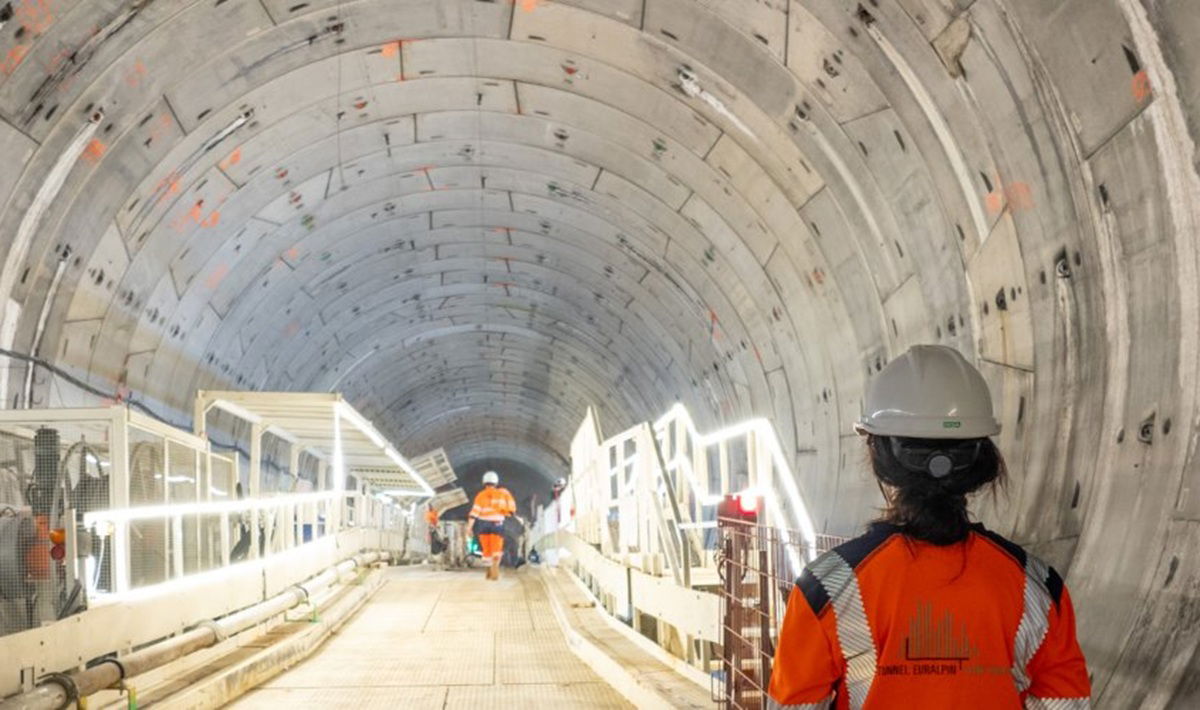
Engineers and workers press on with the construction of the Lyon-Turin high-speed rail tunnel, set to become the world’s longest and connect France and Italy by 2033.
Credit : X – TELT Lyon Turin
@telt_lyonturin
It sounds like something out of a Bond film: a high-speed train shooting beneath the Alps, linking France and Italy in record time. But this isn’t fiction – it’s the €25 billion mega project now picking up pace under Europe’s favourite mountain range, with a finish line pencilled in for 2033.
If you’ve ever found yourself stuck in alpine traffic or fidgeting through endless airport security queues, the Lyon–Turin tunnel might just feel like a miracle in the making. But is it really happening? And what’s in it for the average traveller – or for the thousands of lorries currently crawling across the border?
Diggers, deadlines and diplomatic drama: The race beneath the Alps
Work is already rumbling away on both sides of the border. We’re talking 3,000 workers, 11 separate sites, and more than a quarter of the 164 kilometres of tunnels already dug—including 13.5 km of the main 57.5 km stretch, which, once finished, will officially become the world’s longest rail tunnel. (Sorry, Switzerland.)
But don’t go packing your bags just yet. The European Commission recently published the roadmap: tunnelling should wrap up by 2031, with tracks and tech in place by the end of 2032, and the first trains whizzing beneath the Alps by 2033. A fair wait, but in European mega-project terms, that’s practically light speed.
And it’s not just about the tunnel itself. There’s a whole supporting cast: Italy’s revamping rail lines between Turin and Avigliana, sprucing up stations, and rolling out new tech, while France will see improvements all the way from Lyon to the mountain gateway, opening up a smooth corridor for both passengers and freight.
Big bills, big promises: Who’s actually paying?
If you’re wondering who foots the €25 billion bill, the answer is, well… everyone. France and Italy are splitting the costs (France takes a slightly bigger chunk), but the European Union is putting its money where its mouth is, covering over half the cost of the tunnel. The aim? To cut lorry traffic, speed up journeys, and help the continent hit its climate targets.
And just to make sure things don’t go off the rails, the project is run by TELT – a binational French-Italian company – with both countries now required to file annual progress reports to Brussels. That means more paperwork, but hopefully fewer budget-blowing surprises.
Why all the fuss? A greener, smoother future on track
So, why should we care about a tunnel under the Alps? For a start, it’ll whisk you from Lyon to Turin in a fraction of the time, making city breaks (or business trips) a doddle. More importantly, it could take up to a million lorries off the roads every year, cleaning up the air and taking a big step towards a greener Europe.
The tunnel is also part of the grand ‘Mediterranean Corridor’—Europe’s ambitious plan to link up its biggest cities by high-speed rail. Paris to Milan, anyone? Soon you might not need to think twice about hopping a train across the continent.
Of course, there’s still a mountain of work (quite literally) to be done. But as Europe bets big on rail, the next decade could see your travel map get a whole lot more exciting – and a whole lot more sustainable.
Stay tuned with Euro Weekly News for more news from France and Europe