
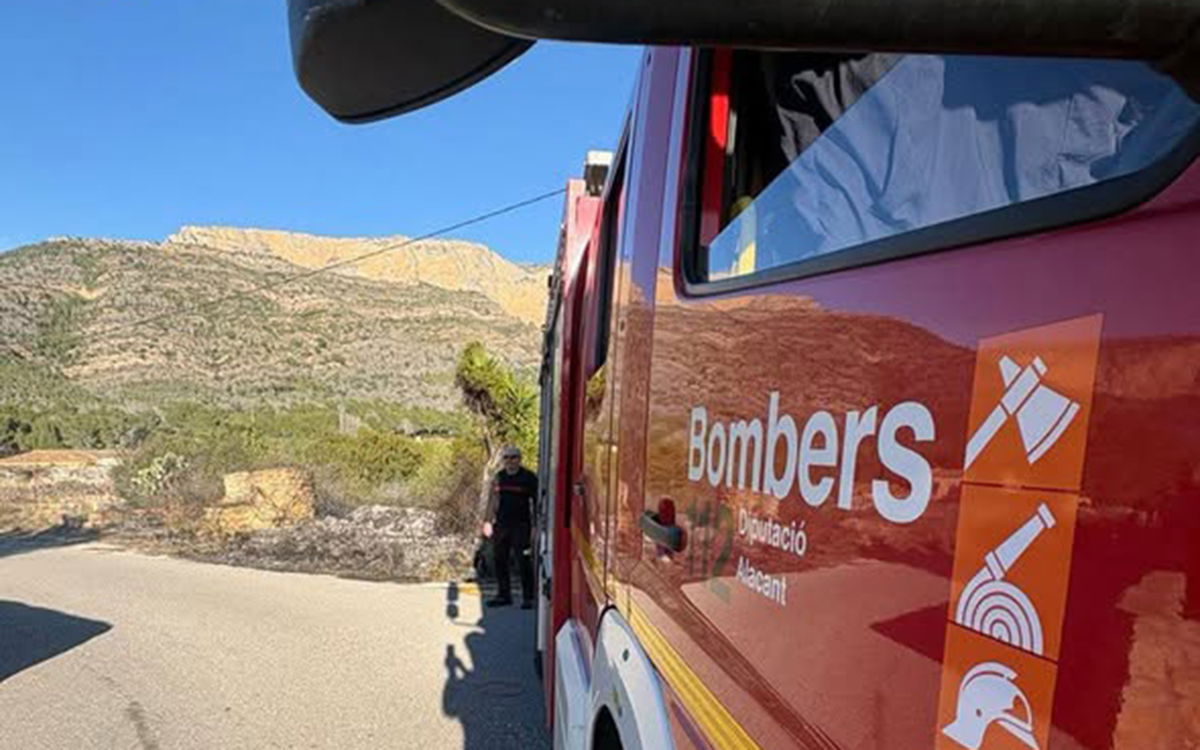
More vehicles already on the way. Credit: Bomberos Alicante
The Generalitat Valenciana has taken a significant step towards modernising its wildfire response by adding six new fire engines to the Forest Firefighters Service, as part of a wider plan to renew the fleet with a total of 17 vehicles attending the Costa Blanca North.
Official handover at Emergency Coordination Centre
The delivery of the new autobomba trucks took place on January 23 during an official event at the Emergency Coordination Centre, attended by the regional minister for Emergencies and Interior, Juan Carlos Valderrama.
More vehicles already on the way
Valderrama confirmed that the Generalitat Valenciana has invested €2,311,584 in the acquisition of these six vehicles and announced that the purchase of a further five trucks with the same specifications has already been awarded, with six more scheduled to be acquired later this year.
Over €6.4 million committed to fleet renewal
Once the programme is completed, a total of 17 new fire engines will be in service, representing an overall investment of €6,430,605, which the conseller described as a clear commitment to strengthening and modernising forest fire response resources.
High-capacity pumping and water reserves
Each of the new vehicles is equipped with advanced pumping systems and a 3,500-litre water tank, along with an additional 500-litre self-protection reserve designed for use in extreme emergency situations.
360-degree visibility for safer manoeuvres
The trucks also feature a 360-degree rear and perimeter vision system, allowing full control of the surrounding environment during manoeuvres, improving response times and speeding up the identification of intervention points.
Comprehensive self-protection systems
Among the safety features is an automatic self-protection sprinkler system that sprays atomised water to protect the cab, sides, tyres, fuel tank and air filter, as well as an anti-rollover warning system that alerts crews visually and acoustically to dangerous conditions.
Enhanced safety for firefighters
Additional equipment includes foldable side railings, respiratory protection equipment inside the cab, and perimeter lighting, all aimed at improving safety and working conditions for forest firefighters in high-risk environments.
Special coating designed for forest fires
The vehicle bodywork is finished with a highly resistant paint developed specifically for forest firefighting vehicles, which helps insulate against thermal shock in the event of fire entrapment and also acts as an external acoustic insulator under normal working conditions.
With wildfire risk continuing to rise, the Generalitat Valenciana believes the renewed fleet will significantly boost operational capacity while improving safety for frontline forest firefighters across the region.
Strategic deployment of forest firefighters
The Costa Blanca relies on a dedicated team of forest firefighters to tackle the increasing threat of wildfires, especially during the hot summer months. While the exact number of personnel varies across the region, the Generalitat Valenciana’s Forest Firefighters Service has a strong presence in key areas to ensure rapid intervention. These teams are spread strategically to cover both coastal zones and inland areas, maintaining readiness for emergencies that can arise at any time.
Vulnerability of mountain villages
Wildfires are a recurring issue in the province, often affecting small mountain villages and rural communities tucked away in the inland hills. These areas are particularly vulnerable due to their proximity to forests and scrubland, combined with limited access for heavy vehicles, making fast and well-equipped firefighting teams essential. In recent years, many of these communities have experienced repeated fire alerts, underlining the importance of modern, high-capacity fire engines and advanced safety systems.
Protecting homes and infrastructure in remote areas
In addition to large forested areas, the Costa Blanca’s firefighters must also respond to smaller-scale fires that can quickly threaten homes, farms, and local infrastructure. Villages such as Guadalest, Polop, and Castell de Castells, surrounded by rugged terrain and dense vegetation, rely heavily on the swift mobilisation of specialised crews. The continual risk posed by wildfires in these remote locations reinforces the Generalitat Valenciana’s commitment to maintaining a well-equipped, highly trained firefighting force across the region.