
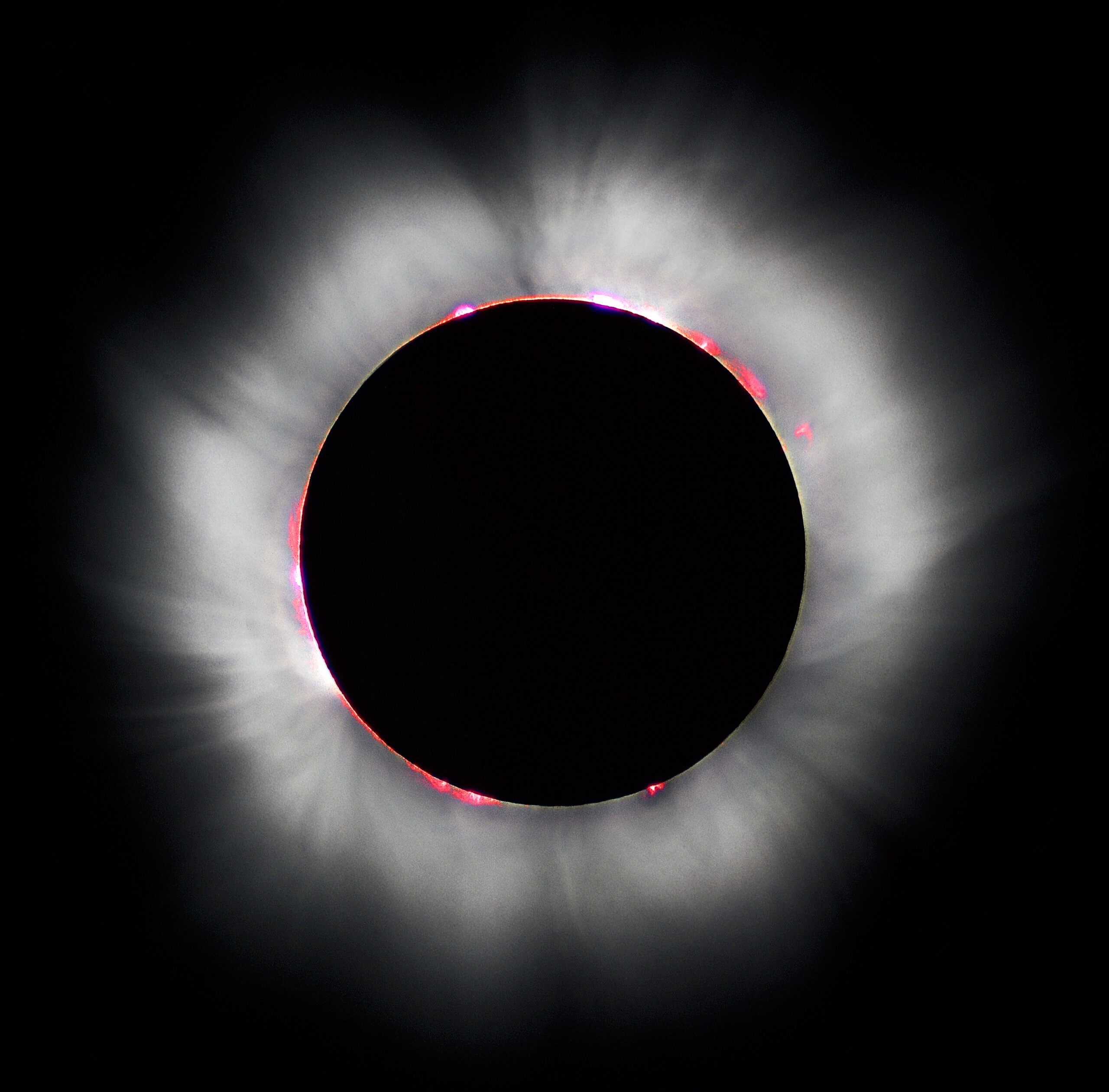
ONLOOKERS gazed upwards as the sunlight dimmed, a rim of gold lining the pitch-black blot in the sky.
It was the middle of the day, yet for a moment Spain was plunged into darkness.
The year was 1912, and it marked Spain’s last total solar eclipse for more than a century.
Now, 114 years later, one of the universe’s most awe-inspiring spectacles is set to return to the Iberian Peninsula, and sky-gazers from across the world are booking up Spanish hotels to ensure they do not miss it.
READ MORE: Off the beaten track: Five destinations to explore in Spain during 2026
Around 8.30pm on August 12, 2026, the phenomenon will be visible across the entire country, sweeping through the sky from west to east for about 90 seconds.
The prime viewing location, however, will be the region of southern Aragon, where more than half of the available rural rental homes have already been snapped up, with tourists arriving from across Europe and the United States.
Total solar eclipses occur roughly once every 18 months somewhere on Earth, but they are usually limited to a narrow area of visibility – known as a ‘path of totality.’
What makes this one extraordinary is that it will be visible across the whole of Spain.
Stelyanos Pyrzas, astrophysicist at the Aragon Centre for Cosmic Physics Studies, told El Pais: “There is not a single person alive who witnessed the previous eclipse in Spain.”
In Teruel, northwest of Valencia, science communicator Nacho Perez is organising a party for 800 people, with talks and coordinated activities timed to coincide with the eclipse.
READ MORE: This wild mountain escape in Andalucia shines in every season – here’s what you need to know
Being in the path of totality represents a major economic opportunity for Aragon, with 157 towns along the route hoping that the surge of astronomical tourism will boost local businesses this August.
The regional government compounded those hopes by unveiling its ‘Eclipse Plan,’ which provides designated camping areas across municipalities to accommodate the expected influx of visitors.
The anticipated crowds are so large that Spain’s Ministry of Environment, led by Manuel Blasco, has also set up protected natural zones to prevent damage to the landscape and minimise the risk of fires, ensuring that both residents and tourists can enjoy the event safely.
READ MORE: FIESTA! The best festivals in Spain for your 2026 travel bucket list
A solar eclipse happens when the moon moves directly between the Earth and the sun, briefly blocking its light and casting a shadow on the planet.
During a total eclipse, the Moon completely covers the sun for observers in the path of totality, turning day into twilight and revealing the sun’s outer atmosphere, known as the corona.
For one brief moment this August, the skies over Spain will not just darken – they will unite locals and visitors alike in a rare and unforgettable cosmic spectacle.
Click here to read more Environment News from The Olive Press.