
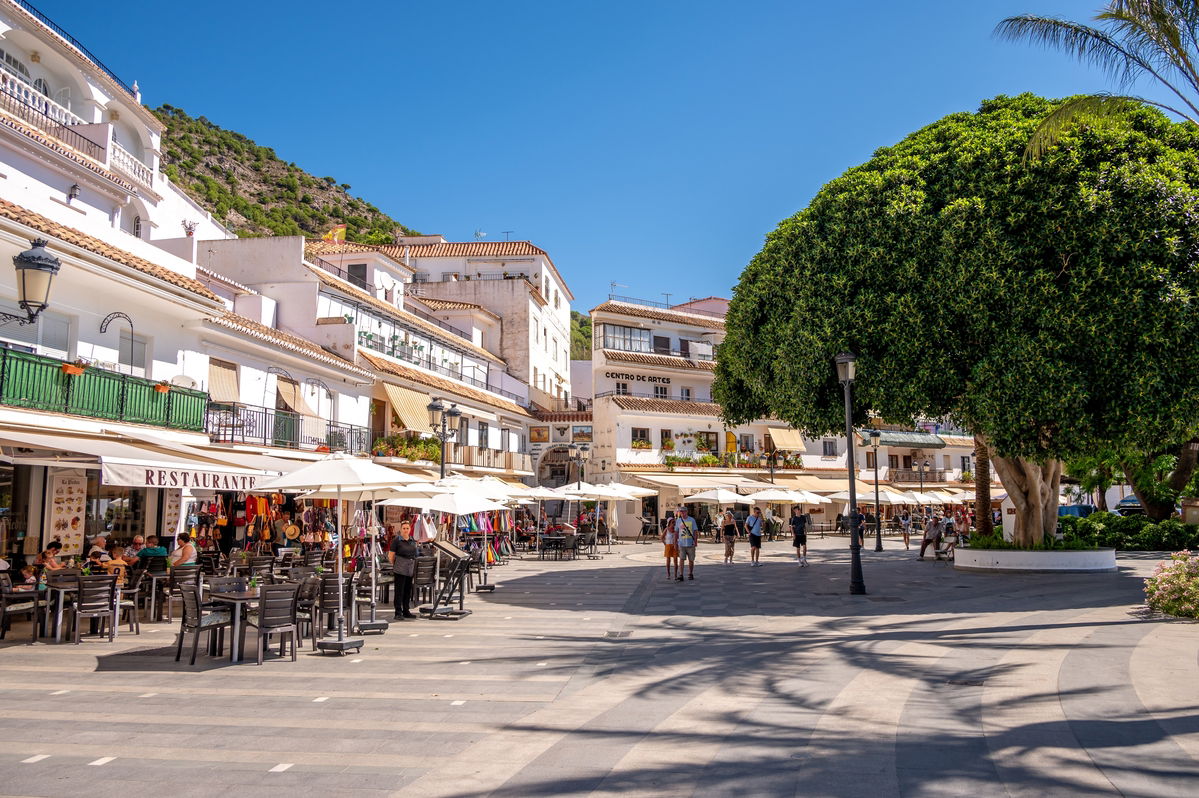
Hospitality in the Costa del Sol is bracing for a challenging season as European spending power weakens, hinting at a need to make price adjustments for accommodation to put the region back in line with economic realities.
The Asociación de Empresarios Hoteleros de la Costa del Sol (Aehcos) has reported a projected occupancy rate of 88.32 per cent for August 2025, which is not bad, but a notable decline of 4.57 percentage points from 92.89 per cent in August 2024. This follows a troubling trend observed in July, where the Gross Average Impact per Guest (IBCA) plummeted from €198.61 to €157.18, despite a slight occupancy increase to 87.82 per cent. “We’re filling rooms almost the same, but earning much less,” said Javier Hernández, Aehcos’s executive vice president, expressing what he sees as the core issue: reduced consumer spending capacity.
Drop in spending affecting Costa del Sol profits
The drop in spending power is particularly clear in certain European markets. Recent data shows that spending power is declining across Europe in general, with countries like France, the UK, Italy, and Romania who face significant economic pessimism. For instance, 70 per cent of French consumers express economic concerns, with spending on things like clothing notably down, while in the UK, only 34 per cent plan the occasional splurge out on a holiday abroad, the lowest among the countries surveyed.
In Italy, 81 per cent of consumers are spending more in the sales, but less in regular months, and Romania is showing similar bargain-hunting behaviour. The trends are also being seen impacting Malaga Province’s tourism sector, where 70 per cent of July’s hotel guests were international, yet per-person, spending dropped over 20 per cent, severely affecting profitability after many businesses in the Costa del Sol had opted for more of a luxury, high-end business model post-COVID.
Costa del Sol too expensive for many Spanish holidaymakers
The Spanish are suffering too, deciding to holiday more in cheaper, foreign locations, rather than on the traditional Costa del Sol. This can generally be directly attributed to inflation and reduced purchasing power, which has curbed domestic holidaymakers’ contributions. Aehcos says that while domestic tourism is expected to rise to 40 per cent in August from 30 per cent in July, it remains well below pre-pandemic levels. As well, over half of bookings are now made at the last minute, or at least within a month of arrival, which inevitably complicates pricing strategies and staffing plans. Hernández has stressed that the sharp IBCA decline is the most worrying metric, as it threatens the long-term financial viability of hotels and restaurants despite high occupancy rates in areas like Fuengirola (92.58 per cent full), Benalmadena (92.37 per cent full), and Torremolinos (92.20 per cent full).
To remain competitive, Costa del Sol businesses need to manage their expectations more and adjust accommodation prices to pre-pandemic times. Hernández pointed out that destinations like Punta Cana in Mexico offer lower costs due to cheaper workers and raw materials, which puts pressure on the Malaga Province to recalibrate prices.
Despite these challenges, the region still has an extremely strong appeal, with a 76 per cent annual occupancy rate and recent investments like a new five-star Meliá hotel in Marbella. However, the interior regions, such as Axarquía and Serranía de Ronda, are struggling much more than coastal hotspots.
Costa del Sol profits down, but not out
Moving forward, September forecasts show a further dip to 86.96 per cent occupancy, down 1.78 points from 2024, with only Benalmadena and Torremolinos expected to exceed 90 per cent. Francisco Salado, president of Turismo Costa del Sol, remains optimistic though. He cites 155,000 tourism jobs and new international routes, like Malaga-New York, and the upcoming Malaga to Beijing flights, which are hoped to diversify markets. Yet, he acknowledges the need for “reflection” on pricing, as domestic tourists are looking for more reasonable alternatives.
With European spending power constrained, Malaga’s hoteliers and restauranteurs are looking to balance competitive pricing with profitability in order to sustain the region’s tourism-driven economy.