
Recently, the Círculo de Empresarios presented its “Position Statement” on the Spanish agricultural sector. One of the highlights was that thanks to the profound transformation of recent decades, Spain is among the most competitive countries in the world. The Círculo de Empresarios is a think tank founded in 1977 featuring more than 200 entrepreneurs and senior executives of the main companies operating in Spain, both national and multinational, and its main objective is to ensure the recognition of the social value of entrepreneurs as creators of employment, wealth, and welfare, as well as the promotion of the entrepreneurial spirit.
 © Agroatlas
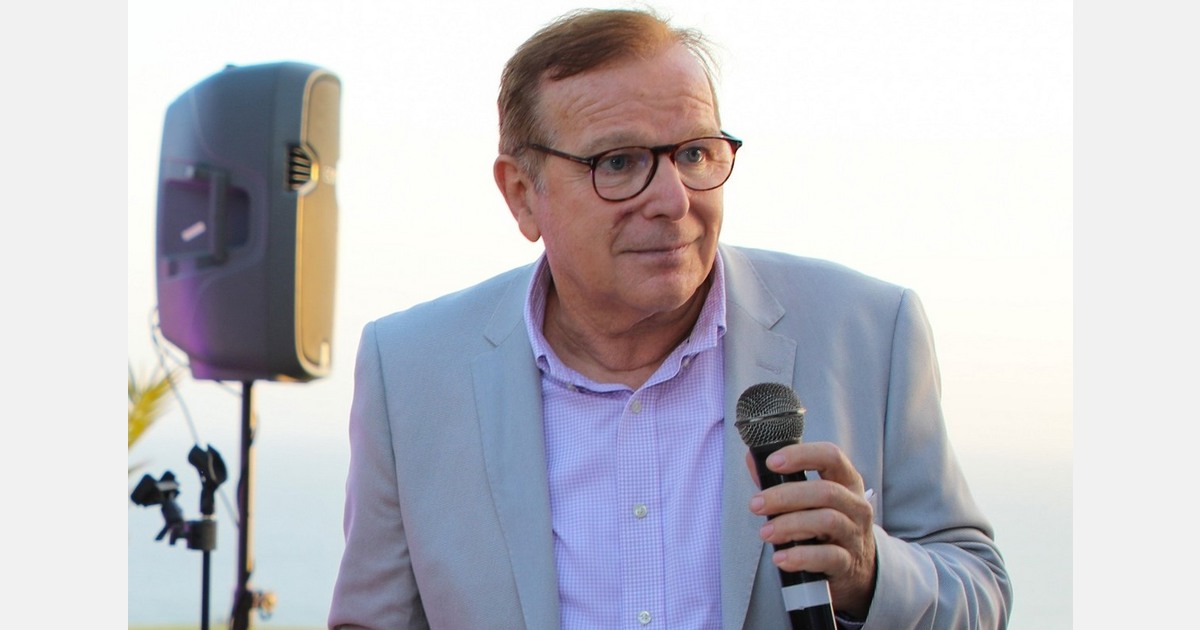
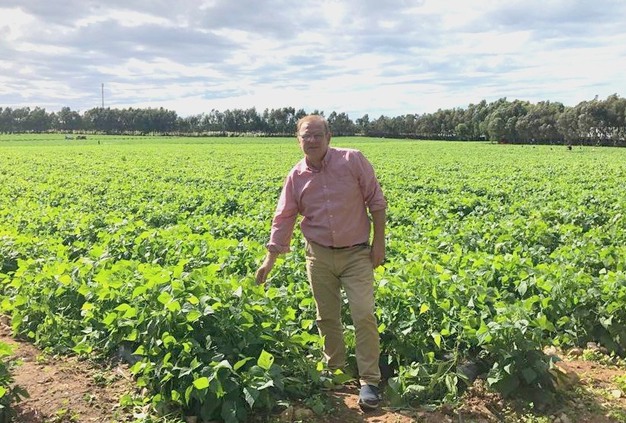
We interviewed Ricardo Menoyo, president of the producer and marketing company Agroatlas Europa and coordinator of the Agricultural Laboratory of the fruit and vegetable sector of the Círculo de Empresarios. He explained the great challenges that the fruit and vegetable sector is facing, proposed solutions, and outlined proposals for the Spanish agricultural sector to secure a stronger position on the commercial chessboard.
“Along with fundamental issues such as health, education, security, and energy, food sovereignty plays an essential role. That’s the motivation for this Position Statement. Also, Spanish agriculture generates wealth, as Spain is the world’s third largest exporter of fruit and vegetables, behind only China and the Netherlands,” says Ricardo Menoyo.
What challenges are ahead for the fruit and vegetable sector?
“The fruit and vegetable sector is facing major challenges, such as rising production costs (energy, inputs, labor, water, etc.) and increasing competition from other countries with lower labor costs, such as Turkey, Egypt, or Morocco. Even Albania is becoming increasingly stronger in Eastern Europe.”
“At the same time, the sector is stifled by excessive regulatory pressure (CAP, environmental and phytosanitary regulations, etc.). Here we are again reminded of the famous quote saying that ‘Europe only knows how to legislate’ while offering few practical solutions.”
“Water and water management are another problem. There is a limited supply, little infrastructure, and, I stress, little planning. The sector needs to look at the big picture, and not just at what’s going on today.”
“I also think we need a greater concentration of the supply; there are too many small producers. This means that there’s a great deal of competition within the Spanish agricultural sector, which results in more limited bargaining power when dealing with the retail.”
“In addition, we are faced with very volatile prices, which generate a lot of insecurity for the grower, as, besides the unpredictability of the weather and other external factors, there’s also uncertainty about whether prices during the season will be good or not. It’s just like playing the lottery.”
“We must not forget that there’s a great lack of generational replacement and many difficulties in persuading young talent to work in agriculture.”
What measures need to be put in place to address these challenges, and what does the Círculo de Empresarios propose, and to whom is it proposing it?
“To those in government positions, who are in charge of passing and removing regulations and laws, I would say that they should use logic and coherence, because many of the sector’s problems are not external, and it is in their hands to solve them. For example, the labor policy in the agricultural sector is unreasonable. We must have a flexible labor contracting law adapted to the needs of the agricultural sector, where work is seasonal, with social protection for the worker, of course, because one thing doesn’t take away from the other.
“Tax incentives are needed so that companies can grow and merge if they need to. Investment and growth. The state can’t be just a tax collector; it must also be a provider of value, incentivizing investment and employment.”
“As for water, we need more funding for efficient irrigation, renewable energy, and technology. We should have a national water plan with reuse, desalination, sensorization, and tariffs encouraging responsible use, as well as simpler, more rational, logical, and coherent regulations.”
“In the words of Henry Ford, ‘farming is easy when the hoe is a pencil, and you are many miles from a farm’. It’s good for those in charge of legislation to listen to those in the know before implementing unreasonable or impractical regulations.”
“The sector itself, in the opinion of the Círculo de Empresarios, needs greater business and cooperative integration to gain bargaining power, as well as greater investment in technology, logistics, and automation.”
 © Agroatlas
Spain is a production powerhouse, but it’s not quite in control of the market. Why?
“I’ll answer this question with another rhetorical one: why is it that the Netherlands, which has an area of 41,000 km², less than 10% of Spain’s area, is the world’s second biggest exporter of fruit and vegetables? Because it acts as a major link in the agricultural value chain in Europe. 18,000,000 tons pass through the Netherlands every year. It has invested in advanced logistics and promoted its role as a re-exporter. That is the key: selling what other countries produce. The Dutch look after their agriculture; they make sure they never lack anything, but as a commercial global power, they dominate the markets.”
Could Spain become a fruit and vegetable trading hub for Europe?
“The document from the firm Roland Berger says that ‘we must stop seeing ourselves only as a large producer and also become an articulator of value chains in Europe.’ In this regard, the link with Latin America and other areas (with other products) is strategic. Spanish commercial experience and Latin American production capacity could be a perfect fit.”
“There are currently some large Latin American agricultural production companies that are aware of the fact that they cannot rely solely on exports to the United States. Until now, their exports have been shipped to Europe through importers, but now they want to get closer; they find a stronger European market desirable, and they want to establish themselves with strategic partners and associates. They look to Spain for cultural identity, language, and quality of life, and to the Netherlands as a logistical hub.”
“It is true that the Netherlands’ location in central Europe gives it an edge, but if we strengthen and modernize our logistics and channels of arrival (Mediterranean corridor, transport by ship, logistical organization, etc.), we can become an alternative for marketing products over a 12-month cycle and expand our portfolio. This would mean that we would have more control over the value chain, as well as greater bargaining power.”
Could this be a problem for Spanish products?
“If we are in control, not at all; quite the opposite. In this case, I’m not speaking on behalf of the Círculo de Empresarios, but on my own behalf, given my many years of experience in the sector. The problem is that these products arrive through other channels. Then we lose control.
“An example is Moroccan agriculture, which is right next door. For years, it has been in the hands of agents and importers from Perpignan. I wonder what would have happened if we had been in control from the beginning of the neighboring country’s agriculture in terms of marketing and production, just like the Netherlands did with Almeria’s production. We wouldn’t just be strong, like we are now, but would actually be number one.”
“We would expand our product portfolio, we could eliminate seasonality, producing all year round, and our structural costs would be significantly reduced, with all the benefits that would bring for our production here in Spain. But this would make for a much longer and deeper conversation.”
All the data presented by the Círculo de Empresarios can be found at www.circulodeempresarios.org.
For more information:
Agroatlas
[email protected]
https://agroatlas.es