
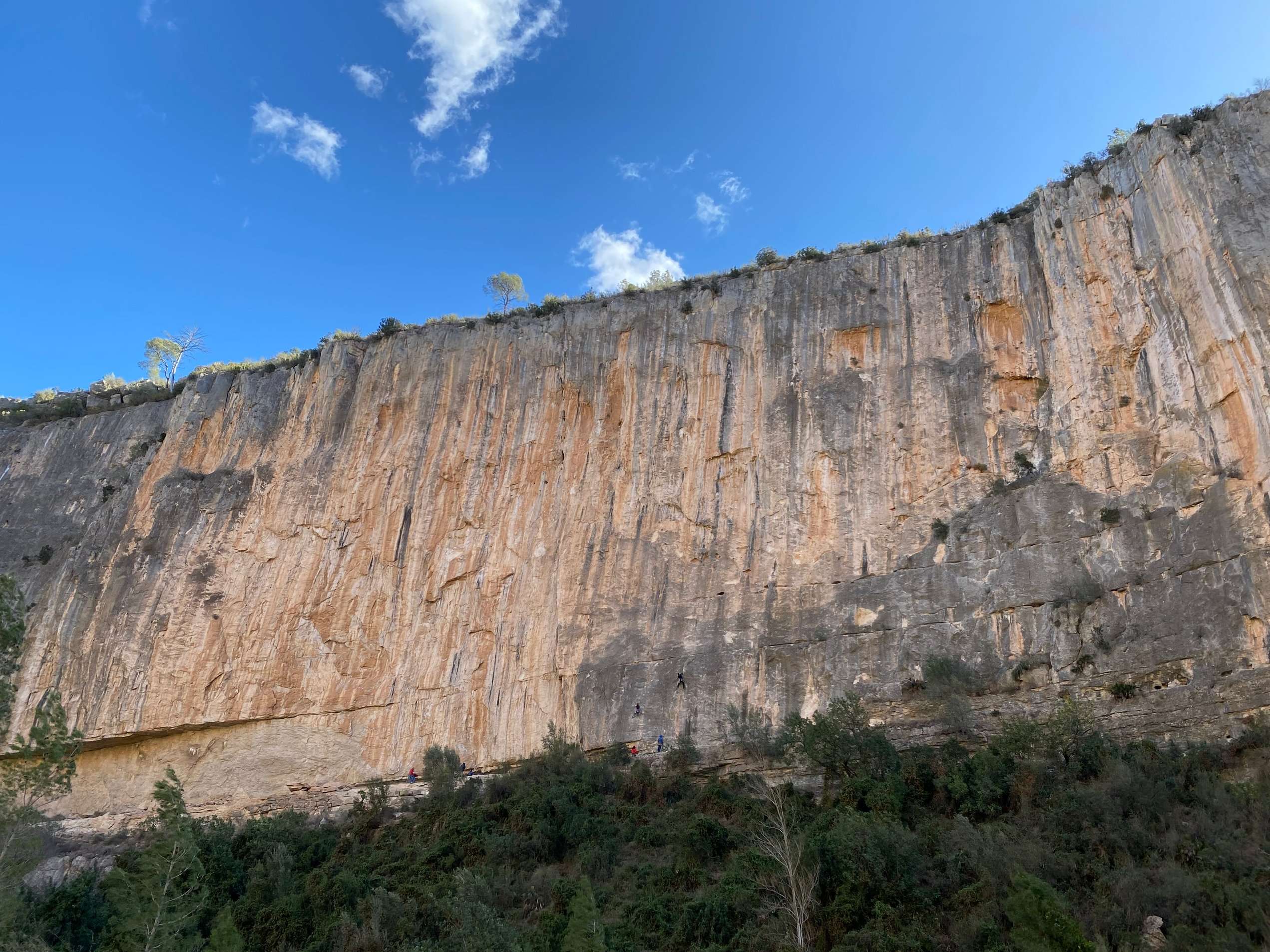
If you’re thinking about escaping the winter to some warmer temps and getting after some good sport climbs, Spain, Greece, and Italy are classic destinations. The temperatures are often moderate, meaning you can climb in the shade in pristine conditions. When the temps do dip, you have the option to climb in glorious full sun without melting. All three countries are known for their high-quality limestone, offering a range of styles and grades in some of the most beautiful locations on Earth.
Here are five great options for a winter sport climbing trip abroad. These destinations are all excellent choices for other times year too, but are particularly great choices for December, January, and February when other top European destinations are too cold and wet.
El Chorro, Spain
El Chorro is located in the south of Spain in the province of Málaga. Its towering limestone cliffs are a sight to behold, and are all the more appealing if you have come to ascend them. Here, over 1500 routes await, including high-quality bolted multipitch climbs at every grade. It is an excellent winter destination, with average highs in the mid to upper teens. There are crags of all orientations, so it’s easy to both chase and avoid the sun.
The small town of El Chorro has plenty of accommodations, so you can be close to the cliffs. A car is not essential, as it is possible to get around on foot once you are in El Chorro. However, a car is an asset if you hope to visit the surrounding areas or crags outside of El Chorro, like the awesome crags of Desplomilandia. The coastal city of Malaga is only one hour away—it is a popular tourist destination, and for good reason. While the Mediterranean may not be its warmest in the winter, you might still find its beaches enjoyable on a sunny rest day. There are plenty of restaurants, many of which cater to seafood lovers. Being in Andalusia, where the style was born, you can also find top-tier authentic Flamenco performances.

Chulilla, Spain
Chulilla is in the province of Valencia. There are great moderate climbs, but those who climb 5.11+ and higher will be rewarded with epic, long tufa journeys and beautiful slightly overhanging faces on crimps, pockets, and jugs. Most of the climbing is located in a gorgeous winding canyon where you can find all-day shade or all-day sun. The routes are long – an 80m rope is a must.
A wide range of accommodations are available in Chulilla. While the village itself is quite small, you can also find a few bars, restaurants, bakeries, and shops for groceries. Valencia is one hour away and is well worth the visit. It also boasts beautiful beaches. If you visit in March, you can check out the epic celebration of Las Fallas.

San Vito Lo Capo, Italy
On the north-western coast of Sicily, you can rock climb in paradise. San Vito Lo Capo is known to most as a beach destination with pristine white, sandy beaches, but there are also more than 1,200 climbs to explore. There is a good spread of grades, but what makes San Vito Lo Capo special is that the easy climbs are fun and engaging, a welcome change to the ladder-like climbing on grey rock that most limestone destinations offer in the lower grades.
You can easily get around without a car, but if you want to explore the culturally rich island of Sicily, a car is an asset. There are campgrounds, B&Bs, hostels, and hotels nearby. The area has suffered from issues with bolt erosion, but a major rebolting project is underway. You can find plenty of five-star routes that have been re-bolted with titanium, the gold standard of bolting material for sea-side environments.

Leonidio, Greece
Greece remains one of the most popular climbing destinations in the world. Most people are familiar with the famous island of Kalymnos, but another picturesque destination with over 1,900 routes can be found on the Peloponnese coast—Leonidio. Featured caves, steep pocketed walls, and slabs await, and the bolting is as friendly as the people. Leonidio is roughly 3.5 hours from Athens by car, but once there, you don’t necessarily need one. However, a car also means that you can visit nearby villages and easily get to the beach on your rest days. Leonidio is a small but lively village. There are many cafes, restaurants, a couple of climbing shops if you need gear, and you can even find live music quite regularly.
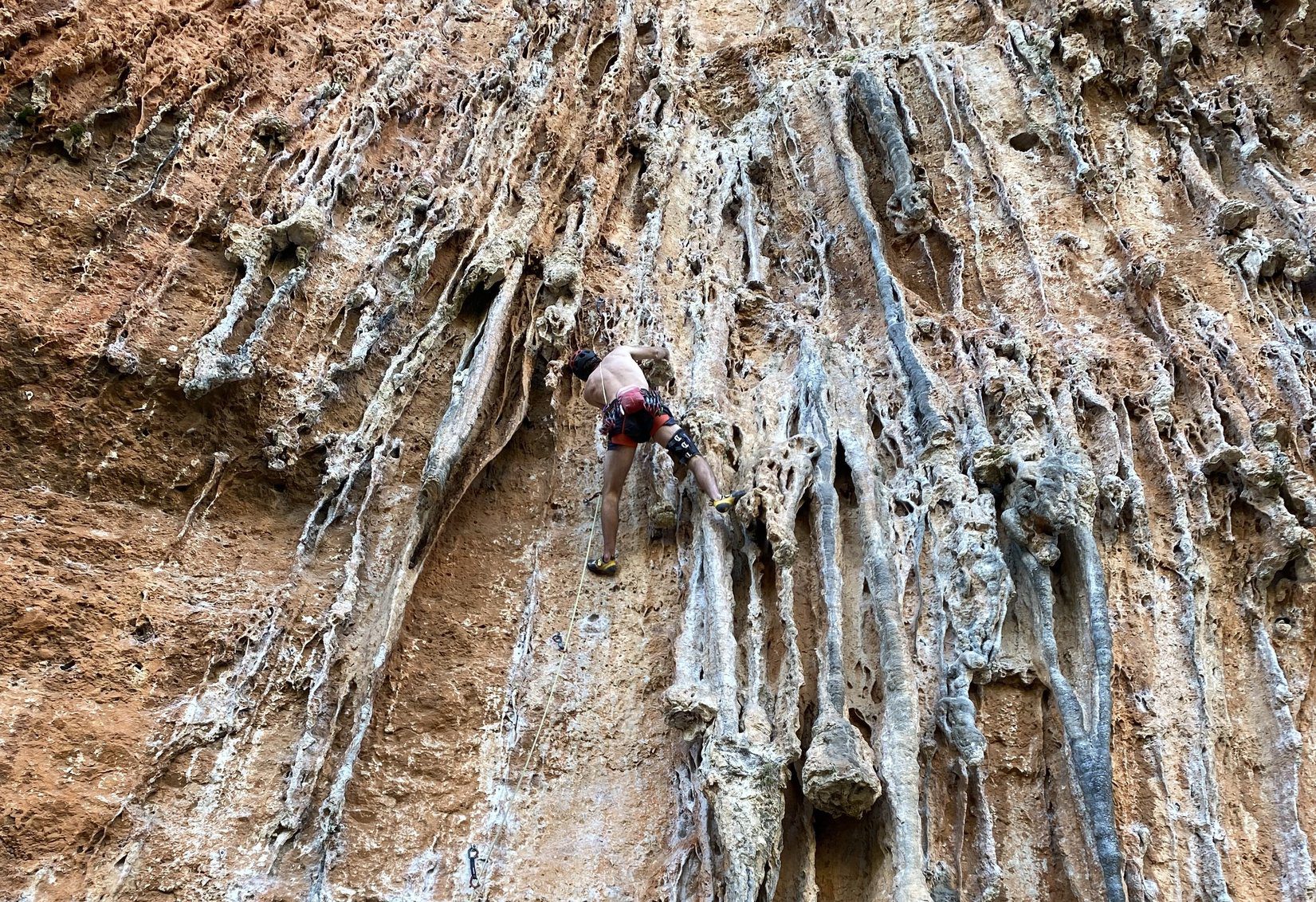
Part of what makes Leonidio such a great area is the variety of climbing. You’re guaranteed to find routes that fit your style. Monstruous tufa journeys, pocketed face climbing, crimpy slabs, short burly power-endurance lines – you’ll find it all in Leonidio on five-star quality stone.
Manikia, Greece
If you’re seeking somewhere a little off the beaten path and want to avoid crowds, Manikia on the island of Evia is a good option. A relatively new area, it already boasts 500 single-pitch and 25 multi-pitch climbs ranging from 5.4 to 5.14d. The area is referred to as Manikia, and while many climbs surround this extremely tiny village, many crags are found a few kilometers to the east near the village of Vrisi. It is necessary to have a car for this area as the crags, accommodations, and amenities are dispersed. The area is roughly 2.5 hours from Athens by car, so you can easily pair a trip here with a visit to the country’s capital.
