
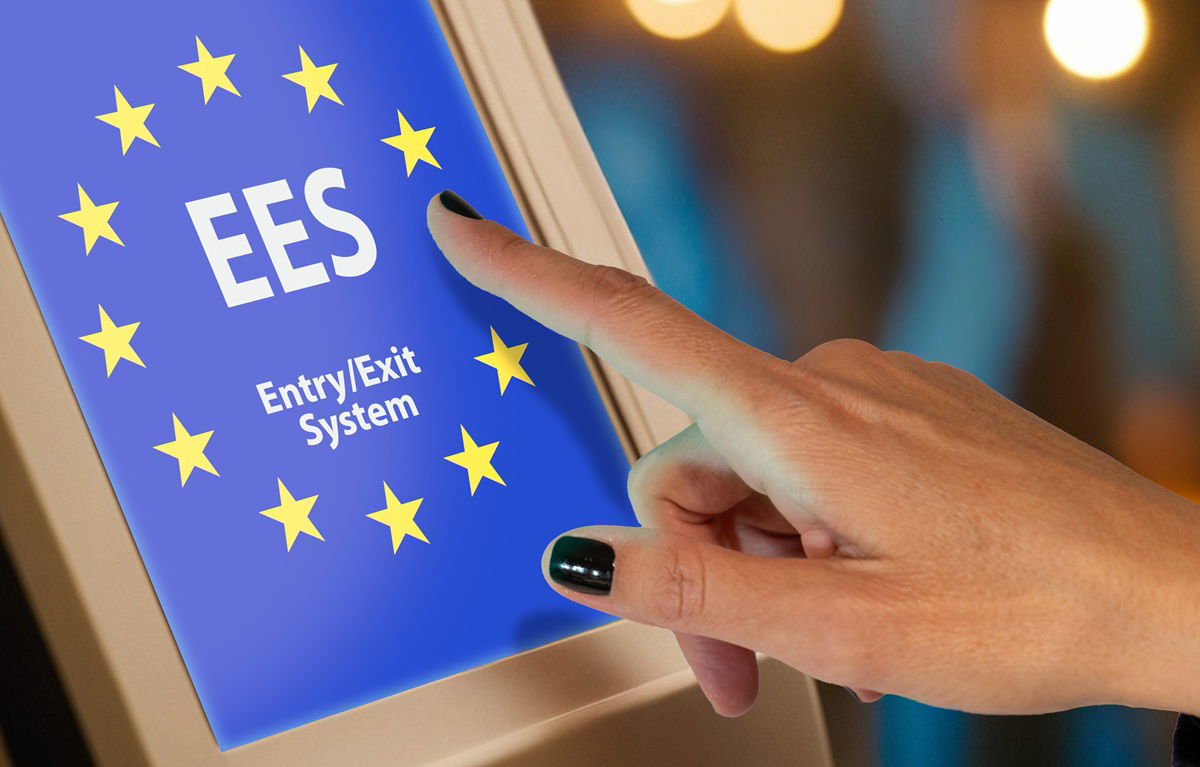
Spain launches the EU’s new Entry/Exit System at Madrid-Barajas Airport.
Credit : Ivan Marc, Shutterstock
Spain has officially started using the EU’s new Entry/Exit System (EES) – a high-tech border control designed to replace passport stamps with digital checks.
And it all begins at Madrid’s Adolfo Suárez Barajas Airport, where passengers arriving from outside the EU, including British travellers, will be the first to try it.
After years of delays, the EES is finally being introduced across the Schengen Zone from this Sunday, October 12 though it won’t be fully operational everywhere until April 2026. The system will be installed gradually at airports, ports and land crossings throughout the EU.
What is the new system and how will it work in Spain?
At Madrid Airport, 48 self-service kiosks are already set up and ready to go. The new process might look a bit like airport check-in — except here, it’s all about biometric registration.
Non-EU passengers will be asked to scan their passport, have their face photographed, and provide four fingerprints (from their right hand). Once this information is taken, it’s stored in a central EU database, accessible to border agents in all member states.
The aim is simple: make border crossings faster and safer while keeping a closer eye on who’s coming and going. Officials say that once a traveller’s details are logged, future trips will be much quicker – as their identity will already be in the system.
The process is meant to be intuitive, following a set of questions similar to what a border officer would ask: where you’re staying, how long you’ll be in the EU, if you have a medical insurance, and whether you have sufficient funds for your trip.
If the machine detects a mismatch or technical issue, the passenger will be referred to a manual inspection handled by Policía Nacional officers on site.
Why is the EU introducing this now?
The Entry/Exit System has been in the works for years as part of the EU’s ‘Smart Borders’ initiative, which was first proposed back in 2016. Its main goals are to tighten border security, fight document fraud, and track overstays more efficiently.
Authorities say it will help tackle issues like terrorism, organised crime and illegal immigration, while replacing the outdated passport stamping system – which officials admit is nearly impossible to monitor accurately.
Spain’s Interior Ministry says the country is ready for the change, having invested €83 million to upgrade its infrastructure and prepare its 81 official Schengen border points.
In a post shared on X (formerly Twitter), Spain’s Interior Ministry released a video showing how the new border control system works in practice. Travellers register at the kiosks, then proceed through automated passport gates, known as ABC gates, for a second facial recognition check. This double step helps prevent identity swapping and strengthens security.
“The process might take a little longer the first time, but it will make future crossings much smoother,” an Interior Ministry spokesperson explained. “Once the data is stored, passengers can move through borders faster and with less hassle.”
Who will it affect and what will change for travellers?
The EES applies to all non-EU nationals entering the Schengen Zone for short stays – meaning visits of up to 90 days within a 180-day period. This includes Britons, Americans, Australians, and other non-EU visitors.
For travellers who need a visa, fingerprints are already taken as part of the visa process, so EES will only capture their facial image and passport details. For those who don’t require a visa — such as British citizens – both facial and fingerprint data will be collected on entry.
Once fully rolled out, the EES will automatically log each entry and exit, as well as refusals at the border. This will allow EU authorities to know exactly when a visitor’s 90-day limit expires and whether they’ve overstayed their visa-free period.
Until the system is completely operational, travellers will still receive passport stamps – but those will soon disappear. Once EES is in place everywhere, physical stamps will be a thing of the past.
Spain’s Policía Nacional will continue to handle border checks, while the Guardia Civil will remain responsible for customs and fiscal matters.
Gradual rollout across Europe
Although Madrid is leading the way, the system won’t appear everywhere overnight. The rollout will be gradual, with airports first in line, followed by land crossings and seaports.
Some ports in Spain are still undergoing technical upgrades, so the process may take several months before it reaches all entry points. The EU has set April 2026 as the final deadline for full implementation across all Schengen countries.
For now, the main focus is ensuring travellers can adapt smoothly. Support staff and police officers will be on hand at airports to assist those unfamiliar with the kiosks or biometric registration.
Despite the new technology, authorities emphasise that privacy will be protected and all data stored securely in the European Commission’s central system, accessible in real time to all EU member states.
As the system begins its first real-world tests in Spain, officials hope it will bring a new era of ‘smart borders’ – faster, safer, and better connected across Europe.
But for now, anyone flying into Madrid this week might want to leave a few extra minutes between landing and luggage claim – because the future of border control has just gone digital.