
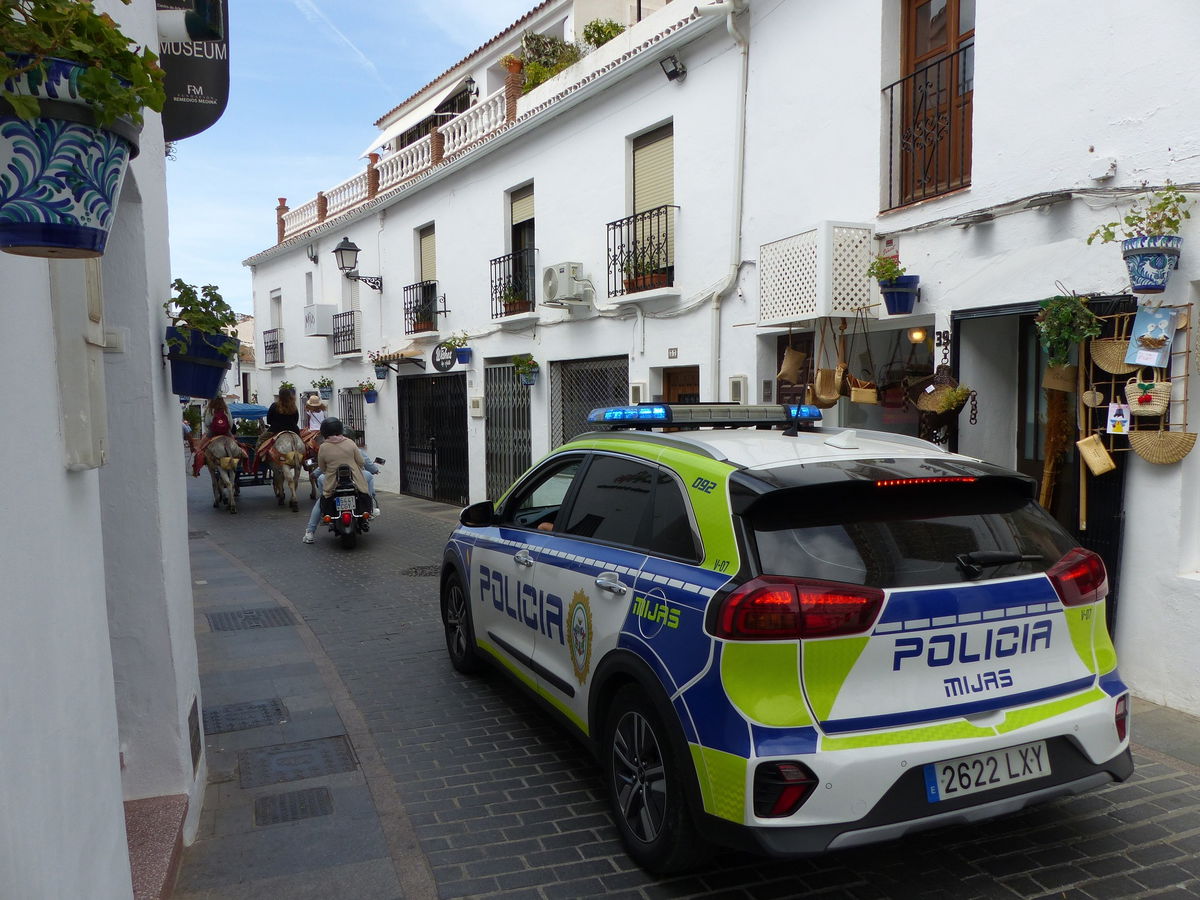
Guardia Civil handed her case over to a specialised crime unit- A local lawyer says he knows of at least two other similar cases in CDS | Credits: Shutterstock
A 32-year-old Swedish expat woman living in Mijas found herself at the centre of a jaw-dropping property fraud after returning from a trip abroad to discover her Costa del Sol home had been sold behind her back using a forged power of attorney.
The woman, who had lived quietly on the coast for more than two decades, had no reason to suspect that while she was abroad last December, a gang of opportunistic fraudsters were finalising the sale of her villa using counterfeit legal documents, a Swedish news outlet first reported the incident via an X post on May 31st.
“When the 32-year-old Swedish pregnant woman returned to her home in Mijas, she discovered that it had been sold. The Swede had been the victim of a staggering real estate scam,” the outlet wrote on the social media platform.
The house, located in the Riviera del Sol area, was transferred to the name of a third party after a notary approved a power of attorney that the woman never signed. The perpetrators not only forged her identity documents but also fabricated the notarised authorisation that granted them full rights to sell the property, according to a Swedish Magazine article.
Euro Weekly News spoke with Diego Echavarria, from German-Spanish legal firm Fairway Lawyers. “Criminals had broken into her home previously and stolen her documents, which is how they were able to sell her property illegally by impersonating her,” said Echavarria, who also said he is aware of at least two other similar cases in the Costa del Sol.
Strangers sold her home while she was gone
When she returned to Spain, she found strangers in what was once her home. Her belongings were gone, the fraudsters changed the locks, and the new “owners” insisted they had legally purchased the property. That’s when the nightmare began.
She went to the Guardia Civil, who opened an investigation. What they uncovered was a carefully orchestrated operation involving falsified documents and suspected international collaboration. The Guardia Civil decided to hand over this case to a specialist police unit dealing with property crime and legal document fraud.
Sources close to the case say the fake power of attorney had been drafted in Marbella and used in Fuengirola. Investigators are now working to trace the notary who approved the paperwork, as well as those behind the shell buyer who briefly took ownership of the property before the criminals flipped and sold it again to another buyer.
Beware! This is not an isolated case
This isn’t an isolated case, the Swedish outlet stated. A Málaga lawyer said it’s the third case he’s heard this year so far. Legal experts on the coast have noted a recent uptick in property fraud cases involving foreign residents with assets left unattended for extended periods.
Criminal gangs on the Costa del Sol have turned absentee property owners into prime targets, exploiting the gaps left by distance, trust, and a complex legal system. With forged powers of attorney, counterfeit IDs, and fabricated signatures, they push through fraudulent sales or secure remortgages—often without raising so much as an eyebrow until it’s far too late.
These operations are meticulously planned, executed quietly, and devastating in their aftermath. For the Swedish expat homeowner, the personal consequences have been nothing short of catastrophic, particularly given that she is a mother.
She’d be living there for over 20 years
This was not just a house—it was her home, the space where she had built a life over more than 20 years. To return and find strangers inside, her possessions gone, and her name erased from the deed was more than a shock. It was a violation of the most profound kind. The emotional toll has been heavy. What should have been a straightforward matter of ownership has spiralled into an exhausting, grinding legal battle.
Her solicitor is now immersed in the slow, painstaking task of unravelling the fraud. But reversing a property transfer in Spain—even one based on forged documents—is neither quick nor straightforward. Every step is hindered by mountains of paperwork, official delays, and the inertia of a system not designed to move swiftly. Until the courts intervene, the house remains legally in the name of a second buyer—someone who might have purchased it in good faith or perhaps as part of the broader scheme. No one knows for sure.
She, meanwhile, is without a roof over her head and fearing she will lose her unborn child. Stripped of legal rights to her own home, she’s stuck in a paralysing state of limbo—watching from the sidelines as the slow wheels of justice turn.