
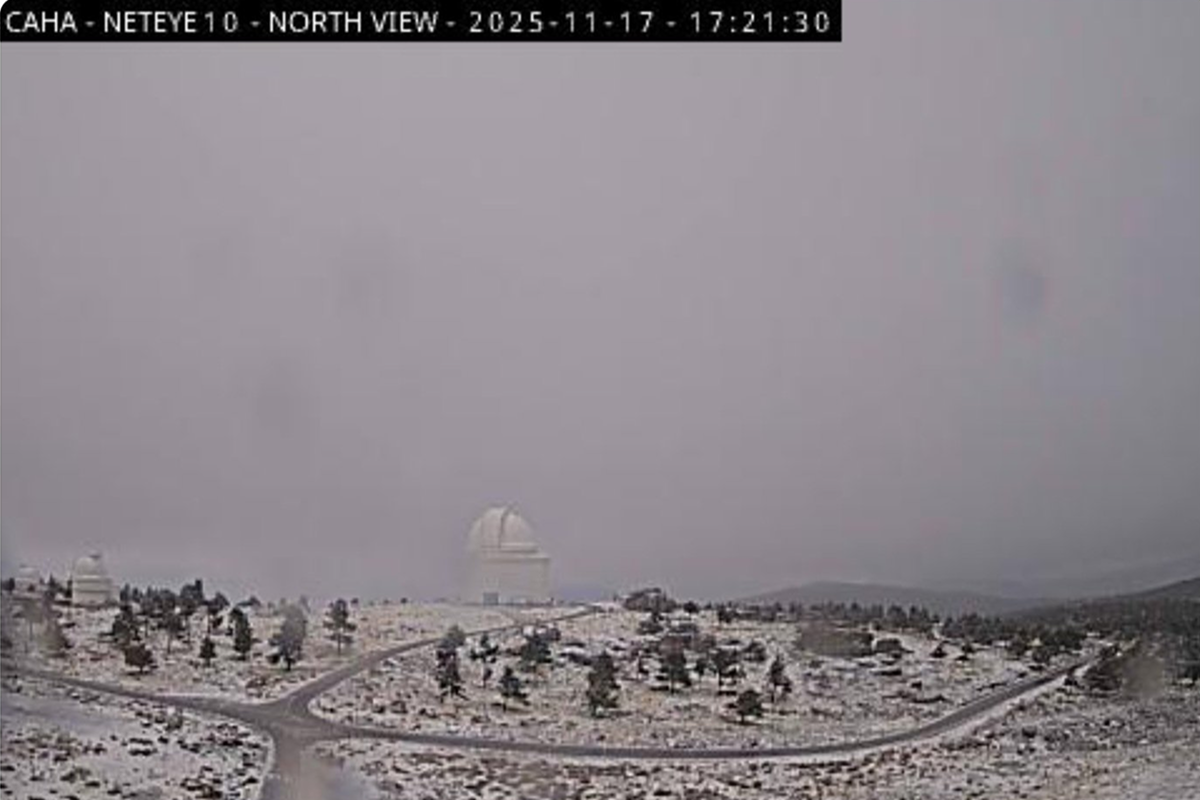
Views of the snowfall at the Calar Alto Astronomical Observatory.
Credit: Calar Alto Astronomical Observatory – webcam.
The first autumn snow at Calar Alto has arrived, turning Almeria’s highest observatory into a white plateau while much of the province stayed grey and wet. On Monday November 17, the first autumn snow at Calar Alto coated the 2,168-metre summit and its telescopes, marking the province’s first proper taste of winter. For many locals and expats, it’s the signal that snow season in Almeria’s mountains has begun.
First autumn snow arrives at Calar Alto
The first autumn snow at Calar Alto followed a cold front that swept across Almeria’s sierras, bringing heavy rain to the coast and snow above 2,000 metres.
A fresh white layer settled around the Calar Alto Observatory and surrounding peaks in the Sierra de los Filabres, whilst nearby ranges, including parts of Sierra de Gador and the Almeria flank of Sierra Nevada, also woke up to a “manto blanco”. Temperatures dipped close to 0ºC at summit level, with even lower readings reported in the highest parts of the province.
For an observatory better known for clear, dark skies and desert views, the sudden transformation into a winter landscape is still a small annual event.
Why the snow matters for locals and visitors
For residents of coastal towns like Mojacar, Vera and Roquetas, Calar Alto is one of the closest places to “go and see the snow” without leaving the province. Families head up to the plateau for sledging, photos and a very different view of Almeria.
The snow also underlines how varied the province really is: semi-arid beaches and greenhouses below, mountain winter above. For international readers used to thinking of Almeria as “all sunshine”, first autumn snow at Calar Alto is a reminder that winter driving, clothing and planning still matter here.
How to experience Calar Alto safely in winter
If the first photos have you planning a trip, a little preparation goes a long way:
- Check conditions first – look at the Calar Alto weather station and webcams, plus regional traffic updates for the A-1178 mountain road.
- Dress for real cold – at 2,000+ metres, wind, ice and negative temperatures are common even when the coast feels mild.
- Consider a guided astro visit – on clear nights after a snowfall, stargazing tours can combine snow underfoot with some of Europe’s best skies.
Always follow official advice on road closures, chains and parking near the observatory.
What happens next in the snow season?
If recent years are any guide, this first autumn snow at Calar Alto will not be the last. Further cold fronts through December, January and into spring often bring repeat dustings – and the occasional heavy dump that closes the road entirely.
At the same time, long-term data suggest warmer, slightly drier winters could slowly reduce how often these early snows appear. For now, though, Almeria’s mountains have their first white postcard of the season – and locals are already watching the forecasts for the next one.
Discover more local news and upcoming events across Almeria.