
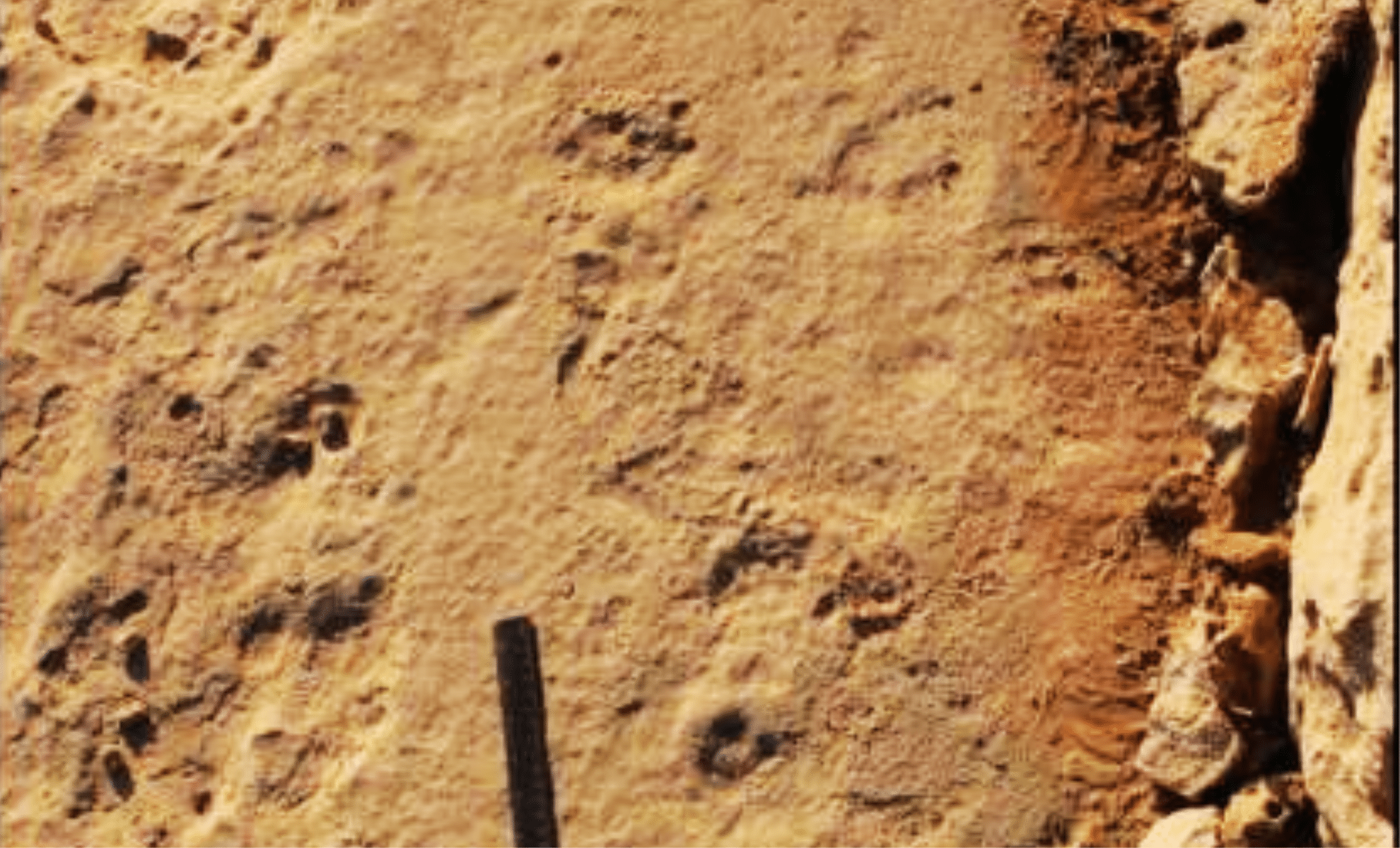
Researchers have recently uncovered fossilized footprints of prehistoric elephants in Murcia, Spain, offering a rare glimpse into the distant past. These footprints, the first vertebrate traces from the Quaternary period found in the region, provide valuable insights into the behaviors of ancient species and the environments they inhabited. This discovery not only deepens our understanding of prehistoric wildlife but also highlights the complex relationships between animals and the ecosystems they lived in.
The Discovery of Prehistoric Elephant Footprints: A Window Into the Past
The recent identification of prehistoric elephant footprints in the fossilized dunes of Murcia, Spain, marks a significant moment in paleontology. This discovery is not only the first of its kind in the region but also reveals valuable information about the Quaternary period. The study, which was published in the journal Quaternary Science Reviews, involved an international team from the University of Seville, the Andalusian Institute of Earth Sciences, and the University of Huelva. The footprints were found in what were once active sand dunes, offering a snapshot of the landscape during a time when elephants roamed the Earth.
Scientists believe the footprints belong to a species of elephant that existed thousands of years ago, during the Quaternary period. The sand dunes where these footprints were discovered were once coastal, a part of the broader ecosystem inhabited by these prehistoric animals. The prints not only help confirm the presence of elephants in this part of Spain but also offer a glimpse into the size and movement patterns of these ancient creatures. By studying the depth, length, and width of the footprints, researchers can reconstruct the behavior and mobility of these early elephants.

The Role of Fossilized Footprints in Understanding Prehistoric Life
Fossilized footprints offer more than just a glimpse of the creatures that made them—they provide invaluable data for understanding ancient ecosystems. For paleontologists, footprints are often better indicators of how animals lived than skeletal remains. Unlike bones, footprints reveal the interaction between animals and their environment, such as their walking patterns, speed, and the type of terrain they traversed. In the case of these elephant footprints, the footprints help scientists understand how these animals moved across the landscape, including whether they traveled in groups or individually.
Additionally, footprints provide clues about the climate and landscape of the time. The sand dunes of Murcia, where the footprints were found, were part of a coastal area with a variety of ecosystems, ranging from sandy shores to more vegetated inland areas. This discovery highlights the diversity of environments that prehistoric elephants inhabited. It also raises questions about how these animals adapted to changing climates and what role such environments played in their survival.
The Quaternary Science Reviews study emphasizes that while such discoveries are rare, they are instrumental in piecing together the broader picture of ancient life. Footprints, as opposed to other fossilized remains, have the unique advantage of preserving direct evidence of animal behavior, allowing scientists to analyze movement and social interactions within prehistoric populations.
Uncovering the Past: How Fossils Reveal the Habitats of Ancient Elephants
Elephants, as massive and migratory animals, left distinct traces on the landscapes they roamed. The footprint discovery in Murcia allows researchers to understand how these ancient animals navigated different terrains, particularly sandy and coastal areas. The footprints suggest that these elephants were moving through an environment that combined dry and wet conditions, likely following water sources. This aligns with the known behavior of modern-day elephants, which are known to travel to waterholes and riverbanks in search of sustenance.
The finding also highlights the fact that prehistoric elephants, much like their modern relatives, were influenced by their environment. Climate change during the Quaternary period would have shaped the distribution of these animals, forcing them to adapt to different habitats and potentially contributing to their migration patterns. The fossilized footprints provide essential clues about how these elephants adapted to changing climates, particularly during the ice ages when dramatic environmental shifts occurred.