
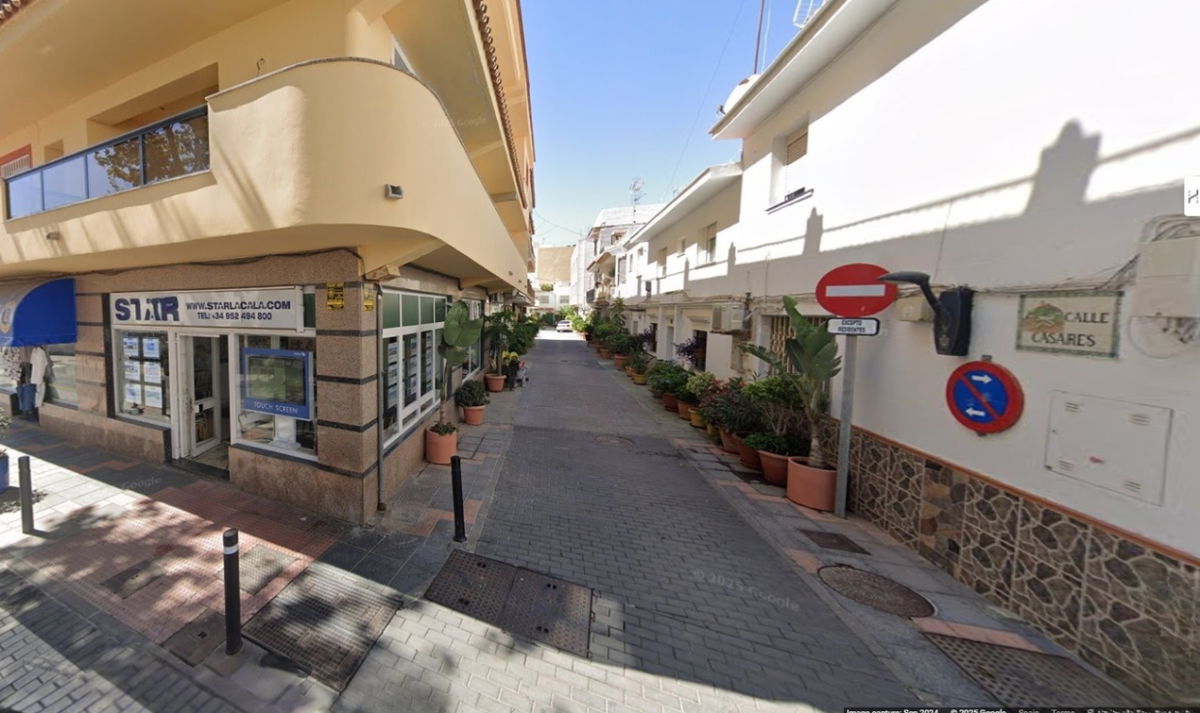
Anne Sewell’s flat she calls home is on the left-hand side of this street in Cala Mijas | Credits: Google Maps
Anne Sewell has spent over twenty years building a life on the Costa del Sol. Originally from England, she relocated to Spain with her son after spending years living in Malawi, Zimbabwe, and South Africa. Although she rents her unit, the attempt by scammers to steal her identity and occupy or sell the flat illegally worried her and her landlord.
Ms Sewell calls her apartment in La Cala de Mijas home—a place filled with memories, personal photos, and the quiet rhythms of daily life. In an exclusive interview with Euro Weekly News, she shared how a scammer’s approach shocked her awake to a hidden threat spreading across southern Spain.
She decided to share her story with EWN after reading the story of the pregnant Swedish expat who returned from a trip abroad to find others illegally occupying her home. Anne’s story started subtly. One morning, a man pressed her buzzer, inquiring about apartment 3C. He told her it was listed on an auction site and insinuated there were illegal rentals. Confused, Anne dismissed it at first.
‘Two flats were supposedly auctioned off’
The next day, a young woman knocked, claiming the same—her apartment had been sold online. Anne asked to see the listing on the woman’s phone, but it appeared sketchy and incomplete. When she searched herself, nothing showed up. Still, the story nagged at her.
Concerned, Anne asked the intruder to send the link via WhatsApp. She forwarded it to her landlord, who confirmed it was a scam and drew up a lawyer’s warning letter on her behalf.
Sewell did not think much of the incident, although she did report it immediately to her landlord, who also notified the authorities. However, Sewell might not be aware that the suspects could have been after her key personal data—copies of her passport, IDs, and even banking details—to forge documents, pose as her, and arrange a fraudulent sale while she was travelling.
Echoing Swedish Costa del Sol expat’s case
Anne’s case echoes that of a Swedish expat who returned from a holiday to find her Costa del Sol villa had been sold and re-keyed via a forged power of attorney. Her experience was devastating—she ended up in the hospital from the emotional trauma of losing her home. Across the region, cases are emerging of similarly fake sales and empty-home fraud.
These scams are just one side of a broader issue. Illegal occupation—whether through disregard, desperation, or opportunism—is on the rise across Spain. Ministry of the Interior data show that 16,426 cases of squatting were recorded nationwide in 2024, representing a 7.4 per cent increase from the previous year.
45 illegal home invasions daily
That’s an average of 45 illegal home invasions every single day. Although a small fraction of the 27 million homes in the country, the toll is human, not statistical.
Regions like Catalonia lead the charts with 42 % of occupations. However, coastal provinces such as Málaga, Alicante, and Valencia also experience thousands of incidents each year. Homeowners often find that squatters can delay eviction for months, triggering stress, financial costs, and a loss of trust in the system.
Anne’s scare comes at a time when Spanish courts are trying to expedite the process. The 2025 Anti‑Okupa Law allows fast-track evictions within days for criminal squatting. But it does nothing to protect against forged title deeds, phoney power of attorney documents, or falsified sales transactions.
That leaves victims like Anne vulnerable. The fake‑sale route is often executed while a homeowner is overseas, their personal documents having been leaked or stolen beforehand. The scammers impersonate them before notaries, forge documents, and list the property for auction or sales websites. The victim, unaware, returns to find strangers moving in—or a deed in someone else’s name.
An intricate legal battle
Recovering the property through the courts can become a slow and intricate legal battle. Owners must prove documents were forged, challenge false notarisations, and face bureaucratic delay, while the so‑called buyer may have resold or refinanced the title.
Anne says she still works as a travel and entertainment writer. Her life overseas and the time she spends on assignments put her at risk—scammers know she travels and may leave her flat unattended. She now checks on her property registry, encrypts documents, and keeps legal advisories close at hand.
“It felt like a punch to the gut,“ she told us. “This is where I live, where I’ve built my life. To think they could pretend to be me and take it—it’s terrifying.” She’s since installed security cameras, changed payment methods, and hired a legal team.
Her landlord has posted signs warning neighbours, and she shares tips with friends: “Never let your guard down. If someone asks about your flat, write down their name. Ask to see the documentation. No one should be making decisions about your home without your say-so.”
The human impact on victims can’t be overstated. Episodes of property fraud often leave homeowners mentally drained and financially strained, dealing with lawyers, notaries, debt collectors, and emotional loss. Even after a court rules in their favour, the resale or eviction of unscrupulous occupants can take months. And the reputational damage in local communities lingers.
Structured property fraud
Outside tourist hotspots, some criminal rings have turned property fraud into a structured operation. In Tenerife earlier this year, nineteen suspects were arrested for forging contracts and selling eighteen properties—including a €1.3 million chalet—often using shell companies and fake IDs. The estimated total of fraud is nearly €2.9 million. Buyers were left in limbo, sellers robbed, and investigators scrambled for evidence.
With nearly 3.8 million empty homes in Spain, the formula is tempting: target absentee owners, forge documents, sell, remortgage, and repeat. Banks get the money, buyers gamble, and legitimate homeowners lose everything.
Solutions demand coordination: notaries alerting owners before signing documents, centralised registration of powers of attorney, mandatory ID checks at all stages of sale, and instant alerts when properties are listed in public registries. Law enforcement requires well-resourced units to trace fake transactions quickly. Real estate agents and property platforms should verify listings and flag suspicious activity.
For now, Anne’s road remains unsettled. She’s taken advice, strengthened her defences, and kept her papers secure. But the fear might stay, although she doesn’t show it. But does she still face the risk of losing her flat the next time she goes out on a trip?
Her advice to expats and long-term residents is simple: treat your documents like gold, watch your registry entry, question every unexpected visitor, and never assume your home can’t be snapped up in your absence. Because, as she discovered, fraud doesn’t need a break-in—it just needs your paperwork left exposed.