
When I arrived in Spain over a decade ago, one of my main focuses, aside from improving my Spanish, was to learn about local gastronomy—by eating, of course. I came to the country as an assistant English teacher and was happy there were many Spanish teachers eager to socialize in the evenings and on weekends; they, too, were far from their hometowns, family, and friends. Almost every week, there was an invitation to go out for tapas or to lunch, or someone was hosting a dinner party. I always said yes.
Imagine my heart’s content when we went to a neighborhood restaurant, and I was introduced to the concept of menú del día or “daily menu,” created for workers to have an affordable, accessible lunch.
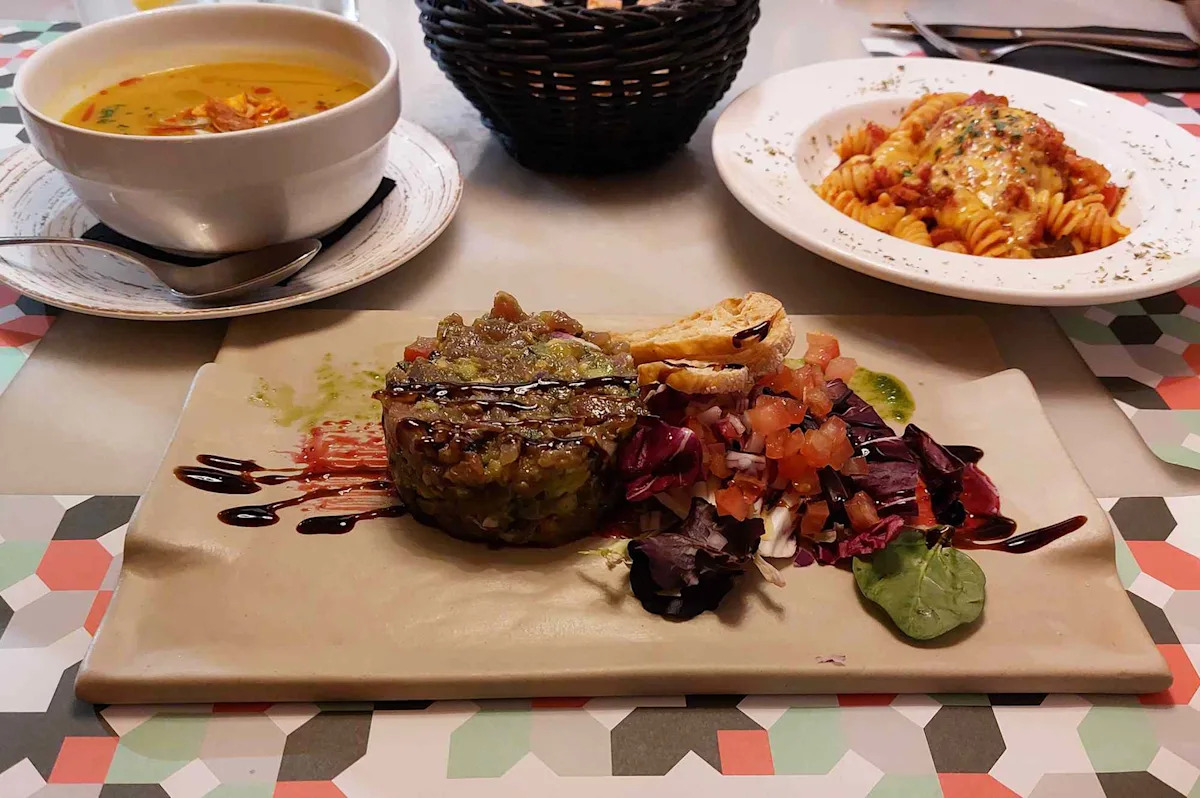
A menú del día includes a starter, an entree, and a dessert—often a piece of fruit, yogurt, flan, or even tartas caseras (homemade cakes)—plus bread, and drink for a fixed price. Typically, there are four to eight dishes per category, though I’ve dined at restaurants where the daily menus only had two dishes to choose from per section, and upward of 15.
Prices range from 10 to 20 euros—higher, if it’s a more elevated place. When an American friend visits, I always take them for lunch, and they’re wide-eyed and surprised that a three-course menu is reasonably priced. I don’t eat a menú del día every week nor every month, but I’ll admit, I’m always excited when there’s an opportunity to dine midday.
In the Basque Country, Andalusia, Madrid, and other regions, it’s typical if someone orders wine with the menú del día, they’ll be asked if they prefer white or red, and then a bottle will be brought to the table—though this varies from restaurant to restaurant. Many restaurants in Catalonia don’t include drinks in the price, and sometimes select dishes will incur a supplemental charge.
The first time I ordered a menú del día with my mom while she was visiting me in the Basque Country, she was surprised when a bottle of wine appeared on our table. “I didn’t order a bottle,” she said. “Don’t worry. There won’t be a surprise charge. It’s part of the daily menu; it’s the custom here. Enjoy it,” I responded. And she happily obliged, sipping her wine as if she had just hit the restaurant lottery.
So how do you know if a restaurant offers a menú del día? Most will proudly display a handwritten menu alongside their other menus, or it will be written on a chalkboard hung outside the restaurant or on the street, getting your attention as you walk by. There have been occasions where I’m enticed by the menu, walk in, and ask for a table, only to have the server bring regular menus, and I specifically have to ask for the daily menu.
Just make sure you go to the restaurant hungry. There have been too many times I’ve eaten everything on my plate, and by the time dessert comes, I’m too full.
Read the original article on Travel & Leisure