
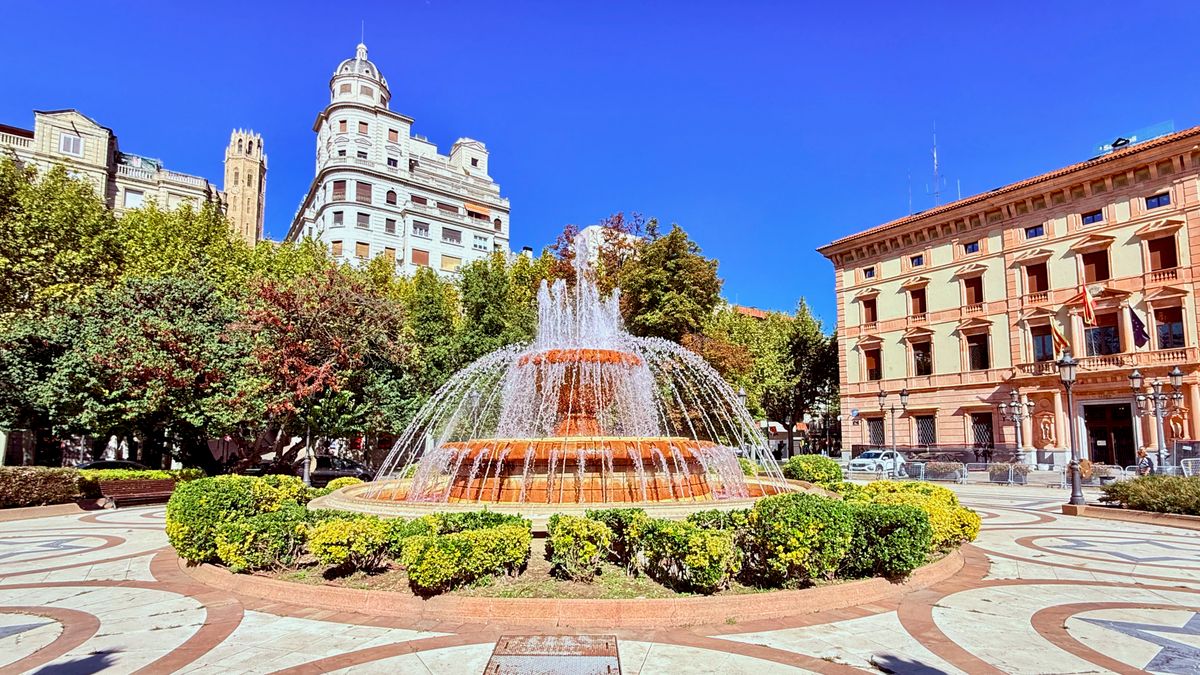

Just an hour by train from Barcelona, Lleida offers a low-key, lived-in magic that sneaks up on visitors. Part university buzz, part old-world Catalan calm, this city isn’t trying to impress anyone, which is exactly why it does.
At the heart of the city stands the University of Lleida, one of Spain’s oldest universities, founded in the 1300s. The institution gives the city a youthful pulse with smart energy, though not a party vibe. This creates a unique atmosphere where academic vitality meets traditional Catalan life.
The historic center is wonderfully walkable, anchored by Carrer Major, the city’s main pedestrian artery. Visitors will find a blend of independent boutiques and major chains as well as bakeries, bookshops and family-run stores. The standout area surrounds Plaça de la Paeria, where civic life, cafés and small markets naturally collide.
As evening rolls in, street musicians set up near plazas and corners with guitars, soft vocals and sometimes jazz or Catalan folk. Locals pause, kids dance and nobody rushes. It’s this unhurried rhythm that defines Lleida’s charm.
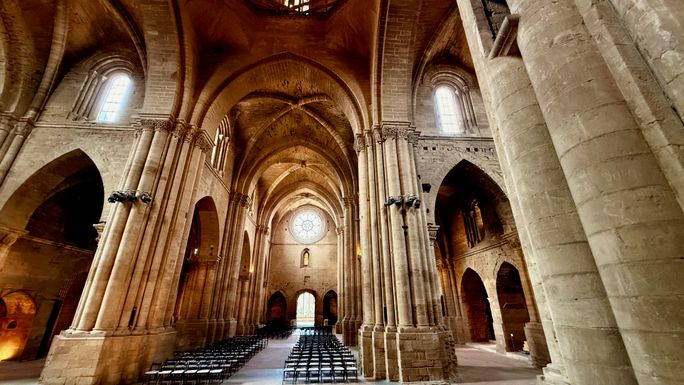
Seu Vella (Photo Credit: Janeen Christoff)
Seu Vella: The Soul of Lleida
Towering above the city center is a cathedral that doesn’t perform but simply stands. Unlike Barcelona’s showstopping cathedrals, Seu Vella is quieter, moodier and deeply Catalan—a place shaped as much by loss and survival as by faith. If Barcelona is a showstopper, Seu Vella is the slow burn that stays with visitors long after they leave.
The “Old Cathedral” isn’t just a religious building but an entire fortified hilltop complex sitting on the Turó de la Seu Vella, towering above Lleida like it’s still on medieval guard duty.
Construction began in 1203, blending Romanesque structure with early Gothic ambition. But Seu Vella’s story took a dramatic turn in 1707 after the War of Spanish Succession, when the cathedral was seized and converted into a military barracks. For 250 years, there was no worship, just soldiers, horses and cannons. The site wasn’t rescued and restored until the 20th century, when it was slowly reimagined as a cultural and historic landmark.
The open-air cloister serves as the showstopper. Massive Gothic arches frame the entire Lleida plain with no stained glass, just sky, wind and light. Designed as both a spiritual space and a lookout, the cloister makes visitors feel as though medieval monks and soldiers could stroll by at any second. Goosebumps are guaranteed.
The bell tower is worth the climb for those without claustrophobia concerns. The cathedral’s dual-purpose design—sacred and military—is rare and gives the site its unmistakable gravity, especially apparent from atop this perch.
Visiting Tips
- Go late afternoon when golden light in the cloister creates cinematic magic
- Bring layers as it gets breezy up on the hilltop
- Pair the visit with La Suda, the castle next door that completes the historical story
- Slow down and linger rather than treating it as a checklist stop
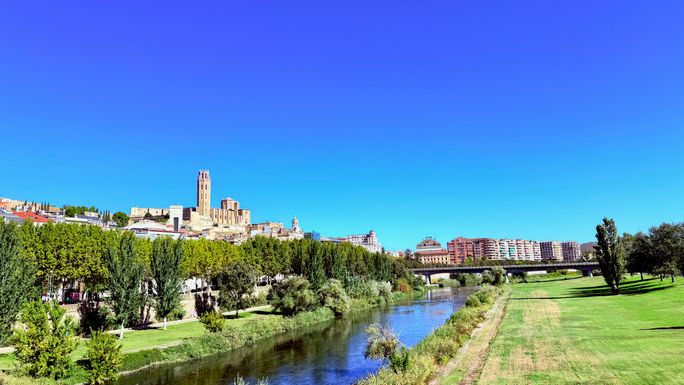
The Segre River, Lleida, Spain (Photo Credit: Janeen Christoff)
The Segre River: Lleida’s Natural Divide
The Segre River shapes Lleida in a fundamental way. On one side lies the historic city center with Seu Vella rising dramatically above it all, shopping streets, markets, cafés and music. On the other side sits the university zone with residential neighborhoods, green spaces and calmer, daily-life energy.
Instead of heavy development, Lleida lets the Segre exist naturally. Along the banks, visitors will find wide walking and cycling paths where locals jog, stroll and walk dogs. Students decompress between classes, families come out at sunset and the pace of life noticeably slows. The riverbanks are perfect for morning or evening strolls.
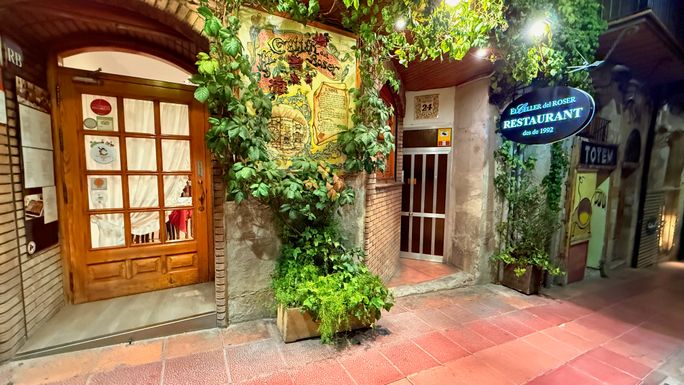
El Celler del Roser (Photo Credit: Janeen Christoff)
Where to Eat
El Celler del Roser: At the heart of Lleida’s historic old town sits a local institution that’s been quietly winning hearts and palates for over three decades. El Celler del Roser is beloved by locals and visitors alike for its deep roots in Catalan cooking, warm service and thoughtful wine pairings—the kind of place that turns a meal into an experience worth remembering.
The menu celebrates Catalan interior cuisine with regional ingredients including caracoles a la llauna (snails), embutidos (artisanal sausages and cold cuts), local vegetables and traditional preparations given a contemporary touch. Wine pairings often highlight Costers del Segre, the local Denomination of Origin, making it a great way to sample the region’s wines alongside its flavors.
Restaurant L’Aplec: Located in the Parador de Lleida, this unique dining space occupies a converted convent. Traditional panadons—large Catalan empanadas—are among the Catalonia foods highlighted by visitors here.
Where to Stay
Hotel Real Lleida: For travelers seeking a classic, centrally located stay focused on comfort, convenience and simple Spanish hospitality, Hotel Real Lleida delivers. The hotel sits on Avinguda de Blondel, literally steps from the river Segre, the historic center and the lively shopping and dining streets.
Guests are about 5 to 10 minutes on foot from the old town and cathedral area, walking distance from markets, museums and cafés, and close to public transit and the bus station. All of this makes it a practical base for exploring Lleida’s city and culture rhythm without needing a car.
This is a 3-star hotel with a simple, welcoming feel—not a historic mansion like a Parador, but a reliable, everyday favorite for travelers.
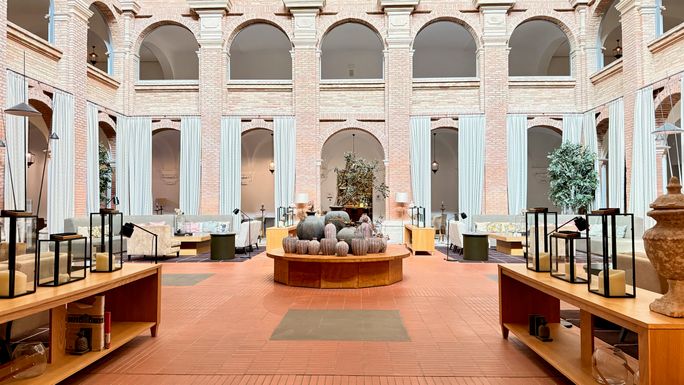
Parador de Lleida (Photo Credit: Janeen Christoff)
Parador de Lleida: The Parador de Lleida occupies the old Convento del Roser, a religious complex whose origins date back to the 17th century. There are about 53 rooms, including standard doubles, superior rooms and suites, all arranged around a three-story central cloister that’s the heart of the hotel.
Rooms combine modern conveniences like air conditioning, flat-screen TVs, free Wi-Fi and minibars with subtle nods to the building’s heritage. Common spaces feel serene and elegant, with neutral tones and natural light enhancing the sense of calm.
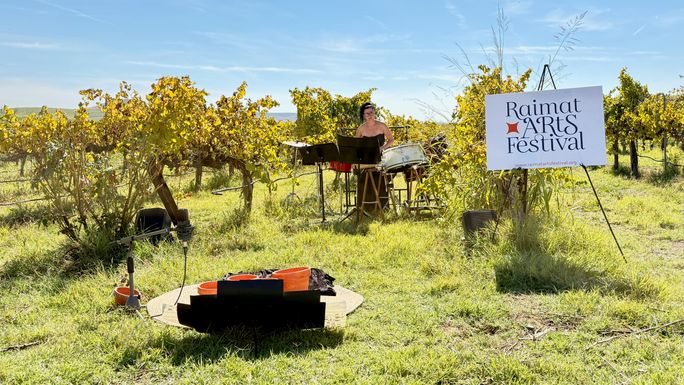
Raimat Arts Festival (Photo Credit: Janeen Christoff)
The Wine Region
Sitting just about 14 km northwest of Lleida in Catalonia, Raimat isn’t just a wine village but a foundational force in the broader Costers del Segre wine region. The region’s continental climate—hot summers, cold winters and big temperature swings—combined with limestone soils creates intense, expressive wines across reds, whites, rosés and sparkling wines.
Raimat didn’t just make wine but helped found the Denominación de Origen (DO) Costers del Segre, officially established in the 1980s. The estate’s influence was so significant that Raimat became a subzone within this DO.
Raimat Arts Festival
Each October, the Raimat Arts Festival brings together classical music, wine tastings and local cuisine in an intimate, multisensory experience set among the vineyards and historic buildings of the estate. The festival has established itself as the world’s first water positive cultural event, offsetting its water footprint and contributing additional water resources back to the ecosystem.
From Wine Grapes to Olive Oil
Cuadrat Valley is a standout extra-virgin olive oil producer in the Lleida area, right in the heart of the Les Garrigues olive-growing region, one of Catalonia’s most respected olive-oil territories.
This family-run olive oil estate is based around L’Albagés and Juncosa, within the Les Garrigues PDO (Protected Designation of Origin) area south of Lleida. Its oils are extra virgin and 100% Arbequina, the signature Catalan olive variety known for elegant, fruity oils.
The estate blends deep local roots with careful, modern production. Their olive mill is one of the more technically advanced in the region, built to preserve freshness and quality from harvest to bottle.
Planning Your Visit
Lleida offers the perfect combination of accessibility and authenticity. The city provides an escape from tourist crowds while delivering genuine Catalan culture, impressive historical sites, excellent food and wine, and an atmosphere that feels welcoming rather than performative.
Whether exploring the dramatic heights of Seu Vella, strolling along the Segre River, savoring traditional cuisine or discovering world-class wines and olive oils, visitors find a city that rewards those who take the time to truly see it.
For the latest travel news, updates and deals, subscribe to the daily TravelPulse newsletter.