
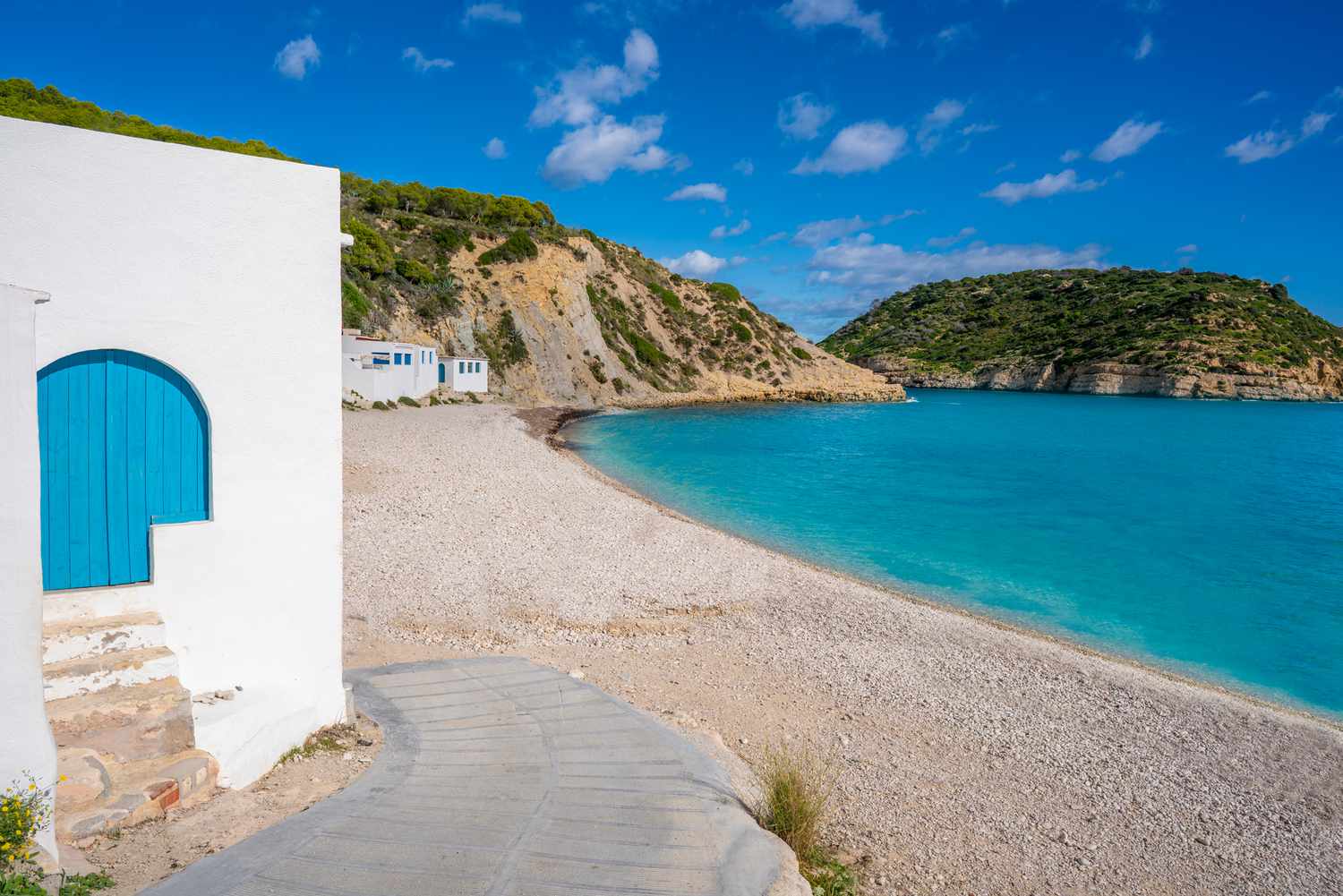
Top 5 Can’t Miss
- Stay at a thoughtfully curated boutique property like the Nomad Hotel, where every room has a private balcony overlooking the water.
- Seek out secluded local-recommended coves Cala Sardinera and Cala del Francés, or find your own secret beach.
- Hike Montgó massif for soaring views of the coast.
- Sip cocktails at La Siesta, a laid-back beachfront spot.
- Try local dishes like cocas and paella, or splurge at Michelin-starred restaurants such as BonAmb.
In Spain, there’s no shortage of beach towns where you’ll find sandy stretches or rocky coastlines and crystal-clear, turquoise water. But these beautiful destinations haven’t exactly been kept secret. So, you’ll also find crowds—and lots of them. Instead of piling up with other tourists at beaches in major hubs like Barcelona or Marbella, do as the locals do and escape to Xàbia.
This Costa Blanca town has cemented itself as a summertime getaway for Spaniards, whether they’re in search of sunny days spent lounging on the beach or epic adventures that involve hiking to the top of a mountain for coastal views. Against all odds, it’s remained under the radar, even as cities like Valencia to the north, Alicante to the south, and the Balearic Islands off the coast have boomed in popularity in recent years.
Clara Puig, owner of local Michelin-starred restaurant Tula, said it best: “Xàbia is a diamond of the area.” After settling in Xàbia about a decade ago, she has embraced the town for its quiet luxuries, like sneaking away to hidden beaches called calas and staying at boutique accommodations with fewer than 10 rooms. “You can be at the beach, and then 20 minutes later, climb an amazing mountain,” says Puig. “That’s what makes Xàbia so special: You really have everything.”
Best Hotels & Resorts
Courtesy of Nomad Hospitality Group.
Nomad Hotel
Dieter Roelen and Monica Mascaros, the husband-and-wife duo behind Nomad Hotel, spent 20 years living like nomads and traveling around the world. When they were ready to slow down, they channeled that sense of adventure into a 14-room hotel with eclectic bohemian details collected during trips to Morocco, the Greek islands, Mexico, and beyond. Located steps from Platja de la Grava, every room offers a waterfront view from a private balcony, and about half of the accommodations are suites with two bedrooms. The property also gives guests local intel, thanks to a beautifully hand-drawn guide to the town, and access to electric scooters to zip around on.
Ritual de Terra Resort & Spa
Tucked away from the main stretch of restaurants and hotels along the coast, Ritual de Terra offers a secluded place to unwind. The boutique hotel has 42 rooms, and the majority of accommodations are suites with a separate seating area and private balcony. Don’t miss the on-site spa and refreshing outdoor pool—both rare amenities in this no-frills beach town.
Villa Dora
Villa Dora is a small, adults-only escape with just nine rooms. This classic Mediterranean property is decorated with antique furniture, elegant chandeliers, and thoughtful touches like fresh flowers and curated art. Its jewel, however, is the pool, complete with striped double chaises and an epic view of the coast down below.
Best Things to Do
LUNAMARINA/Getty Images
Explore tucked-away beaches.
Xàbia is home to two major beaches: Platja de l’Arenal, a sandy stretch with all the amenities of a big-time vacation spot, and the smaller Platja de la Grava, a rocky area along the port that’s more popular with locals. Visitors can spend their entire trip switching off between the two, but be sure to take some time to explore the rocky cove beaches called calas that have made Costa Blanca famous.
Thanks to the geography of these special hideaways, the vibrant blue water of the Mediterranean Sea is typically quite calm, making for an idyllic place to take a dip or even snorkel. While some calas are accessible by car, others can only be reached by a short hike—that’s where visitors will find the real magic and privacy. Some of the most popular options are larger beaches like Cala Granadella, Cala Portixol, and Cala Blanca, but Cala Sardinera and Cala del Francés are popular with locals for their secluded feel. “[They are] small, intimate, and amazingly clean,” says Monica Mascaros. “Because these calas can only be reached on foot, they’re not crowded, even in the summertime.”
Hike in Montgó Natural Park.
No matter where you are in Xàbia, look up and you’ll see an imposing mountain towering above. That’s Montgó, the nearly 2,500-foot mountain located inside Montgó Natural Park. The park offers several hiking paths that explore caves along the base of the mountain and a trail that leads to the nearby town of Dénia. But the most popular hiking route takes visitors all the way to the summit. Expect a three- to four-hour trek of moderate difficulty, but the majestic views of the rocky coastline from the top are worth the trip.
Visit Jardin de L’Albarda.
With more than 700 native plant species, Mascaros calls Jardin de L’Albarda “the most beautiful private Mediterranean garden in Spain.” The lush gardens are spread across about a dozen acres and feature a mix of styles, including a traditional Valencian space with Moorish influences, sprawling greenhouses, and pergolas covered in swaths of roses. For Mascaros, these grand gardens feel unexpected for the area, making visitors feel like they’ve stumbled upon something special.
Go kayaking or paddleboarding.
Costa Blanca is stunning from dry land, but exploring by water offers an opportunity to see the coastline from a new perspective. So, let tour companies like Kayak Javea help you get out on the water with a guided kayak or paddleboard excursion. “I always say Xàbia is very different depending on whether you experience it by land or sea,” says Puig. “It’s special and something everyone should experience.” Exploring by boat or paddleboard is also a great way to find hidden areas that feel like your own private beach.
Best Nightlife
La Siesta
Xàbia has maintained its low profile, so you won’t find major beach clubs here. But that doesn’t mean the fun stops at sundown. Instead, enjoy laid-back spots like La Siesta, where you can sip cocktails or order wine by the bottle while lounging in a chic, all-white beachside area.
Chabada
For a livelier scene, head to the main drag along Platja de l’Arenal to find Chabada. Settle in for some of the area’s best cocktails before the venue becomes an all-out dance party with a DJ on weekend evenings.
Best Restaurants
Trinquet
You can’t leave Xàbia without feasting on some tapas. So, try the spread at Trinquet, a cozy restaurant in the Old Town, the historic center where some facades date back to the medieval period. Valencia and the greater Costa Blanca region are known for paella, so order a pan along with some seafood like grilled squid and red prawns. Just be sure to call ahead, as many restaurants in Xàbia require reservations and preorders for paella.
BonAmb
Since earning two Michelin stars (in 2013 and 2016, respectively), BonAmb has helped Xàbia become a destination for top-notch dining. The restaurant offers an ambitious tasting menu focusing on a different theme each season, so guests can return year after year for a creative new experience.
Tula Restaurante
Tula Restaurante is another Xàbia spot that has earned Michelin recognition with one star. Located along the bustling stretch of Platja de l’Arenal, the restaurant offers high-caliber dining that changes with the seasons and highlights local ingredients. “Our restaurant is like our living room, and we want you to feel like our guest,” says Puig, the restaurant’s co-owner. Though the dining room is more relaxed, you can trust each dish is delicious—Puig and chef Borja Susilla, her husband, met while working at Quique Dacosta, a three-Michelin-starred restaurant in the nearby town of Dénia.
Ca Aleix
Another favorite among locals like Puig is Ca Aleix. Chef Alejandro Crespo has created a menu that dials up traditional tapas. Puig says a coca, a traditional, savory pastry of the region, should be on every table. Her favorite is the coca de dacsa, which comes with tuna, grated tomato, onion, and egg, plus an anchovy on top.
How to Get There
Wirestock/Getty Images
Visitors will want to fly into Alicante-Elche Miguel Hernández Airport (ALC). Xàbia is located a little over an hour by car from there, and Beniconnect offers shuttles between Alicante and Xàbia for those without a rental.
Xàbia is also an easy trip from other major cities in Spain. It’s less than a two-hour drive south of Valencia, or you can take a bus with Alsa, which offers direct trips between the two destinations.
Best Time to Visit
gdagys/Getty Images
Xàbia shines in the summer, with August being the busiest month. But the coastal town is stunning year-round and stays warm through the spring and fall, so visitors may want to take advantage of pleasant shoulder-season days on the coast. “In recent years, it feels like the season never ends,” says Puig.
Getting Around
Renting a car is a great choice if you want to explore Xàbia and its surrounding areas with ease. But if you plan to stay in town, many destinations along the coast or in the Old Town are walkable or accessible via bike. Radio Taxi Jávea is an option for longer trips. The city also offers a tourist train for five euros that runs about every hour, connecting the historic center with the two main beach areas (Platja de la Grava and Platja de l’Arenal).