
With the first hint of sunshine or even just a spare long weekend, it doesn’t take much to start daydreaming about the sea. The best coasts in Spain, Italy and Portugal cover a lot of moods: wild Atlantic cliffs, turquoise coves you have to scramble down to, and lazy promenades made for evening strolls.
Best coasts in Spain, Italy and Portugal
Salento coast, Italy
Salento sits at the very tip of Italy’s heel in the trending region of Puglia. Located where the Adriatic and Ionian seas almost meet, it’s one of those places where you can be hanging out in a quirky trullo in the morning, eating a plate of orecchiette in a baroque piazza at lunch and swimming in ridiculously clear water an hour later.
Why Salento is special
- Lecce is the natural base if you like a bit of city life with your beach days. Its old town is full of ornate stonework, small churches and cafes that spill out onto the pavement.
- Over on the Ionian side, Gallipoli balances soft sandy beaches with a compact historic centre on a small island.
- North of Lecce near Bari, Polignano a Mare hangs on the cliffs above the Adriatic. It has that classic Puglia look of whitewashed houses, caves hidden below the town and a little pebble cove squeezed between rock walls.
Practical notes
- Best time: May, June, September, and early October are lovely. July and August are hot, busy and more expensive, but good if you want guaranteed swimming weather.
- Getting there: Fly to Bari or Brindisi, then pick up a hire car. Trains and buses exist, but they’re slower and less flexible for beach‑hopping.
Find your holiday rental in Salento or your future home in the Lecce province.
Costa Brava, Spain
The Costa Brava runs north from just above Barcelona to the French border, and it suits people who like their coastline a bit crinkly. Think rocky headlands, pine trees leaning towards the sea and lots of little coves where you can actually hear the waves because there isn’t a giant resort behind you.
Why Costa Brava stands out
- Around Figueres and Cadaqués, you get art and scenery in one go. Dalí’s museum is properly odd in the best way, and Cadaqués has the white houses and sheltered bay that feel almost Greek.
- Inland, Girona is a brilliant day trip or base. Its old town has city walls you can walk, a cathedral that pops up in Game of Thrones scenes, and loads of small bars and restaurants where you can tuck into proper Catalan food.
- The coastline near Tossa de Mar is full of small inlets. Cala Pola is one of those Costa Brava coves where you feel enclosed by cliffs and forest.
Practical notes
- Best time: Late spring and early autumn are much calmer. August can feel intense, both for crowds and prices.
- Getting there: Girona-Costa Brava airport puts you close to the northern section; Barcelona-El Prat works if you want to combine city time with a few days on the coast.
Find your holiday rental on the Costa Brava or check out the property for sale in Girona province.
Alentejo Coast, Portugal
The Alentejo Coast sits between Setúbal and the Algarve, and it still feels like a bit of a secret compared with the south. This is proper Atlantic territory: long sandy stretches, cliffs with nesting storks, and small villages where the main evening entertainment is watching the sky change colour over the ocean.
Much of the shoreline falls inside the Parque Natural do Sudoeste Alentejano e Costa Vicentina, so the scenery stays front and centre rather than big developments.
What gives the Alentejo Coast its charm
- Praia Zambujeira do Mar is tucked between cliffs, and the village on top has a laid‑back feel with a handful of bars and restaurants.
- Porto Covo is one of those picture‑book Atlantic villages. White houses with blue trim, a central square, and a string of small coves scattered along the coast nearby.
- If you like walking, the Rota Vicentina passes through the region, so you can pair coastal hikes with lazy beach afternoons.
Practical notes
- Best time: Late April to October works, though the water stays on the fresh side compared with the Med. July and August are sunny but windier, which surfers love.
- Getting there: Most people fly into Lisbon and drive south. There are buses to the bigger towns, but a car gives you access to the smaller villages and trailheads.
Find your holiday rental on the Costa del Alentejo or see what sort of houses are for sale in Odemira, Alentejo’s southern area.
Amalfi Coast, Italy
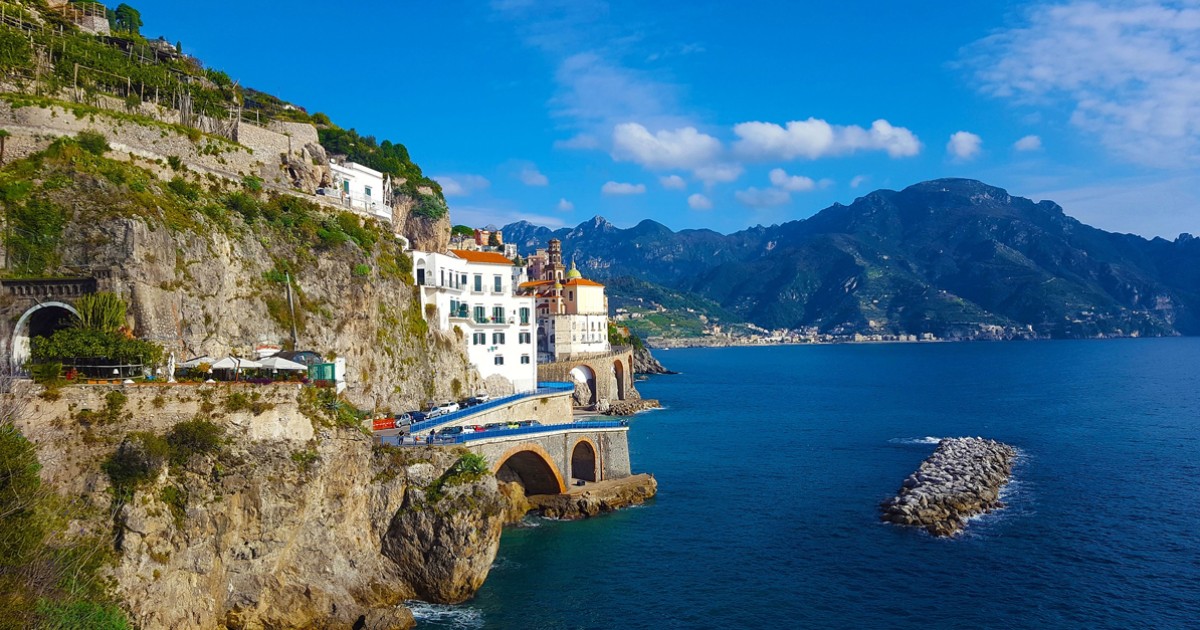
The Amalfi Coast, along the Gulf of Salerno in southern Italy, is one of those places that really does look like the postcards. Steep terraces planted with lemon trees, villages that seem to cling to the rock, and deep blue water dotted with boats.
It is beautiful, and also busy and pricey in peak season, so it suits you best if you treat it as a bit of a treat trip rather than a bargain break.
What makes the Amalfi Coast memorable
- Sorrento sits slightly apart from the tightest curve of the coast, on a clifftop plateau.
- Positano is the Instagram‑star village, all pastel houses climbing up the hillside. The main beach is often crowded, but boat trips, viewpoints and smaller coves nearby give you breathing room.
- Above the shoreline, Ravello feels more contemplative, with gardens and villas looking out across the sea.
- Amalfi itself has a bit of everything: a historic centre, the cathedral, a small beach and ferries heading off to other towns.
Practical notes
- Best time: May, June, and September hit a nicer balance between sunshine and crowds.
- Getting there: Fly into Naples. From there, you can continue by train to Sorrento and then use ferries and buses, or arrange transfers directly to towns like Amalfi and Positano.
Find your holiday rental on the Amalfi Coast or explore property for sale in Salerno province.
Mariña Lucense, Spain
Mariña Lucense sits on the northern coast of Galicia, running between Ribadeo and O Barqueiro. It is one of those corners of Spain where you still hear a lot of Galician, see more locals than tourists outside August, and get that mix of green hills and rough Atlantic.
If you like the idea of Galicia’s hidden beaches and do not mind slightly cooler weather, this stretch of coast is very rewarding.
What gives Mariña Lucense its character
- A Rapadoira is the classic town beach: fine sand, sheltered water and all the services close by.
- The beaches around Barreiros run along a low coastline where rock formations and sand alternate.
- Viveiro has a lovely setting around an estuary, a small old town and that mix of fishing port and seaside resort that Galicia does so well.
- In Burela, the focus is the harbour and its catch. If you like seafood, you can eat very well here without spending a fortune.
Practical notes
- Best time: June to September has the mildest weather, but you still get changeable days, so layers are your friend.
- Getting there: Airports at A Coruña, Santiago de Compostela and Asturias are all within driving distance.
Find your holiday rental or have a peek at the property for sale in Mariña Lucense.
Stay inspired for your travels in Spain—get our weekly newsletter for the latest travel guides, cultural news, and lifestyle tips.