
The new system allows blind users to access real-time information about monuments and points of interest throughout Lorca
Lorca is installing more than 100 digital accessibility codes across its historic centre to help blind and visually impaired tourists navigate the city’s museums, monuments and heritage sites.
The €26,540 project involves placing 125 NaviLens universal codes at key locations including museums, information centres and bus and taxi stops. Through a mobile app, blind or visually impaired users can access real-time multimedia information about their surroundings, even when they’re moving around the city.
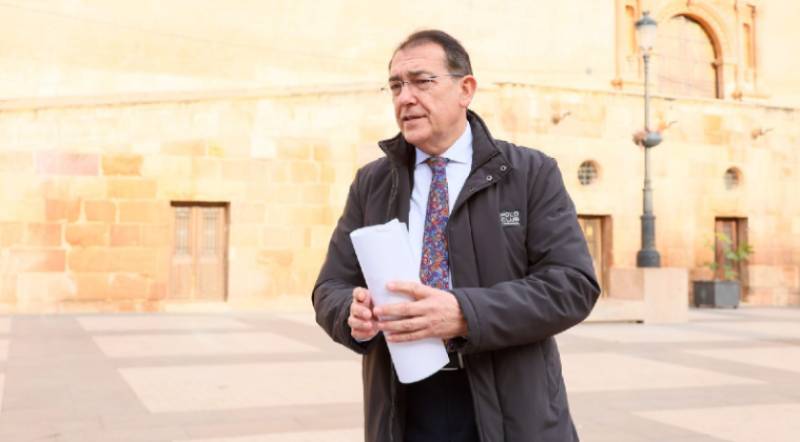
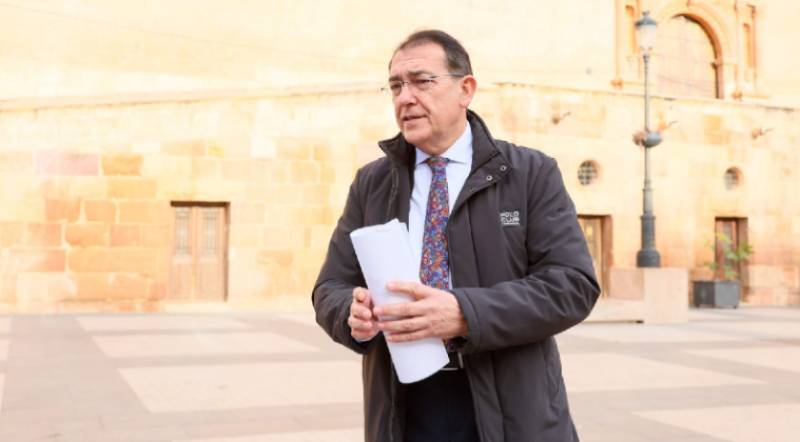
Santiago Parra, Councillor for Tourism, explained the benefits of the technology:
“This new accessible and universal digital signage will allow people with visual impairments to orient themselves in unfamiliar environments, reach the signposted element with great precision, and obtain accessible contextual information, all with their mobile devices.
“People with visual impairments do not need to know exactly where the NaviLens codes are placed to read them (unlike Braille or QR codes), nor do they need to focus on them since the NaviLens code does not need to be framed on the screen.”
The system works differently from traditional QR codes or Braille because users don’t need to know exactly where the codes are located or frame them precisely on their phone screens. The technology detects the codes automatically and provides information about nearby points of interest, monuments and the history of the area.
According to a Town Hall source, the information is currently only available in Spanish, although this may change down the line as the system develops.
Councillor Parra said the initiative would benefit both tourists and residents.
“This innovative and inclusive initiative will allow us to open up the city’s history and culture to everyone. Any tourist or resident strolling through the streets will be able to easily and accessibly learn about the city’s culture and details via their mobile phone, allowing them to better understand the roots and significance of their surroundings,” he said.
Mr Parra noted that the scheme also fits into Lorca’s broader push to become a Smart Tourist Destination.
“The City Council is committed to modernising and promoting the range of tourist, cultural and heritage information services to make them more comprehensive, inclusive and accessible to everyone,” he concluded.
Address
Calle Lope Gisbert, 12, Lorca
Tel: 968 441914
Loading
Oficina de Turismo de Lorca
The rich and extensive history of Lorca has left a legacy of archaeological sites, and historic buildings, around which the modern city has built its tourism industry. Among these are Lorca Castle, the Jewish quarter of the castle and synagogue, Plaza de España, Colegiata de San Patricio, Museo de Arqueologico Municipal, Iglesia de San Francisco, Casa Huerto Ruano, Palacio de Guevara, Iglesia de San Mateo, Pósito de los Panaderos, Convento Virgen de las Huertas, Antiguo Convento de la Merced, Iglesia del Carmen and the Teatro Guerra.
 Unfortunately Lorca has also been prone to natural disaster, suffering a Gota Fría on September 28th 2012, as well as two earthquakes measuring 5.3 and 5.5 on the Richter scale on 11th May 2011, claiming 9 lives. Since this earthquake the city has been rebuilding, winning recognition for its Lorca, Open for Restoration initiative, which used the restoration of the city as a tourist attraction whilst it rebuilt its historical buildings, some of which are currently still not open.
The tourist office relocated for 14 years to Calle San Patricio, near the church, but has now returned to its former premises alongside the Palacio de Guevara in the Plaza Concha Sandoval, or Plaza de la Bordadora (click for map).
Lorca also has an area of coastline incorporating the Parque Regional de Cabo Cope – Puntas de Calnegre, in the Sierra de Almenara, which includes the beaches of Puntas de Calnegre, Baño de las Mujeres, San Pedro, El Siscal, Cala Honda, Cuartel del Ciscar, Junquera, Cala de la Gruta, Cala Leña, Los Hierros, Cala Blanca and Playa Larga, although many are accessible only along difficult tracks or by boat!

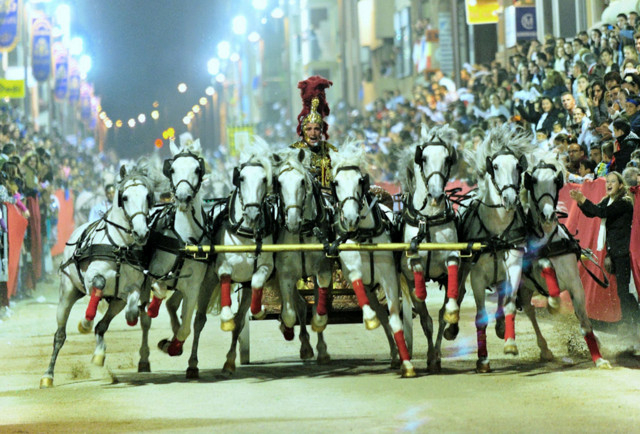
However, in spite of its many attractions, the name of Lorca is synonymous with Easter, (Semana Santa) its biblical parades of International Tourist Interest status and famous throughout Spain. The week includes a series of processions in which the Whites (Paso Blanco) and Blues (Paso Azúl) try to outdo each other with the magnificence of their embroideries and the skill and daring of their horsemen.
Lorca also has a Parador hotel, located within the historic castle.
Opening hours for Lorca tourist office:
Every day of the year apart from 1st and 6th January and 25th December, 10.00 to 14.00 and 16.30 to 18.30 (except Sunday afternoons).
These opening times are often extended and other information points created during the Semana Santa celebrations.
For more local news, events and visiting information go to the home page of Lorca Today
See what’s on in Lorca: