
Monday, 19 January 2026, 11:38
As announced by landowner Sociedad Azucarera Larios in December 2025 through SUR, the demolition of leased buildings on the Vega de Maro land in Nerja on the eastern Costa del Sol has already begun as part of the company’s plan to ‘clean up’ and reorganise its agricultural estates. It has already terminated some 400 rental contracts affecting around 80 families living in the area.
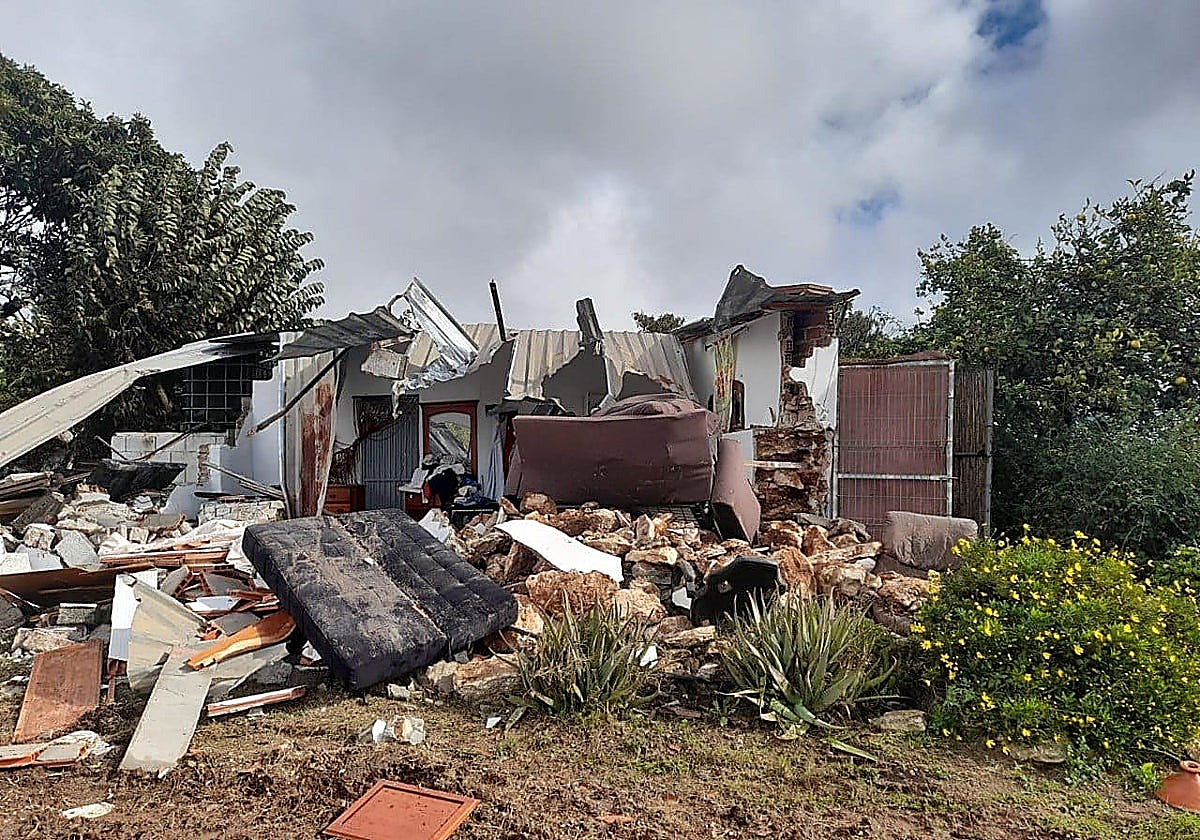
The demolition of the home of tenant Loli Fernández on Friday 16 January has set off alarm bells among fellow tenants and agricultural groups, who have said there has been a “lack of information”. They are demanding “protection” for the families who lived on the land.
Fernández is a local resident who works with the Ángeles sin Voz de Torrox animal welfare organisation. The property was demolished with her belongings inside and “without prior warning”, according to a complaint made by the newly-formed Acción por Maro y su Agricultura (action platform for Maro and its agriculture) on social media.
Social media
The group has shared a video of the demolition on social media, showing machinery working among the remains of the house and has warned that this is the start of a series of demolitions on the company’s properties. “This house on a property in Nerja, owned by Sociedad Azucarera Larios, was demolished with all its contents, without prior notice to the tenant,” the platform said in its public statement. Fernández, who lived in this house seasonally, has reported it to the Guardia Civil.
Sources at Sociedad Azucarera Larios explained to SUR at the time that the contracts are being terminated one year in advance and in stages until the summer of 2026, with the stated aim of restoring “strictly agricultural” use to farms covering around 150 hectares. The plan includes a “comprehensive clean-up” with the demolition of illegal constructions, the removal of water tanks and other elements that the company considers detrimental to the landscape and the environment.
In recent decades, the Maro valley has gone from being home mainly to professional farmers to becoming, for the most part, a mosaic of allotments, second homes and small buildings erected by local and foreign tenants. Sociedad Azucarera Larios claims that, of the approximately 400 current tenants, only about 50 are professionally engaged in farming, while the rest are leisure users, many of whom are not residents in the area.
Water bills and waste
Among those affected are around 80 families, 20 of which have children enrolled at the Maro primary school, according to information obtained by SUR in December 2025. The group has requested documentation on the demolition permits from Sociedad Azucarera Larios and Nerja town hall through its lawyers, but has not yet received a response. They are considering taking legal action against these demolition operations.
The platform told SUR that “The company (Larios) has never been interested in forcing people to do things like pay their water bills, clean up their (agricultural) waste, or take care of infrastructure such as roads, etc. Through the water association, we have asked Larios many times to cancel the contracts of people who do not pay for water, but they do not want to get involved because, in the end, all this degradation, rubbish and neglect works in their favour to eventually change the use of the land.”
The demolitions come as the company’s planned tourist development on some 200 hectares of the land, which includes a golf course, around 500 homes and up to three hotels with a total of 700 rooms, remains stalled. The plan, known as “Maro Golf”, remains blocked by uncertainty over whether the process should be subject to the new Law for the Promotion of Sustainability in Andalucía (LISTA) or to a planning innovation in accordance with the previous LOUA.
Hotels and golf course
Larios argues that its proposal is “innovative and sustainable” and aims to place Nerja and the Axarquía “at the forefront of the Costa del Sol”, integrating agriculture, golf and high-end hotels. The company stresses that the easternmost part of the estate, within the natural area of the Maro-Cerro Gordo Cliffs, would be preserved without any urban development, beyond possible agreements for heritage improvement.
The Plataforma Acción por Maro y su Agricultura considers that the demolitions represent a “silent eviction” of families and tenants who have lived and worked the land for years, some of whose families go back many generations. They are calling on residents and farm workers to remain alert and announce that they will continue to document cases such as that of Loli Fernández, as well as studying possible legal action.
From a political perspective, the opposition socialist PSOE political group in Nerja has been warning of the “social and economic impact” of the end of leases and has called on the town hall to mediate in order to find alternatives that would allow contracts to be maintained or reconfigured, especially in organic farms supported by European funds.
Mayor of Nerja, José Alberto Armijo (PP), stated at the last full council meeting in December that “it looks like the agricultural use of these lands will continue” and that the urban development project may not be carried out as initially conceived, which is why he advocated “focusing” on the agricultural use of the Vega de Maro.