
Published on
December 31, 2025
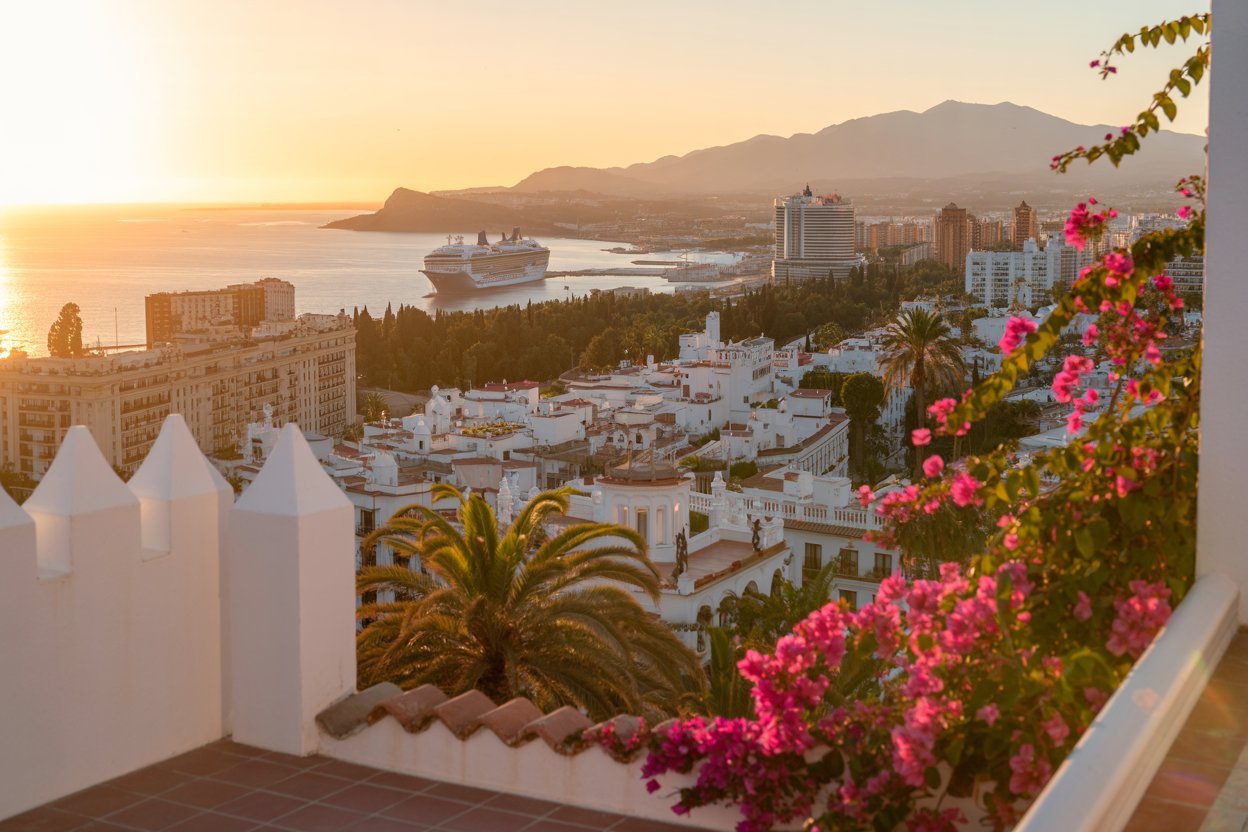
For the Costa del Sol, 2025 has been a year of breathtaking milestones and sobering realizations. The sun-drenched province of Malaga has officially shattered its own records, surpassing a historic threshold of 700,000 tourist beds for the first time in its history. Yet, as the year draws to a close, a new narrative is emerging: the region is no longer just chasing volume; it is wrestling with the complexities of its own success.

According to the latest report from Turismo Costa del Sol, based on data from Spain’s National Statistics Institute (INE), the province reached 700,913 accommodation places by October 2025. This represents a 6% increase in capacity compared to 2024—a remarkable feat for a destination that has tripled its bed count in just eight years.
The New Landscape: 700,000 Beds and Beyond
The growth in supply has been relentless. The number of registered accommodation establishments in Malaga province has climbed to 95,465, up 7.3% from the previous year. While hotels remain the prestigious backbone of the coast, the real explosion has come from tourist homes (VFTs), which now dominate the landscape in terms of sheer numbers.
However, this expansion comes at a time when the traditional hotel sector is seeing a “stabilization” or leveling off. In the first ten months of 2025, total guest numbers in traditional accommodation (hotels, apartments, and campsites) fell slightly by 1.1%, totaling roughly 7.1 million visitors.
The Price of Popularity: Hotel Rates on the Rise
If you’ve booked a room in Marbella or Malaga City recently, you’ve likely felt the “price pinch.” Hotel rates in the province have experienced a 7.1% increase, with the average room cost reaching €138.34 up to October.
This rise in prices has created a divergent market:
- International Resilience: Foreign tourism arrivals saw a slight uptick of 0.4%, with the UK remaining the powerhouse market, despite declines in visitors from France (-11%) and Italy (-32%).
- Domestic Retreat: Spanish tourists, more sensitive to the rising costs of their own “backyard,” showed a 3.8% drop in arrivals. Many locals are being priced out of the coastal hotels they once frequented.
The Rural Revolution: A 33% Surge
Perhaps the most surprising “human” story of 2025 is the flight to the hills. While the coast grapples with saturation and high prices, rural tourism in inland Malaga is booming.
- Arrivals: Up by a staggering 33%.
- Overnight Stays: Increased by 31%.
Rural houses have become the sanctuary for domestic travelers, with Spanish stays in these properties soaring by 92%. Whether it’s the search for authenticity or simply a more affordable way to enjoy a family holiday, the “white villages” of the Axarquía and the Serranía de Ronda are no longer just day-trip destinations—they are the new stars of the show.
A Forecast of Caution: The 2026 Outlook
Despite the festive lights of December, the hospitality association AEHCOS is sounding a note of caution for the start of 2026. President José Luque warns that the rapid growth phase may be hitting a plateau.+1
- December 2025: Occupancy is expected to close at 54.9%, a slight dip from last year.
- January 2026: Forecasts suggest an occupancy of 53.4%, down significantly from the 60.5% seen in January 2025.
The industry is now pivoting its strategy. The focus is shifting away from “more people” and toward market diversification and deseasonalisation. The goal for 2026 is to ensure that the 700,000 beds are filled by high-value visitors year-round, not just during the frantic summer months.
The Balancing Act
As Malaga city celebrates its own record of 25 million passengers passing through its airport in 2025, the conversation on the ground is changing. There is a growing awareness of the “carrying capacity” of the destination. From water shortages to housing pressures, the success of the Costa del Sol is now being measured not just in Euros, but in sustainability.
The message for 2026 is clear: the Costa del Sol has reached the peak. The challenge now is to stay there without losing the very charm that made it famous in the first place.
