
Published on
January 20, 2026
By: Tuhin Sarkar

In 2025, Poland has experienced a record tourism tsunami, joining Greece, Italy, Spain, France, Latvia, and more European countries in a stunning surge of tourist arrivals. This explosive growth is leaving traditional tourism powerhouses like Switzerland, Norway, Denmark, and Austria far behind. Poland’s tourism numbers have soared, with record-breaking hotel overnight stays and visitor spending reaching new heights and here is a new update.
As more international visitors flock to Poland, the country is not only catching up with established destinations but also surpassing expectations. With its growing appeal, Poland is fast becoming a key player in European tourism, outpacing even the most iconic names in the industry.
The surge in tourism spending and overnight stays in Poland highlights a fundamental shift in European travel, where new destinations are now outshining the old guard. As tourism grows in Poland, it is clear that the country’s efforts to revamp its tourism sector are working, leaving countries like Switzerland and Norway struggling to keep up.
Poland, alongside Greece, Italy, Spain, and France, is quickly establishing itself as one of the most dynamic and lucrative destinations in Europe. Keep reading to learn more about how Poland is reshaping the future of European tourism!

Poland’s Explosive Tourism Growth: The European Underdog that’s Gaining Momentum
In 2025, Poland has witnessed an astronomical surge in its tourism sector, experiencing the EU’s second-fastest growth, only behind Malta. New data from Eurostat reveals that the number of nights spent in tourist accommodation has skyrocketed by 7%, outpacing major tourism destinations like France, Italy, and Spain. This growth comes as no surprise considering Poland’s massive efforts to promote its stunning attractions, rich culture, and untapped natural beauty. As Poland positions itself as a must-visit European hotspot, it leaves other established destinations in the dust.
Why Poland is Poised to Be Europe’s Next Top Tourism Destination
Poland’s surge in tourism is nothing short of remarkable. With its blend of captivating historic cities and pristine natural landscapes, including sandy beaches in the north, majestic mountains in the south, ancient forests, and serene lakes, Poland is making waves in the European tourism scene. Although the country’s total number of tourist accommodation nights remains behind the likes of Spain and Italy, Poland’s growing appeal signals a new wave of international interest in Eastern Europe.
Poland’s Strategic Plan to Dominate the Tourism Industry by 2030
The Polish government has been proactive in enhancing the role of tourism within its economy. Despite a modest 4% contribution to GDP in 2025, plans are in place to elevate tourism’s importance to 9% of GDP by 2030. Poland is clearly determined to catch up with global tourism giants and has already started putting the pieces in place. With famous landmarks like Kraków, the UNESCO-listed Wieliczka Salt Mine, and the Auschwitz Memorial all attracting record-breaking numbers of visitors, Poland is setting the stage for future tourism dominance.
Most Popular Tourist Spot, Kraków, Earns Top Spot in Europe’s Best City Breaks
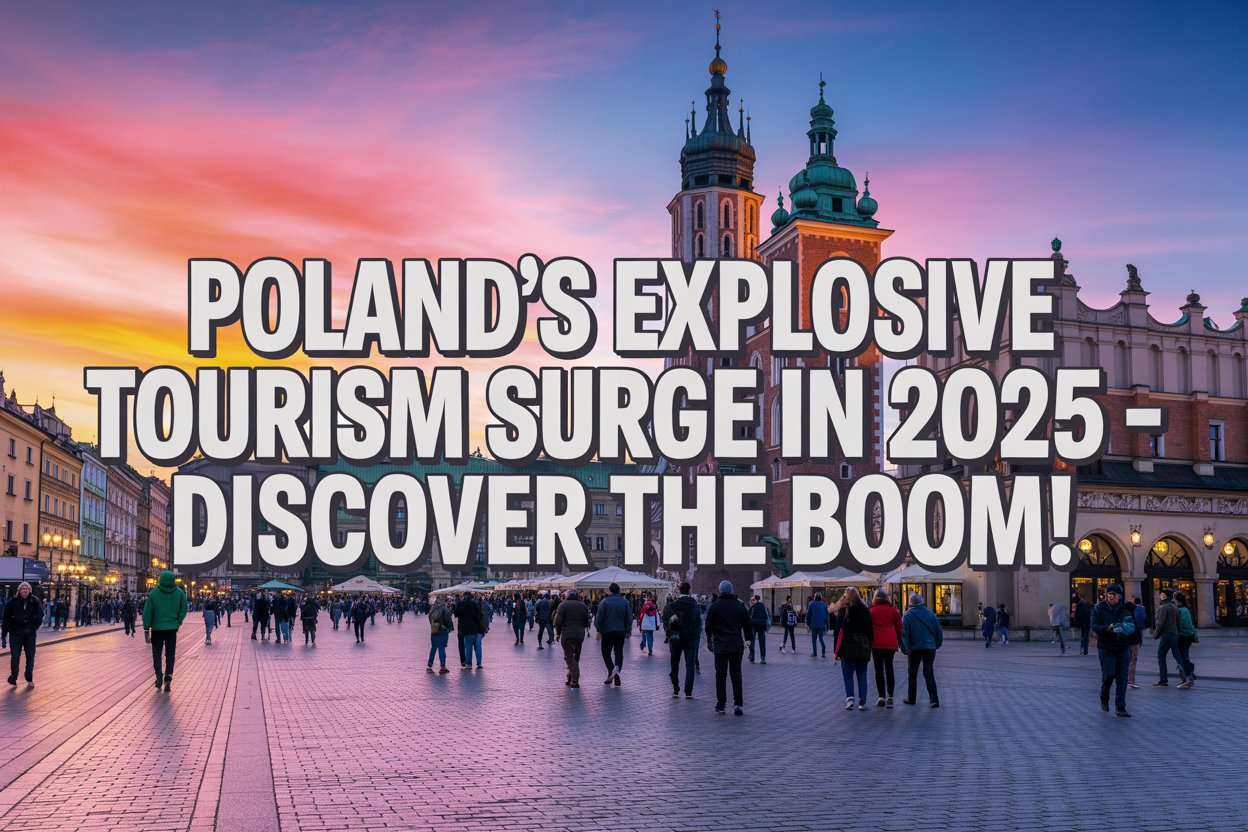
Poland’s tourism revolution is led by Kraków, the crown jewel of the country’s tourism industry. In 2025, Kraków was named the best city break destination in Europe for the fifth consecutive year by the British consumer association Which?. The city’s medieval charm, vibrant culture, and close proximity to iconic sites like the Auschwitz concentration camp and the Wieliczka Salt Mine make it a top choice for travelers seeking both historical insight and modern-day allure.

The Polish Tourism Industry’s Bright Future: How Government Plans to Boost Travel by 2030
The Polish government’s ambitious goal to increase tourism’s contribution to the economy by nearly 5% within the next decade shows just how serious they are about making Poland a leading European destination. With its ongoing investment in infrastructure, cultural promotion, and the development of new tourist attractions, Poland is positioning itself for explosive growth in the coming years. As more travelers flock to Poland to experience its rich history and beautiful landscapes, the country is set to become one of Europe’s most sought-after tourism hotspots.
The Unstoppable Surge: Malta’s Tourism Skyrockets by a Whopping 9.9%!
In 2025, Malta made a huge splash in Europe’s tourism industry, outpacing every other EU country in growth. With an astonishing 9.9% rise in tourist nights compared to the previous year, Malta is now the fastest-growing tourism destination on the continent.
What’s driving this phenomenal growth? Malta’s unique appeal lies in its rich historical tapestry, breathtaking coastlines, and thriving cultural scene, making it the ultimate European escape for travellers. With the Mediterranean climate, stunning architecture, and a wealth of historical landmarks, Malta is fast becoming the go-to spot for both seasoned travellers and those seeking something different. Eurostat shows that international visitors are flocking to Malta in record numbers, eager to explore its ancient cities and crystal-clear waters, pushing the country to the forefront of Europe’s tourism race in 2025.

Latvia and Lithuania: The Baltic Boomers Leading the Charge!
The Baltic States are not to be overlooked. Latvia and Lithuania both posted impressive tourism growth, with Latvia seeing an increase of around 6% in nights spent in 2025. These countries have become hidden gems for travellers seeking authentic experiences away from the bustling crowds of Western Europe. Latvia’s capital, Riga, with its stunning medieval Old Town, has seen a major increase in footfall. Eurostat reveals that Lithuania has followed suit, with tourists flocking to cities like Vilnius and the Curonian Spit, which offers some of the most breathtaking views in the entire Baltic region. Together, these countries are carving out a name for themselves as must-visit destinations for 2025, as they successfully capitalise on their natural beauty and cultural vibrancy.
France’s Tourism: Still a Giant but Slowing Down!
While France remains the undisputed leader in terms of total tourism nights, it is experiencing a modest growth rate of just 3% in 2025, compared to Malta and Poland’s explosive numbers. France, the world’s most visited country, is feeling the effects of overcrowded tourist hotspots and rising costs. Despite the slower pace, Paris, the French Riviera, and the enchanting countryside continue to pull in millions. Eurostat notes that the country’s tourism sector remains resilient, thanks to its diverse attractions ranging from culture, gastronomy, and fashion. But the message is clear: France needs to innovate if it’s to stay on top in the ever-changing tourism landscape.
Italy’s Tourism Revival – A Modest Yet Steady Climb!
Like France, Italy is still a global tourism leader but is experiencing a slower-than-expected growth rate of just 2.1% in 2025. Despite the lower percentage, Rome, Florence, Venice, and the Amalfi Coast continue to shine as top destinations. Italy’s appeal has remained largely unchanged, attracting millions of visitors who seek to immerse themselves in its art, history, and cuisine. With such a steady growth rate, Italy’s tourism is far from fading; it simply needs fresh ideas to keep the interest alive and grow even further

.
Spain’s Ever-Popular Tourism: Growth at a Slower Pace
As Spain continues to lead Europe in terms of total tourist nights, its growth in 2025 is relatively moderate at +1.6%. The Spanish beaches, historic cities, and vibrant culture are still hugely popular, especially with European travellers. However, Spain faces the challenge of maintaining its appeal as overcrowding and the rising cost of living start to affect tourist numbers. Even so, Spain remains one of Europe’s top destinations, attracting millions with its world-class hospitality and diverse offerings.
Romania and Ireland: Declining Numbers and Challenges Ahead
While Romania and Ireland have long been popular for their natural beauty and cultural significance, both countries faced slight declines in 2025, with Romania posting a -1.4% drop and Ireland experiencing a -1.8% dip in tourism nights. The decline is attributed to shifts in traveller preferences and economic challenges. Romania’s traditionally underdeveloped tourism infrastructure and Ireland’s heavy reliance on short-term tourism have left these countries struggling to adapt to the new realities of European travel.
Greece and Croatia: Struggling to Keep Up with Growing Competitors
Greece and Croatia, while still popular, have not seen the same explosive growth as some of the smaller European destinations. Greece continues to be a huge draw for Mediterranean tourists, with its stunning islands and ancient ruins, but its growth rate is somewhat slower compared to newer hotspots. Greece’s tourism sector remains stable but must focus on enhancing its value proposition to keep attracting international travellers. Croatia, on the other hand, saw strong numbers but also faces pressure from new and emerging destinations like Malta and Poland, both of which are experiencing faster growth due to their unique offerings.
Europe’s Tourism – The Winners and the Losers in 2025
In 2025, Europe’s tourism sector experienced an impressive rebound overall, yet the growth was uneven. Malta and Poland shone bright, while traditional powerhouses like France, Italy, and Spain struggled to maintain their growth momentum. The Baltic States are gaining increasing attention for their underrated charm, and countries like Romania and Ireland must evolve their offerings to avoid falling behind. With countries like Latvia, Poland, and Malta leading the charge, the future of European tourism is shifting.
What’s Next for European Tourism? The Future Looks Bright, But Only for the Innovators!
The big question for 2026 and beyond is whether traditional tourism giants like France and Italy can revamp their appeal in the face of rising competition from smaller, dynamic nations like Malta, Poland, and the Baltic States. The secret to maintaining momentum in Europe’s tourism industry will be innovation, sustainability, and the ability to adapt to new consumer demands. As Eurostat suggests, tourism numbers will continue to soar in destinations that understand the evolving travel preferences of the modern tourist.
Poland’s Declining International Visitor Percentage: What Does It Mean for the Future?
While Poland’s tourism industry is growing at an impressive rate, it still has room for improvement in attracting international visitors. At just 19.2% of tourist accommodation nights spent by foreign guests, Poland lags behind top destinations like Malta (94.1%) and Spain (64.2%). This is where Poland’s tourism strategy can make a major impact. The country’s ability to attract a larger international audience will be crucial as it seeks to diversify its tourism offerings and elevate itself as a global tourism leader.
Poland vs. Traditional Tourism Giants: What Sets Poland Apart?
Although Poland’s tourism figures remain behind the EU’s big players like Spain, Italy, and France in terms of total tourist nights, its growth rate outshines all of them. In 2025, Spain, Italy, and France saw modest increases in tourism, while Poland’s figures soared. The unique appeal of Poland lies in its authenticity, diverse offerings, and the genuine hospitality of its people. Poland has successfully tapped into the rising demand for off-the-beaten-path destinations, offering a refreshing alternative to the overcrowded cities of Western Europe.
Poland’s Government Invests in Tourism: The Ultimate Strategy to Reach 9% of GDP by 2030
In a move that demonstrates Poland’s commitment to boosting its tourism industry, the government has launched an extensive plan to increase tourism’s contribution to the national economy to 9% by 2030. With initiatives aimed at promoting sustainable tourism, developing new cultural and natural attractions, and improving visitor experiences, Poland is positioning itself to dominate the European tourism landscape. As Poland continues to invest in its tourism sector, the future looks incredibly promising for both local communities and international visitors.
A Game-Changer for Poland’s Tourism: Kraków’s Historic Achievement as Europe’s Best City Break Destination
Kraków’s recent accolade as the best city break destination in Europe is a testament to Poland’s growing prominence in the global tourism market. The city’s ancient history, UNESCO World Heritage status, and a thriving cultural scene make it a standout destination for both casual travelers and history enthusiasts alike. Kraków’s rich cultural offerings, combined with the increasing number of tourists visiting nearby sites like the Auschwitz Memorial and the Wieliczka Salt Mine, showcase Poland’s vast potential to become a key player in European tourism.
Poland’s Tourism Growth: What’s Next for This Rising European Star?
As Poland continues to experience significant growth in its tourism industry, it is clear that the country is on the verge of a major breakthrough. From Kraków’s standing as the best city break destination in Europe to the growing popularity of Poland’s natural landscapes, the country is primed to become one of Europe’s top tourism destinations. With plans to increase tourism’s contribution to GDP and continue attracting more international visitors, Poland is on track to cement its place as a major player in the European tourism market.
