
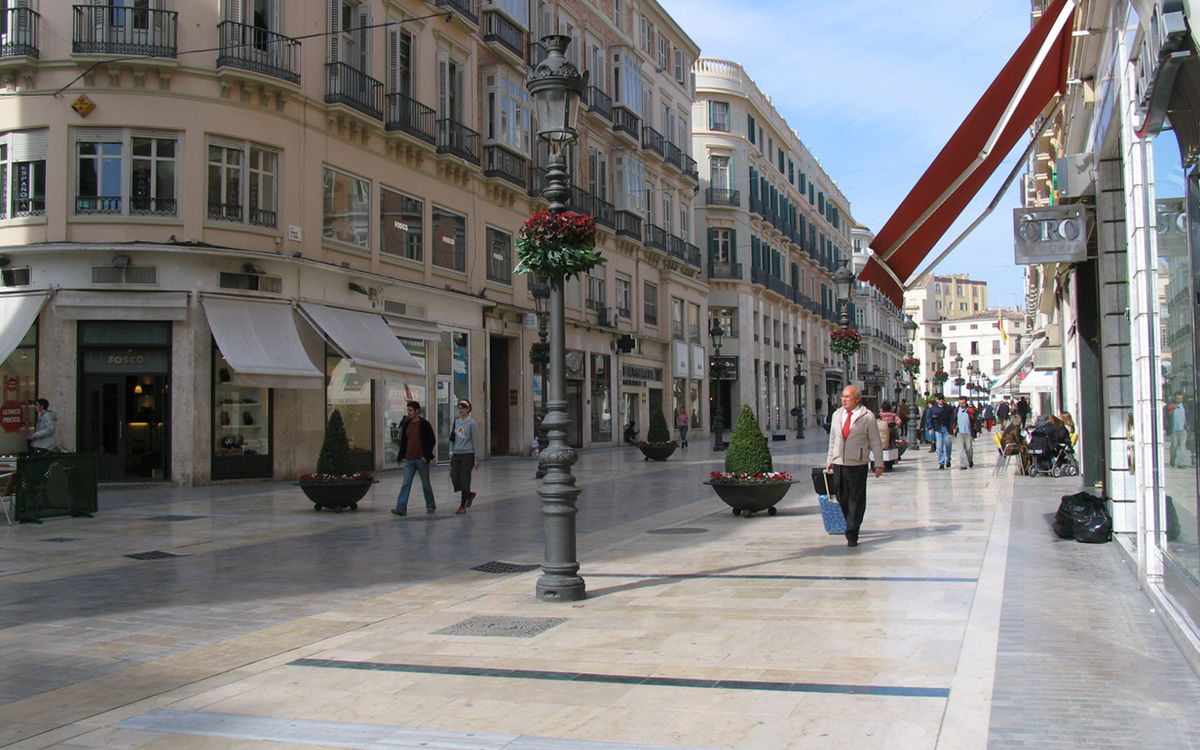
One of the main factors behind the slump appears to be price. Credit: Juanpol / Creative Commons
A quiet worry is spreading among tourism professionals in the Costa del Sol: fewer tourists are coming. And it’s not just a localised problem or a passing perception. The most recent official data, covering up to May 2025, shows a clear decline in the number of foreign visitors and overnight stays in hotels and holiday apartments. Holiday rentals are also suffering: occupancy in the Costa del Sol fell by 2.2 per cent during the first half of the year, according to the Andalusian Holiday Rental Association (AVVA-Pro).
This is the first drop in tourism figures across the Costa del Sol since the pandemic. Last year, the region managed to balance a fall in domestic visitors with strong international demand. But in 2025, even that foreign push is not enough to cushion the blow.
One of the main factors behind the slump appears to be price. Many Spanish travellers now find it cheaper to holiday abroad than to stay in Spain. “I’ve been spending my summers in Torremolinos for 50 years,” says one regular visitor. “But now, a week in an apartment is unaffordable. It’s cheaper to fly to the Caribbean, even with the cost of the plane.”
This paradox is reflected across the country
While Spain continues to attract record numbers of international tourists—and is on track to challenge France and the US for the global top spot—Spanish residents are increasingly priced out of holidaying at home. A study by Mabrian, reported by El País, found that spending a week in Mallorca now costs roughly the same as a trip to Bali. In fact, the total cost of flights and accommodation was €428.5 for Mallorca and €338.2 for Bali.
In similar comparisons, Mallorca’s Playa de Muro was more expensive than Punta Cana, even for a basic all-inclusive week. According to the travel association Aviba, a holiday in Playa de Palma costs around €2,070 per person, while similar trips to destinations like Cabo Verde (€1,560) and Thailand (€2,400) come in significantly cheaper.
Price increases
The trend extends well beyond the Balearic Islands. The Costa del Sol, Costa Brava, Costa Blanca and the Canary Islands are all seeing price increases that push them beyond the reach of many Spaniards. A report by Destinia found that some national destinations, such as Menorca and Mojácar, now cost almost the same as holidays in the Riviera Maya or Punta Cana.
What’s behind the price surge?
Between 2021 and 2025, the average cost of hotels in Spain rose by up to 25.7 per cent, while flights jumped between 10.5 per cent and 62.9 per cent, according to Mabrian. The Spanish National Statistics Institute (INE) confirms that accommodation prices have increased more than 50 per cent since the pandemic. Hoteliers argue that part of the rise is due to investments aimed at improving quality, but the end result is that local travellers are being priced out.
In 2024, Spain welcomed 61.9 million foreign visitors, compared to 54.3 million Spanish residents travelling within the country—a stagnation for domestic tourism, while international figures rise. As one recent report noted, even school groups are now choosing alternative destinations because traditional ones like the Balearic Islands have become too expensive.
Costa del Sol may be the clearest example of this shift, but it is part of a broader national trend.