
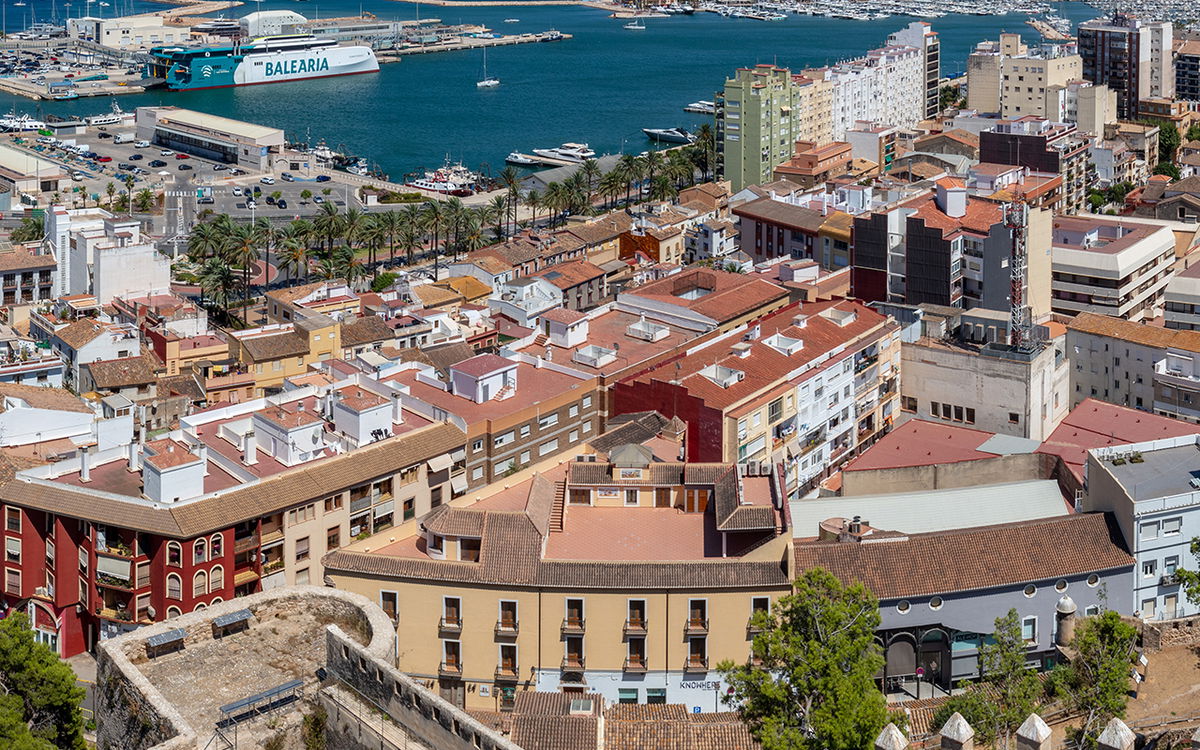
A boost for the local economy without urban sprawl. Credit: Diego Delso / Creative Commons
The sound of hammers, grinders and cranes has become part of the daily soundtrack in central Denia. Throughout December, works of all kinds have been springing up across the town centre, ranging from simple façade repairs and fresh coats of paint to major interior refurbishments and full structural rehabilitations. In neighbourhoods such as Baix la Mar and Les Roques, some projects are so extensive that the end result is effectively a brand-new home behind historic walls.
These building works are impossible to miss for anyone walking through the old town. Streets that until recently felt quiet or even neglected are now buzzing with activity, scaffolding and protective fencing marking properties at different stages of transformation. The scale and concentration of the renovations point to a broader trend that is reshaping Denia’s historic urban fabric.
A boost for the local economy without urban sprawl
This wave of refurbishment represents a key economic driver for the town. Numerous trades are involved, from builders and bricklayers to electricians, carpenters and plumbers, creating steady employment across multiple sectors. Crucially, this activity is focused on areas that are already urbanistically consolidated, meaning it does not consume new land or fuel uncontrolled expansion.
By working within the existing city limits, these renovations avoid adding pressure to water resources, traffic or population density. For many residents, this makes the current boom far preferable to large-scale new developments on the outskirts, as it revitalises the centre while preserving Denia’s overall balance.
Concerns over heritage protection and tourist use
However, not everything about the renovation boom is viewed positively. Some voices have raised concerns about insufficient oversight when it comes to protecting architecturally significant elements in historically listed buildings. Without strict monitoring, there is a risk that valuable features could be altered or lost during the works.
There is also ongoing debate about the future use of some of these properties. A number of refurbishments appear destined to become tourist accommodation, once the current suspension of licences for this type of housing is lifted. This has reignited discussion about how to balance economic return with residential life in the historic centre.
Long-closed premises return to the spotlight
Several projects stand out due to the symbolic nature of the buildings involved. One large property between Marques de Campo and the Convent square, historically used as a bank branch and once home to Bancaja, is finally being renovated after years of closure. Its prominent location has made the works particularly noticeable.
Another eye-catching refurbishment is taking place in a ground-floor unit on Carrer Major, where the former De Nit pub once operated. For older generations of residents, the venue is steeped in memories of Denia’s nightlife, adding a layer of nostalgia to its transformation.
Streets full of works and echoes of the past
Carrer Salt hosts another renovation that might seem unremarkable at first glance, were it not for its curious historical link. In 1958, a NO-DO newsreel filmed a scene outside this very house, making it the only location within Denia’s urban centre to appear in that episode. Today, the building is being rehabilitated beneath the castle walls, connecting past and present in a tangible way.
Carrer Bitibau offers perhaps the most striking example of concentrated activity. On one side of the street, almost all the two-storey houses stand empty and are now under renovation. These properties border the popular Los Magazinos gastronomic market, suggesting a significant transformation of the area is underway.
Official figures point to continued growth
According to Denia Town Council, 22 renovation licences have been granted in historic neighbourhoods since 2023: ten in Baix la Mar and 12 in Les Roques. Some projects have even added a second floor, the maximum height permitted, as seen recently in Carrer Santissima Trinitat.
With more buildings apparently ready to begin works, and others awaiting regulatory changes, the renovation fever shows no sign of cooling. Alongside new boutique hotels and the refurbishment of established ones such as Hotel Chamarel, Denia’s historic centre is clearly entering a new chapter of renewal and reinvention.