
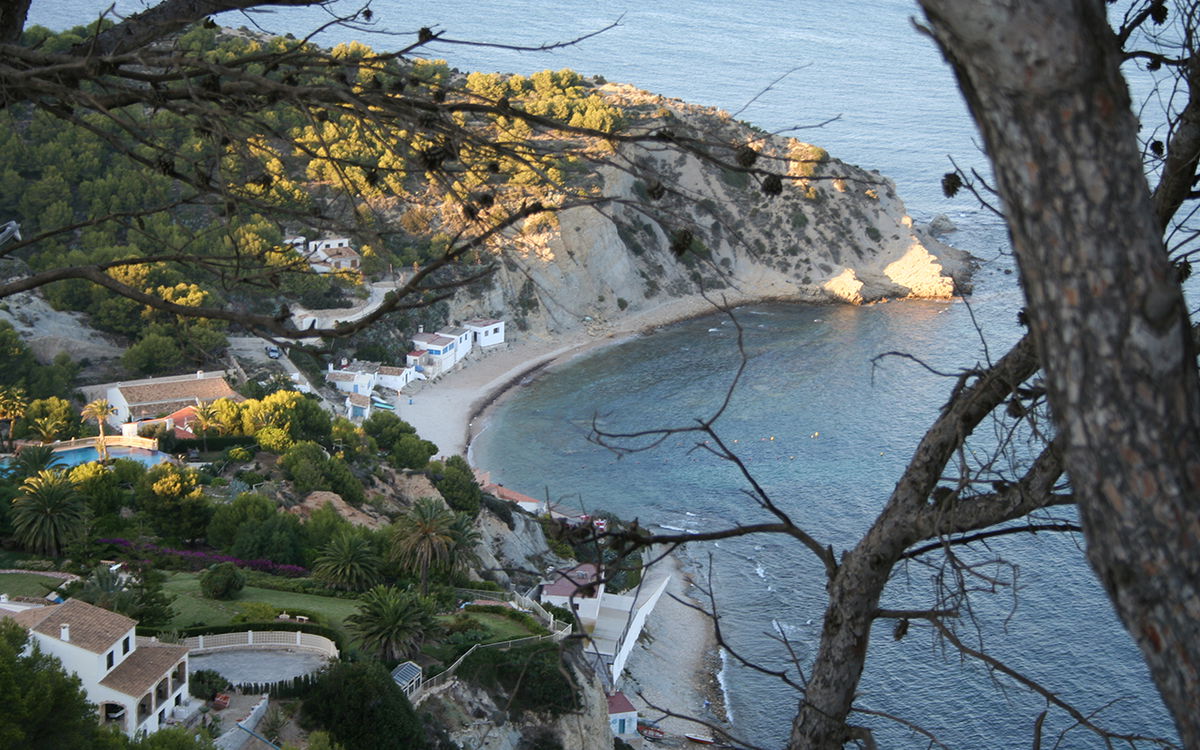
Coastal towns like Javea, Calpe, and Poble Nou de Benitachell have become international hubs, Credit: josemanuel / Creative Commons
The Costa Blanca continues to establish itself as a haven for foreign residents. This is confirmed by the latest figures published by the National Statistics Institute (INE) on the population register of Spanish municipalities as of 1 January 2026.
In six of the 33 towns in the Costa Blanca, over half of the population holds a nationality other than Spanish. In a further ten towns, foreign residents account for more than 40 per cent of the population.
In fact, 17 municipalities in the region are among the 100 towns in Spain with the highest proportion of foreign residents. Six are in the Top 20, and three of these make the Top 15.
Poble Nou de Benitachell leads the way
According to INE statistics, Poble Nou de Benitachell is currently the Costa Blanca town with the highest percentage of foreign residents. With 61.54 per cent of its population born abroad, it ranks eighth nationally and fourth within the Valencian Community.
Close behind is Llíber, ninth in the national ranking with 61.45 per cent foreign residents, followed by Alcalalí and Teulada at 14th and 16th, respectively. Murla is 19th, while Calpe completes the Top 20.
Lower proportion in Denia
In the main urban centres of the region, the percentage of foreign residents is also high, though not as extreme as in smaller towns, which tend to have extensive residential developments that attract international communities.
Nevertheless, the region’s second and third largest towns, Javea and Calpe, make the national Top 100. Javea appears with 47.46 per cent foreign residents, while Calpe reaches 57.60 per cent.
Denia, however, falls outside the Top 100, ranking 142nd nationally with 36.52 per cent foreign residents.
Overall, not only Denia but the vast majority of Costa Blanca towns have proportions of foreign residents well above the averages for Alicante province, the Valencian Community, and Spain as a whole. To give some perspective, in Alicante province, nearly 30 per cent of the population is foreign, in Castellon just over 21 per cent, and in Valencia around 21 per cent. Across the Valencian Community, the total proportion of foreign residents stands at 24.11 per cent, highlighting how the Costa Blanca significantly exceeds these averages.
A steady rise in migration
Spain has experienced a steady increase in migration over the last decade, driven by a combination of economic recovery, lifestyle factors, and climate appeal. Following the financial crisis of 2008, Spain’s economy gradually stabilised, attracting workers and entrepreneurs from both Europe and beyond. Coastal regions, particularly the Costa Blanca, have become increasingly popular, offering a mix of affordable housing, sunny weather, and a relaxed pace of life. This combination has made Spain not only a destination for temporary work or study but also a permanent home for many international residents.
Migration from the Global South
While migration from Latin America, North Africa, and other regions of the Global South continues to be significant, these flows have diversified over recent years. Many newcomers arrive seeking employment opportunities in hospitality, construction, and services, sectors that remain essential in coastal and urban areas. Social networks and family ties also play a role, creating established communities that attract further migration.
The long-standing cultural and linguistic links with countries such as Ecuador, Colombia, and Morocco contribute to the strong presence of these groups in regions like the Costa Blanca.
Northern European residents on the rise
Interestingly, Spain has also seen a marked increase in residents arriving from Northern Europe, particularly from the United Kingdom and Germany. Many are retirees seeking a warmer climate and a lower cost of living, while others are remote workers or entrepreneurs attracted by the lifestyle and business opportunities. This demographic has a visible impact in towns like Poble Nou de Benitatxell, Calpe, and Javea, where international communities have become integrated into local life.
The presence of Northern European residents has not only influenced the housing market but also contributed to the development of services and cultural events catering to a more diverse population.