
The Spain Film Commission has unveiled a bold new initiative aimed at converting iconic filming locations across Spain into innovative and sustainable tourism experiences. The project, developed under the “Experiencias” Program and supported by the Ministry of Industry and Tourism – State Secretariat for Tourism (SETUR), is part of the broader Spain Screen Grand Tour and benefits from European Union Next Generation funding.
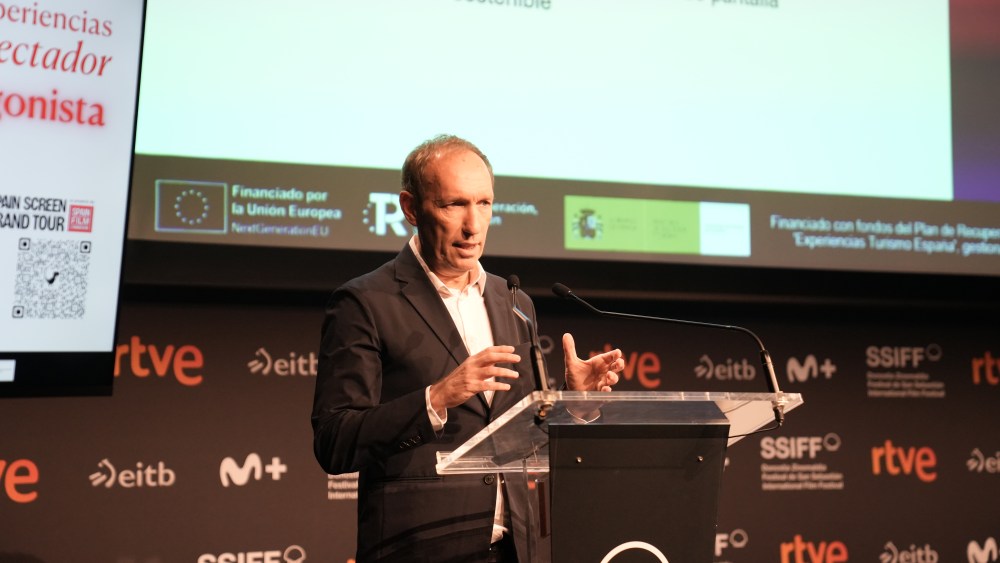
The presentation, held at the ongoing San Sebastián International Film Festival ,had Juan Manuel Guimeráns, president of Spain Film Commission, outlining the project’s objectives and the work carried out over recent months. “We’ve created a clear, standardized framework, recognized by both the tourism and audiovisual sectors, that can be implemented across Spain,” he explained.
Guimeráns also highlighted the critical role of public-private collaboration in delivering ambitious, cross-sector projects like this one. “Spain is home to one of the world’s leading tourism industries and a globally competitive audiovisual sector. Bringing these two forces together was a natural step toward redefining how audiences experience our country,” he added.
Pilot programs across diverse regions
To develop and validate the methodology, four pilot programs were conducted in strategically chosen locations, each representing a different type of destination:
- Formentera (Balearic Islands) – coastal
- Seville (Andalusia) – urban
- Galicia – rural coastal
- Burgos (Castile and León) – natural landscape
These pilots brought together local tourism professionals, public institutions and audiovisual industry players to co-create screen tourism products inspired by well-known film and TV productions.
In Formentera, the program focused on Julio Medem’s “Sex and Lucía,” encouraging off-season travel and offering immersive experiences tied to the film’s narrative and scenery. In Burgos, the legendary film “The Good, the Bad and the Ugly” served as the foundation for tourism experiences centered on the film’s legacy in the region. Galicia drew from the popular Bambú Producciones TV series “Fariña,” based on the book by journalist Nacho Carretero. Meanwhile, Seville explored the unique opportunity of designing tourism experiences around a project still in production, demonstrating the potential for pre-release engagement.
Iñaki Gaztelumendi, the screen tourism expert leading the initiative, presented the new methodology during the event. All project materials and toolkits are now publicly available on the Spain Film Commission website, enabling other regions to adopt and adapt the model for local implementation.
Widespread collaboration across sectors and territories
The project was made possible through the collaboration of numerous partners across the public and private sectors. Spain Film Commission worked closely with TBS (Tech Brands Stories), Telefónica’s creative production agency, communication consultancy Thinking Heads and tourism consultancy Verne.
Institutional support came from a broad network of regional and local stakeholders including the film commissions of Burgos, Galicia, Balearic Islands and Seville Film & Events, the official film office of the Seville City Council.
Each workshop emphasized cross-sector participation, bringing together technical experts, local authorities, hospitality professionals, and cultural organizations to ensure a comprehensive, locally grounded approach.
From viewer to protagonist
A key moment during the event was the roundtable discussion titled “From Viewer to Protagonist,” which explored the intersection of storytelling, place-making and tourism through the lens of industry professionals.
The panel featured Esperanza Ibáñez, Director of Public Policy at Netflix for Spain and Portugal; Raúl Izquierdo, Director of TBS at Telefónica Group; Medem; Raquel Puente, coordinator of the Burgos Film Commission, and Carretero, author of “Fariña.”
“At Netflix, we see first-hand how stories transcend borders. A single series can put a previously unknown town on the map. Supporting projects like the ‘Experiencias’ Program means believing in culture as a powerful engine for local economic development,” said Ibáñez.
Izquierdo, who oversaw the production of the project’s audiovisual materials, stressed the need to raise awareness of these kinds of initiatives both nationally and internationally. “It was important for us to go beyond traditional production models and create something that truly reflects the value of these experiences,” he noted.