
Published on
December 17, 2025
For decades, Spain has been the world’s playground—a land of endless sun, rhythmic flamenco, and a culinary scene that spans from humble tapas to Michelin-starred innovations. As we approach the end of 2025, the numbers tell a story of unprecedented success. According to the latest data, Spain is on track to welcome nearly 100 million international visitors by the year’s close, a staggering figure that would have seemed like a fever dream just a few years ago.
Yet, as the champagne corks fly in the halls of the Ministry of Tourism, a different kind of energy is buzzing in the plazas of Palma and the narrow alleys of Seville. This year isn’t just about a record-breaking headcount; it’s about a nation grappling with its own popularity and a global market that is becoming increasingly crowded.
The Numbers Behind the Boom
The journey to 100 million didn’t happen overnight. By August 2025, Spain had already welcomed 66.8 million visitors—a 3.9% increase over the previous year. But the real victory lies in the bank accounts: tourist spending has outpaced arrival growth, surging by 7.1% to reach over €92 billion in the same period.
The UK remains the undisputed leader of the pack, with over 13 million British travelers choosing Spain as their primary escape. Germany and France follow closely, but there’s a new trend emerging: a rise in high-spending travelers from the United States and Asia, who are staying longer and looking for experiences beyond the traditional “sun and sand.”
A Tale of Two Spains: Growth vs. Sustainability
While the economic contribution of tourism—now making up over 13% of Spain’s GDP—is undeniable, the “100 million” figure is a double-edged sword. In cities like Barcelona and across the Balearic Islands, the “tourist go home” sentiment has moved from graffiti on walls to policy in parliament.
The year 2025 has been a turning point for management. We’ve seen the introduction of stricter regulations on short-term rentals, higher tourist taxes, and even a planned phase-out of tourist apartments in certain saturated districts. The Spanish government’s “Sustainable Tourism Strategy 2030” is no longer a document on a shelf; it’s being felt on the ground.
The goal now is “quality over quantity.” Spain is actively trying to decentralize its visitors—luring them away from the crowded Ramblas and toward the rugged beauty of Galicia, the wine regions of La Rioja, and the historic charm of the interior. By encouraging travel in the “shoulder seasons” of spring and autumn, Spain is attempting to turn tourism into a year-round, sustainable engine rather than a summer-only explosion.
The Rising Heat of Competition
Spain’s throne, however, is being eyed by others. 2025 has seen Greece and Turkey make massive strides. Greece, in particular, saw a growth rate of over 20% in the first half of the year, positioning itself as a high-value, slightly more affordable alternative for European travelers. Turkey continues to dominate the “all-inclusive” market, offering luxury at price points that are becoming harder to find in the increasingly expensive Spanish resorts.
Furthermore, as climate change begins to shift travel patterns, some tourists are looking north. The “cool-cationing” trend has seen travelers swap the scorching 40°C heat of Andalusia for the milder climates of Scandinavia or the Atlantic coast of Portugal. Spain is responding by highlighting its northern “Green Spain” (Cantabria, Asturias, and the Basque Country), which offers a cooler, lusher alternative to the Mediterranean heat.
Looking Ahead to 2026
As we peer into 2026, the momentum shows no sign of stopping, but it is evolving. The focus is shifting toward “meaningful travel.” The modern tourist doesn’t just want a photo in front of the Sagrada Família; they want to know that their presence isn’t displacing a local family or drying up a region’s water supply.
We expect to see:
- Infrastructure Evolution: More high-speed rail connections making it easier to skip the domestic flights and see the country sustainably.
- Cultural Deep-Dives: A surge in gastronomy and “slow travel” itineraries.
- Tech-Driven Management: AI and big data being used to manage crowd flows in real-time to prevent overcrowding at major landmarks.
The Human Element
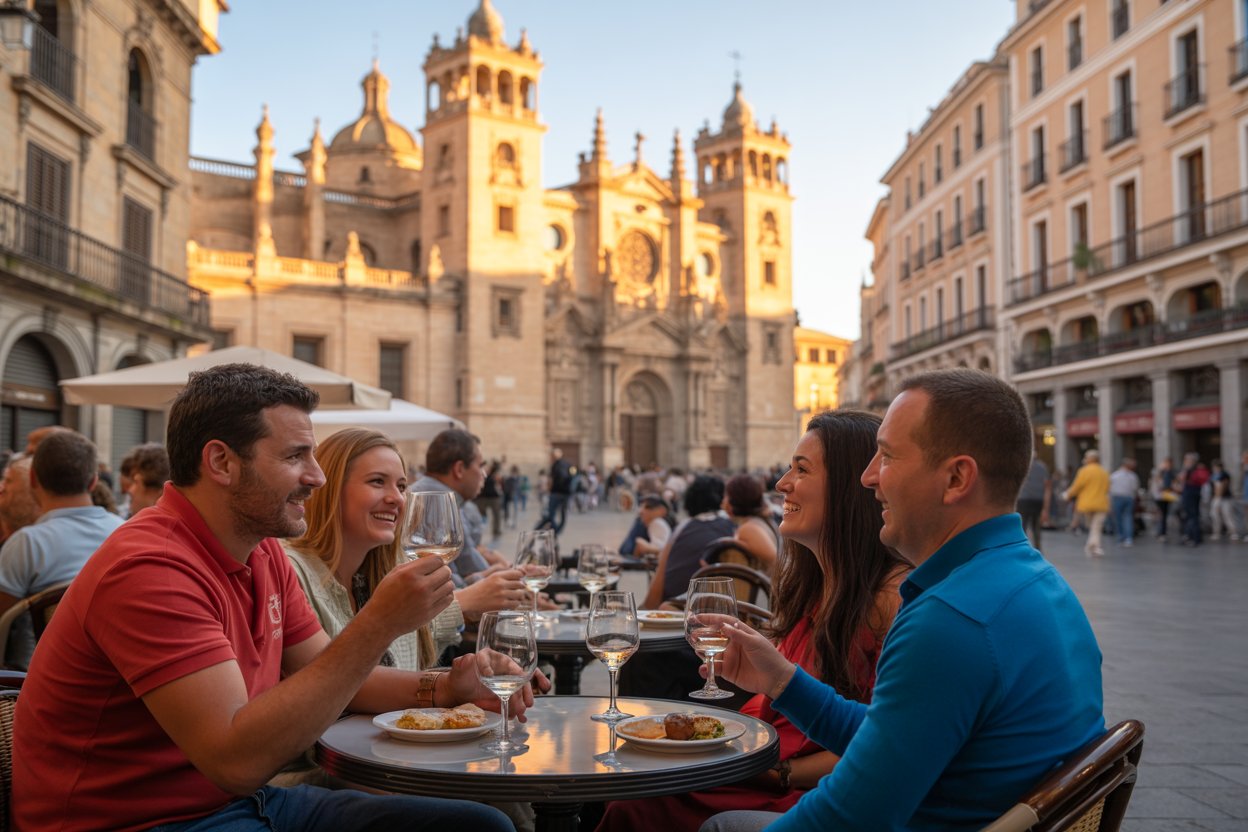
Beyond the statistics and the strategies, there is the human heart of Spanish tourism. It’s the waiter in a Madrid café who remembers your name, the artisan in Toledo keeping centuries-old traditions alive, and the vibrant local festivals that welcome the world with open arms.
Reaching 100 million tourists is a testament to Spain’s enduring magic. But the success of the next decade will be measured not by how many people enter the country, but by how well Spain manages to preserve the very soul that makes everyone want to visit in the first place.
