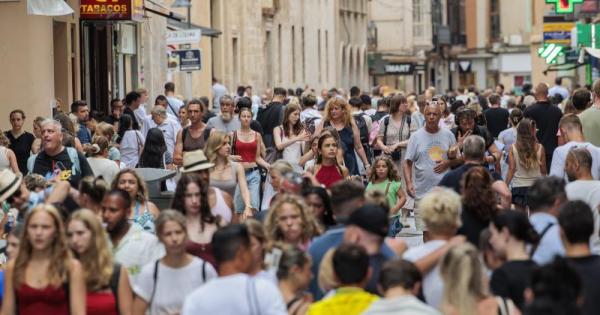
Spain will reach nearly 100 million international tourist arrivals this year, a ‘round and historic’ figure for an economic sector that will contribute more than €70 billion to the balance of payments surplus in 2025, according to forecasts by the Tourism Board. Its president, Juan Molas, announced on Tuesday at a press conference that the Spanish tourism sector will close the current financial year with improved results compared to 2024, confirming its strength and ability to adapt despite the impact of price increases on demand and on the business accounts of companies.
‘We are approaching 2026 with an optimistic spirit and a moderate but sustained growth outlook, backed by favourable forecasts,’ which are based on the increase in air slot reservations for the season and the number of conferences and major events for MICE tourism (meetings, incentives, conferences and exhibitions) throughout the year.
In principle, if there are no international or national events that could in any way harm tourist activity, the first half of the year is expected to be ‘completely normal and even see a small increase in some months compared to 2025, which means we can look forward to a really good 2026,’ he estimated.
Molas pointed out that the camping sector, which has received little attention in general terms, is having an ‘extraordinary’ season and is expected to have an ‘optimal’ 2026 because the private investment being made in this sector is very significant.
‘Although it is not a very significant percentage of the total volume, it is important because it creates and helps to improve the Spain brand,’ said Molas, who believes that there is another sector that is experiencing a certain demand compared to other years, namely health tourism and incentive and conference tourism, where spending per customer per day is also well above average.
However, Molas warned that this favourable forecast should not lead to complacency and, in his opinion, the sector must remain vigilant in the face of growing competition from destinations that are gaining market share in the Mediterranean, such as Greece, Cyprus, Turkey, Croatia and the most recent additions: Montenegro and Albania.
These destinations are emerging as very strong rivals in terms of price and novelty, which requires us to be able to reinforce differentiation, quality and sustainability as distinctive elements of the Spanish tourism offering, he added.
Unfortunately, ‘we are going through a different, not to say complicated, or very complicated, political moment, where the failure to approve the budget – we have been without one for three years now – is naturally limiting many investments,’ he recalled.
‘We must convince the political parties, especially those with a presence throughout the country, that a national tourism investment plan is necessary, but for a minimum of 15 years (in infrastructure, mobility, housing, digitalisation and regeneration of mature destinations, among others),’ he said.
And, according to latest markets reports out of Germany, for example, Germany’s travel landscape for summer 2026 is shifting fast, with tourism giant TUI reporting that Greece has overtaken Spain to become the country’s top early-booking destination. Türkiye, meanwhile, has secured a strong third place — and Antalya stands out as the single most-booked destination among German holidaymakers.
According to a statement from TUI, early reservations for summer 2026 show Greece slightly surpassing Spain, traditionally the firm’s strongest market. Demand is particularly strong for Greece’s major islands such as Crete and Rhodes, with TUI Germany Managing Director Benjamin Jacobi noting a “notable increase” in interest for smaller islands like Korfu and Sisam as well. The trend signals a shift in German travelers’ priorities, with more visitors leaning toward destinations known for natural landscapes, relaxed atmospheres, and Mediterranean heritage.