
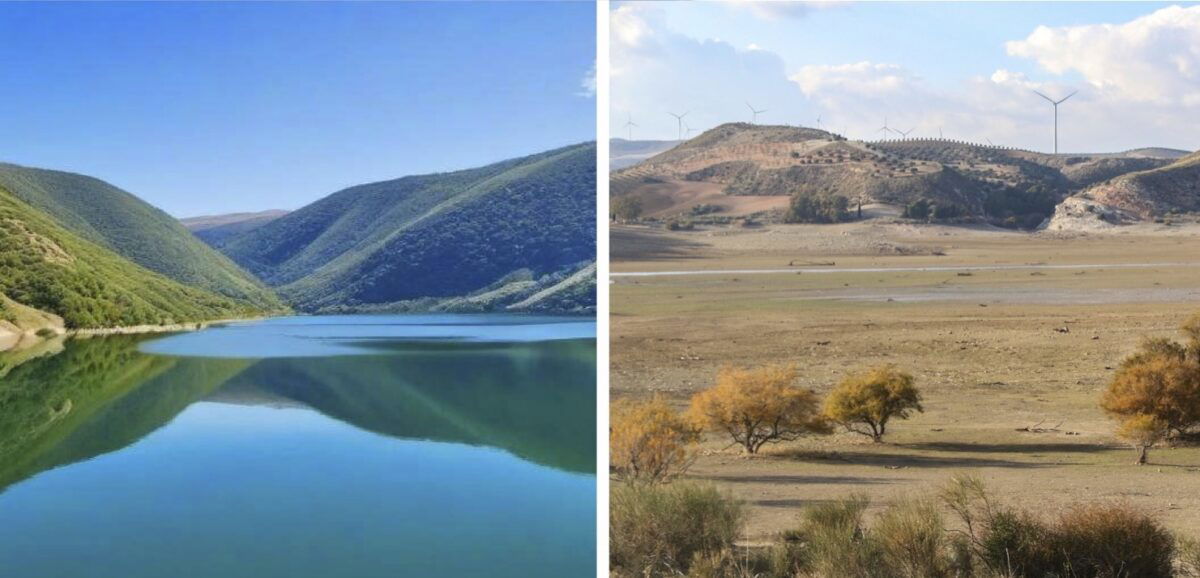
For years, coastal Spain has been under water restrictions amid warnings about reservoirs running dry. Much of the news has been full of doom and gloom about climate change, overtourism, and misuse of water as the main causes, leading to neighbours squabbling over who’s to blame and who is most ecologically sensitive by not filling pools, using hosepipes, and watering gardens. We came close on several occasions, to a point where reservoirs were shut down or nearly, citing that the low levels of water were at a point at which the remaining waters could not be used for human consumption due to the levels of mud and sediment in them.
Today, however, Spain’s southern coasts, including the Costa del Sol and broader Andalucia region, are breathing a sigh of relief as reservoir levels show major improvement entering 2026. After years of severe drought that triggered strict water restrictions, heavy rainfall in late 2025 has boosted reserves, offering hope for tourism, agriculture, and daily life in these areas. But how much better are they and are we out of the woods yet?
National reservoir levels hit healthy 56 per cent in 2026
As of early January 2026, Spain’s reservoirs stand at 56.3 per cent of total capacity, holding approximately 31,546 cubic hectometres (hm³) out of a possible maximum of 56,043 hm³. This is a notable recovery from drought lows below 40 per cent in recent years, thanks to the substantial rains toward the end of 2025.
The improvement provides a strong buffer heading into the drier spring and summer months, with most severe nationwide water restrictions eased or lifted.
Andalucia and Costa del Sol: From critical lows to steady recovery
Andalucia has seen its reservoirs climb to around 48 per cent capacity – a marked improvement from the mid-30 per cent levels seen at the start of 2025. Key areas like Malaga province have benefited from rainfall, easing pressure on tourism spots reliant on water for pools, golf courses, and urban supply.
While sub-regions vary, with Granada at ~25 per cent and Jaen at ~33 per cent, still lower, overall volumes are over 1,600 hm³ higher than a year ago. Provinces like Huelva (nearly 88 per cent) and Sevilla (77 per cent) lead the regional rebound.
This recovery has helped relax many local restrictions, though conservation will remain key for sustainable use.
Northern and Atlantic regions continue to fare best:
- Cataluña: ~75 per cent
- Galicia: ~69 per cent
- Comunidad de Madrid: ~71 per cent
Southeastern areas lag behind but show slow improvement:
- Murcia: ~28 per cent (lowest nationally)
- Comunidad Valenciana: ~41 per cent
- Snowfall in mountains could further boost spring inflows via meltwater.
Experts predict no major nationwide restrictions in 2026 if average rainfall continues, but localised measures could return in vulnerable southern basins during peak summer demand. Long-term investments in desalination plants and efficiency are underway to combat recurring drought risks exacerbated by climate change. Spain’s water story in 2026 starts on a promising note – a testament to nature’s relief after years of strain.