
Published on
January 22, 2026

As the 2026 travel season begins, Spain is grappling with a paradox that has been simmering for years. On paper, the nation is an economic powerhouse, reaching nearly 100 million international arrivals and generating billions in revenue. However, beneath the surface of sunny beaches and vibrant plazas, the “Rainbow Nation” of the Mediterranean is facing a crisis of identity. The latest reports from Majorca and beyond suggest that Spain’s reputation as a welcoming, affordable destination is being eroded by the twin pressures of overcrowding and unaffordable housing.
The Breaking Point of “Full Capacity”
In Majorca, the phrase “full capacity” is no longer a warning for the future—it is the reality of today. In 2025, the island welcomed over 19 million tourists, a staggering figure for a landmass with a permanent population of just under one million. The result is a strain on infrastructure that has become impossible to ignore. From water shortages to gridlocked coastal roads, the sheer volume of people has led to a decline in the quality of the visitor experience.
Local hoteliers and tourism leaders are now advocating for a radical shift: increasing prices to manage demand. The logic is that if the island cannot accommodate more people, it must attract higher-spending visitors who place less strain on local resources. However, this move risks alienating the middle-class European travelers who have been the backbone of Spanish tourism for decades.
The Housing Crisis: When Tourism Displaces Residents
Perhaps the most damaging impact of the tourism boom is its effect on the Spanish property market. In 2026, the disconnect between tourism wealth and local affordability has reached a boiling point.
Advertisement
Advertisement
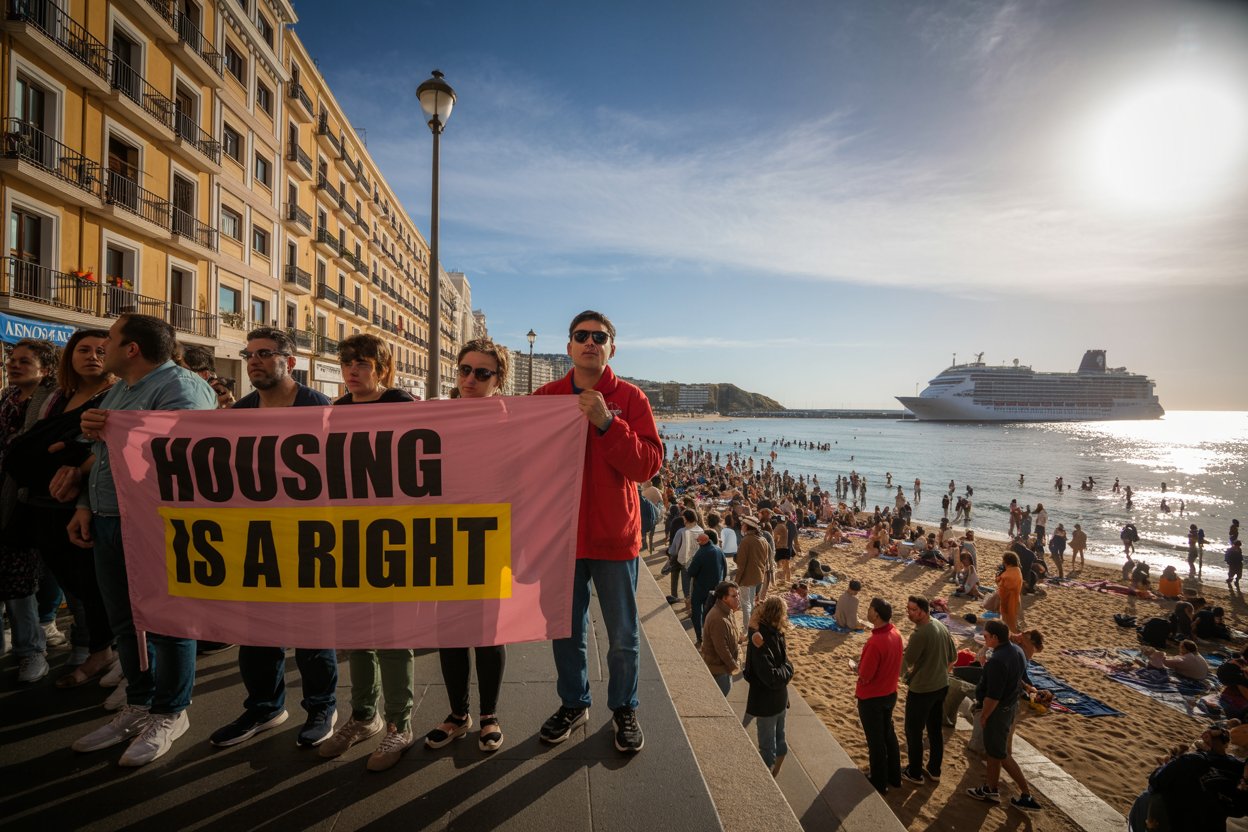
- The “Tourist Flat” Effect: In cities like Barcelona and Palma, thousands of traditional apartments have been converted into short-term holiday rentals. This has halved the supply of long-term housing, causing rents to double in just a decade.
- Living in Vehicles: In a heartbreaking trend, reports indicate that hundreds of workers in the tourism sector—the very people who serve the visitors—are now living in vans or tents because they cannot afford a room in the cities where they work.
- The Generational Squeeze: Data shows that 85% of Spaniards under the age of 30 are still living with their parents, unable to enter a market where “investors” and “digital nomads” outbid local salaries.
A Hit to the Reputation: From “Welcome” to “Go Home”
The most visible sign of the crisis is the rise of anti-tourism sentiment. In late 2025 and early 2026, coordinated protests across 40 Spanish cities saw tens of thousands of residents taking to the streets. Banners reading “Tourists go home, you are destroying our neighborhoods” have become a common sight in news cycles, significantly damaging Spain’s reputation as a “safe and friendly” destination.
For the first time, tourists are reporting a “chilled” atmosphere in formerly buzzy districts. The traditional chiringuitos and local shops are being replaced by international franchises, leading to what locals call the “Disneyfication” of their culture.
The Government’s 2026 Action Plan
In response, Spanish authorities are implementing some of the strictest tourism regulations in Europe:
Rental Bans: Barcelona is on track to eliminate all short-term rental licenses by 2028, with several other cities following suit with strict “zoning” for tourist flats.
Higher Levies: From April 2026, regions like the Balearics and Catalonia are doubling or even quadrupling “eco-taxes” on hotel stays to fund local infrastructure.
Cruise Caps: Limits on the number of mega-cruise ships docking in Palma and Barcelona are being strictly enforced to prevent “flash overcrowding” in historic centres.
The Road Ahead
The challenge for 2026 is finding a “middle way.” Spain cannot survive without tourism, which accounts for 13% of its GDP, but it also cannot survive a housing market that excludes its own citizens. As the country edges toward the 100-million visitor milestone, the goal is no longer to be the most visited country, but the best managed one. For travelers, the message is clear: the era of “cheap and unlimited” Spain is ending, replaced by a model that prioritizes sustainability and local life.
