
Friday, 9 January 2026, 13:51
Farmers on the Granada province’s Costa Tropical are “very concerned” about the presence of Thrips parvispinus, known as tobacco thrips, an invasive insect from Asia that has already forced the uprooting of pepper plantations and has caused significant damage in other areas including Almeria and Murcia.
For the last two months, farmers on the Costa Tropical, especially in Castell de Ferro and Motril, have been following with concern the evolution of this pest, which mainly attacks peppers and, to a lesser extent, tomato and cucumber. It is a very small insect, but with a great impact, as it damages the plants and transmits a virus that can ruin the harvest.
The situation has led many producers to uproot their crops completely, meaning significant financial losses. In addition, many are questioning whether it is worth continuing to plant peppers in the future. “It is a pest that not only ruins the fruit, but can also force you to pull up the whole plantation,” explained Miguel Monferrer, provincial secretary of COAG Granada (Andalusian farmers’ union).
According to data from the Junta de Andalucía, the Costa Tropical has some 540 hectares under pepper cultivation, although the real surface area is around 270 hectares due to double harvesting. In December the regional government set up a line of extraordinary aid aimed at greenhouse pepper farms that have suffered total losses and have had to uproot the crop. This aid, which will be paid in 2026, could reach up to 20,000 euros per hectare, with a maximum of 50,000 euros per farmer.
So far, 281 applications have been submitted throughout Andalucía: 269 in Almeria province and 12 in Granada province. Although the incidence of tobacco thrips in Granada is lower than in Almeria, the sector insists that it is important not to be overconfident, as the pest could reappear at the end of winter.
Julia Ibáñez, the Andalusian Partido Popular (PP) spokesperson for Almeria, announced that the Andalusian government will allocate three million euros in aid, stressing that it is the first time that the Junta has activated a specific line to combat a pest with its own funds. Ibáñez also pointed out the difficult situation that farmers are going through and called on the central government for fiscal measures to alleviate losses.
Solutions
Manuel del Pino, secretary general of the young farmers’ association, ASAJA Granada, acknowledged that, although the aid is a relief, “the economic damage caused by this insect is much greater”, as many farmers have lost all the investment they have made.
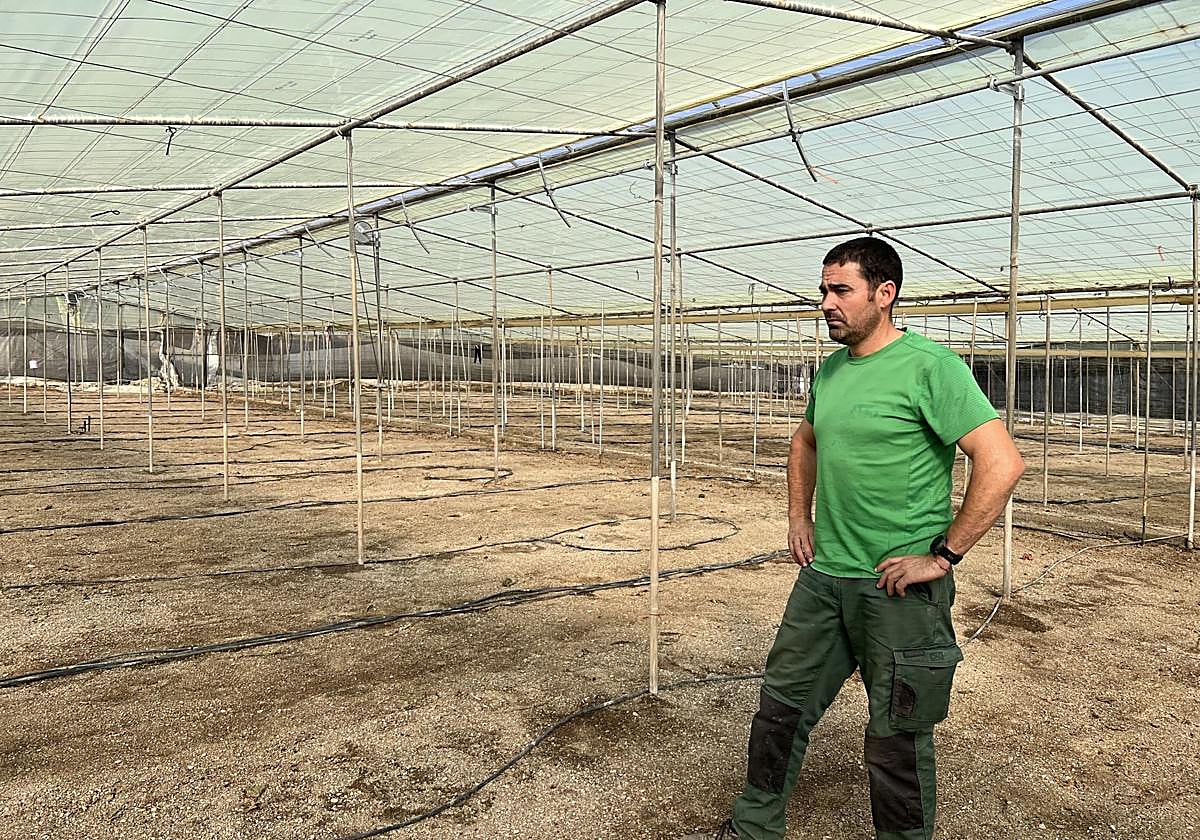
One of those affected is José Villegas, a farmer from Castell de Ferro, who had to completely uproot his two pepper greenhouses, with a total surface area of 6,000 square metres. “I had around 12,000 plants and I have practically not been able to make use of anything”, he reported. Villegas had planted at the end of July with the idea of starting to harvest in November, but the pest left most of the peppers “marked” and worthless.
“First quality peppers can be sold for one or two euros, but second quality peppers barely fetch 30 cents and from that you have to deduct transport and other costs. In the end, every time I sold, I was losing money”, he stated. In plants alone, he claimed to have invested more than 6,000 euros, to which must be added the cost of insects and treatments to try to stop the insect infestation.
“I’ve tried everything in integrated control, different types of insects, and I haven’t recovered anything. Everything has been lost,” he said. At the beginning of December he decided to pull up the crop, disinfect the soil and the structure of the greenhouse and prepare the land to plant watermelon instead.
The Junta de Andalucía’s agricultural department has set up a technical committee made up of experts to study the evolution of the pest, coordinate action and seek new solutions to control the insect effectively.