
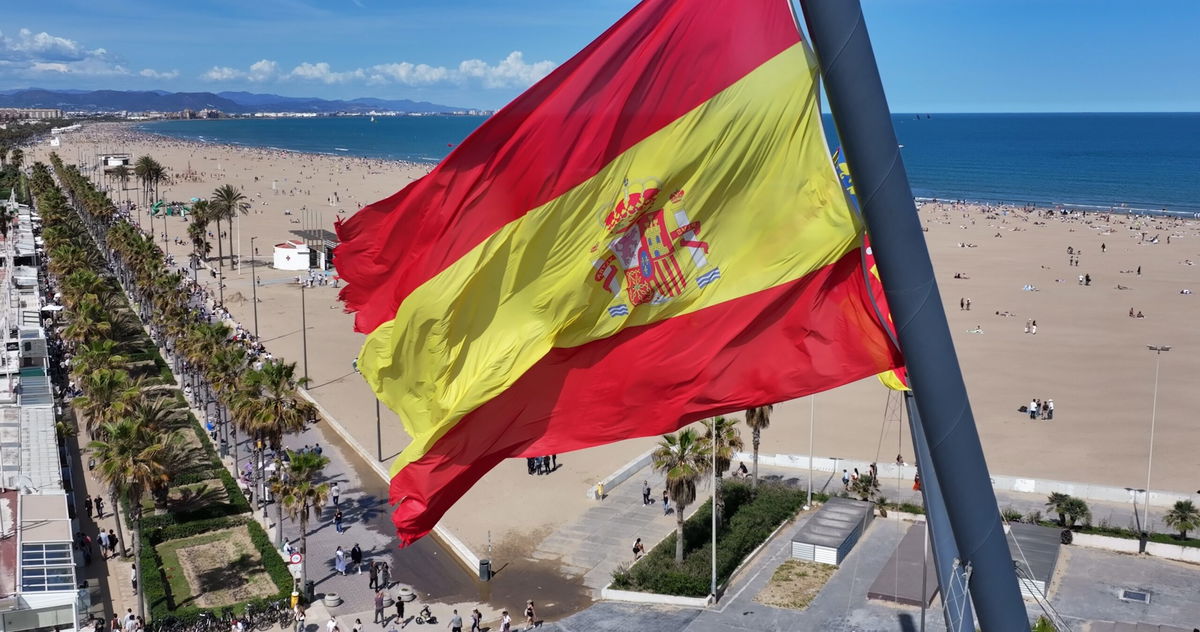
For residents, the ”puente” brings a change in rhythm. Photo Credit: ByDroneVideos/Shutterstock
December 6 marks Día de la Constitución, one of Spain’s most significant national holidays. It commemorates the 1978 referendum in which Spaniards approved the democratic constitution that followed the Franco era. While the day honours a single national event, its practical impact varies widely depending on where people live and work.
As the first of two major holidays in the December “puente”, it often triggers a long weekend, but not for everyone. Residents, newcomers and tourists alike frequently find themselves unsure of what will close, what remains open and who actually gets time off work.
Who Gets the Day Off?
Public Sector and Most Office Workers Benefit
Día de la Constitución is a national public holiday, meaning workers across Spain are entitled to the day off. In practice, however, the picture is more nuanced.
Public administration employees, teachers, bank staff and many office workers normally enjoy a full holiday. However, essential services, hospitals, emergency staff, public transport and some hospitality sectors, continue operating as normal. Shift workers in retail and tourism may also be required to work, depending on regional regulations and employer agreements.
Those in temporary or gig-based work often experience more uncertainty; some receive the holiday, while others may find it treated like a normal working day.
Where the Holiday Is Most Widely Observed
A True Nationwide Celebration, But With Regional Differences
Although the holiday is recognised across Spain, some autonomous communities embrace it more visibly than others.
Regions with a strong focus on national holidays, such as Madrid, Castilla y León, Extremadura and Andalucía, tend to mark the day with official events, ceremonies and parades. Madrid hosts some of the most prominent activities, including institutional events attended by political leaders.
In contrast, areas with stronger regional identities, such as Catalonia or the Basque Country, observe the day as a legal public holiday but tend to keep celebrations low-key, with many residents viewing it primarily as part of the December break rather than a patriotic commemoration.
What Will Be Closed?
Public Institutions, Banks and Many Shops Shut Their Doors
The holiday brings widespread closures across Spain, and residents should plan accordingly.
Typically closed nationwide:
- Public offices and administrative buildings
- Banks
- Post offices
- Schools
- Most small and medium-sized shops
- Many professional services, including law firms and clinics
Supermarkets vary by region and chain. In tourist-heavy coastal areas, some may remain open for limited hours, while inland towns often close entirely.
Large shopping centres in regions with permissive opening laws, Madrid, Valencia or parts of Andalucía, may stay open, but this is not universal. Pharmacies follow a duty-rota system, ensuring at least one remains open per area.
What Stays Open?
Tourism, Transport and Hospitality Keep Moving
Given the holiday falls in a season rich with domestic and international tourism, several sectors continue operating.
Restaurants, bars and tourist attractions generally remain open, particularly in cities such as Madrid, Barcelona, Valencia, Málaga and Seville, as well as popular islands like Tenerife, Gran Canaria and Mallorca.
Public transport services, buses, metros and trains, operate on a holiday schedule, which usually means reduced frequency but uninterrupted service.
Petrol stations stay open, though in rural zones hours may be shortened.
Museums vary: national museums often open, while municipal or privately run spaces may close.
The Wider “Puente de Diciembre”
Two Festive Days Create One of Spain’s Longest Long Weekends
Día de la Constitución marks the start of the famous Puente de Diciembre, culminating with Día de la Inmaculada Concepción on December 8. The proximity of the two holidays means many Spaniards take advantage of a potential five-day break.
Schools typically close for the entire puente, and many companies allow employees to take December 7 as a “puente day”, though this is not guaranteed. Travel surges across the country, ski resorts open their early-season slopes, coastal destinations see a spike in weekend visitors, and airports experience one of December’s busiest periods.
For residents, the puente brings a change in rhythm: bustling city centres, lively Christmas markets and heavy traffic both on the roads and in rail networks.
Why the Holiday Matters
A Moment of Reflection Amid the Festive Rush
Beyond the practical aspects, Día de la Constitución remains a key symbol of Spain’s modern identity. It represents the transition to democracy and the collective effort to establish political freedom and national unity after decades of dictatorship.
While younger generations may see the day as simply part of a long weekend, many Spaniards regard it as a reminder of progress, highlighting the values of stability, human rights and shared citizenship that define today’s Spain.
Essential Information for Residents in Spain
- 6 December is a nationwide public holiday commemorating the 1978 Constitution.
- Most public-sector and office workers get the day off, but hospitality, transport and emergency services continue.
- Observed everywhere, though some regions celebrate more prominently than others.
- Expect closures of banks, public offices, shops and schools.
- Tourist areas stay active, with hotels, restaurants and many attractions open.
- It forms part of the major December puente, which significantly increases travel and local activity.
Residents and newcomers should plan ahead, especially for banking, administrative tasks, and shopping. While many services pause for the holiday, essential services and tourist-related businesses maintain operations, so it is possible to access food, transport, and accommodation with some planning.
For those staying in Spain over the puente, the long weekend offers a chance to experience seasonal activities such as Christmas markets, cultural events, and regional festivities. However, it is important to remember that the holiday rhythm affects traffic, public transport, and the opening hours of shops and attractions across the country.