
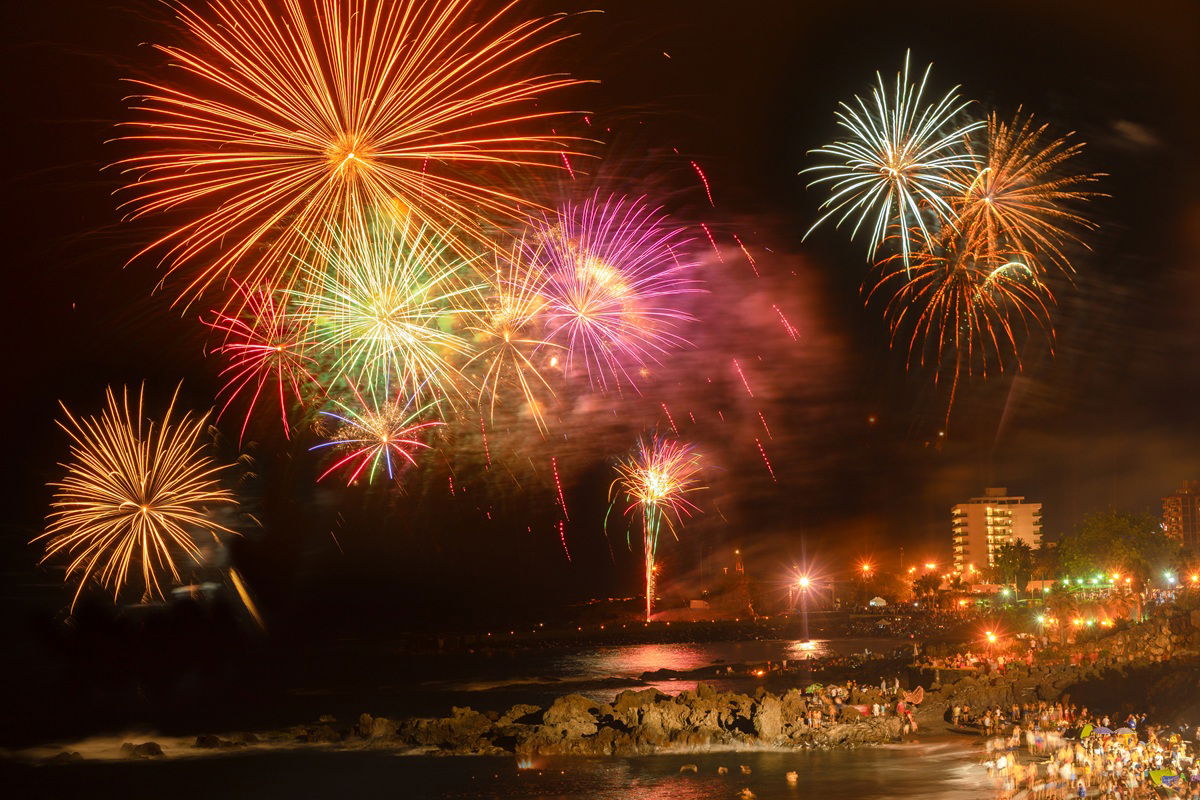
Fireworks and festive crowds mark San Juan night on the Spanish coast, kicking off summer with colour, music and ancient rituals.
Credit : Neirfy, Shutterstock
Summer in Spain isn’t just a date on the calendar—it’s a feeling. And for millions, that feeling officially kicks off with the fiery, joyous celebrations of San Juan.
Now, thanks to a recent announcement in the Boletín Oficial del Estado (BOE), the long midsummer weekend is about to get even better for many Spaniards: Monday, June 23rd, is now confirmed as an official public holiday in several regions and hundreds of towns, setting the stage for a three-day weekend that feels like the opening act of summer itself.
Who gets a day off for San Juan?
San Juan isn’t a national holiday across all of Spain, but it packs a punch in regions and cities where it is celebrated. In 2025, two regions are taking centre stage: Catalonia, where the 24th of June is a full public holiday across the territory, and the Valencian Community, where the day is recognised, albeit with a twist—workers can take the day off but may need to make up the hours later.
But the festivities don’t stop there. Over 1,800 towns and cities—from major provincial capitals like Alicante, Albacete, A Coruña, León, Las Palmas, Segovia and beyond—have marked San Juan as a local holiday. In some provinces, such as León and A Coruña, dozens of municipalities are embracing the tradition. Even areas less known for midsummer rituals, like Álava, have joined in. All told, more than 17 million Spaniards will enjoy a day off thanks to San Juan, whether by regional or local decree.
What does this mean in practice? For most, the party really begins on the evening of the 23rd, with the knowledge that the next morning is theirs to recover (or keep celebrating). School’s out, summer’s in, and the San Juan holiday marks the first true break of the season—perfect for a family getaway, a night out with friends, or simply a long, lazy weekend at home.
A night of fire and rituals: What makes San Juan special?
Even though the official day off is the 24th, the magic of San Juan is really in the night before. Across Spain, the evening of June 23rd is alive with bonfires, fireworks, and ancient rituals—a blend of pagan solstice traditions and modern festivities.
Bonfires are the beating heart of the celebration. From city squares to sandy beaches, locals gather around crackling flames to burn away the bad luck of the past year and wish for good fortune ahead. Some write their wishes or worries on slips of paper and toss them into the fire. Others leap over the flames—sometimes three, seven, or nine times, depending on local custom—for luck or purification.
On the coast, midnight swims are a must. Legend has it that a dip in the sea during San Juan’s night brings health and happiness for the year ahead. In some towns, traditional herbal bouquets—especially those made from “San Juan’s herbs” like hypericum—are gathered to ward off evil and invite good vibes.
One of the most spectacular rituals happens in San Pedro Manrique, Soria, where locals famously walk barefoot over glowing embers in an age-old ceremony that draws crowds every year. It’s a dramatic reminder of how deeply rooted San Juan’s traditions run—and just how seriously some take their midsummer magic.
How each region celebrates San Juan
No two towns do San Juan quite the same way, but everywhere, the festival is a riot of light, sound, and community spirit. In Catalonia, fireworks and firecrackers fill the air, and the traditional “Coca de Sant Joan”—a sweet, fruit-topped pastry—appears on every table. In Galicia, it’s all about the bonfires (“cacharelas”), the scent of sardines grilling in the night air, and the clatter of pans meant to scare away evil spirits.
Down in Alicante, San Juan is a major event: the “Hogueras de San Juan” features huge, artistic effigies set ablaze in spectacular fashion, parades, music, and non-stop street parties. Other cities, like León and Badajoz, celebrate with local fairs, concerts, and fireworks displays.
Even smaller towns and villages find their own ways to mark the occasion. Whether it’s a group of friends gathering on the beach, neighbours sharing homemade food, or entire communities coming together for traditional dances and live music, the spirit of San Juan is about celebrating together and embracing the start of summer.
San Juan 2025: More than just a holiday
San Juan has always been about more than just a day off work. It’s about tradition, togetherness, and a shared sense of renewal as Spain steps into the sunniest months of the year. The fact that so many Spaniards will enjoy an extended break in 2025, thanks to the new BOE ruling, only adds to the anticipation.
So, if you’re lucky enough to be in Spain on the night of June 23rd, don’t be surprised if you hear laughter, see fireworks lighting up the night sky, or even find yourself drawn to the warmth of a bonfire on the beach. Whether you’re a local or a visitor, San Juan is an invitation to leave worries behind, dive into summer, and make a wish for brighter days ahead.
Stay tuned with Euro Weekly News for more news from Spain