
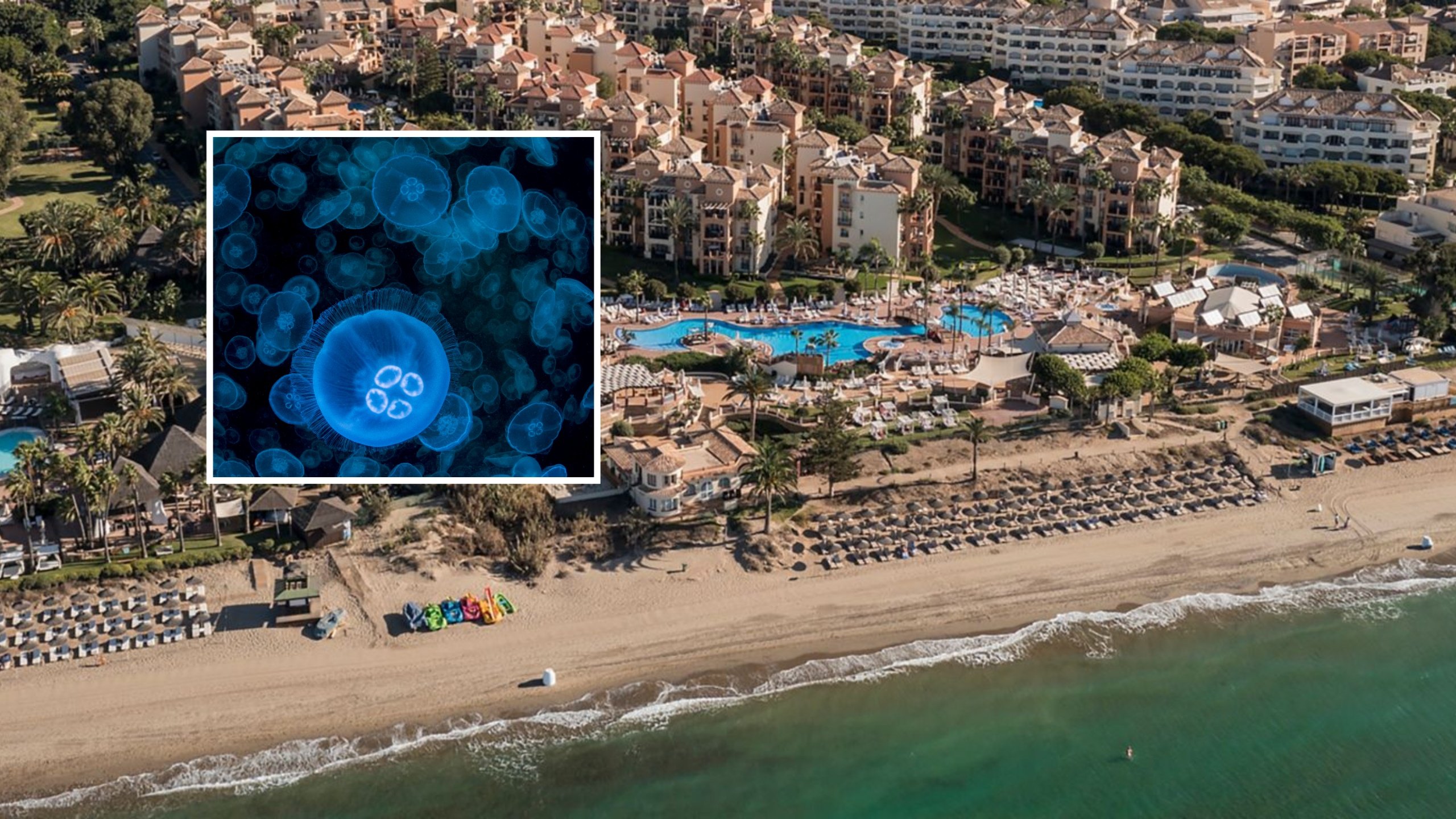
SWATHES of the Costa del Sol are critically vulnerable to jellyfish infestations, new research has found, in what scientists warn could pose a serious risk to tourism in the province.
A study by geography researcher Ana De la Fuente, of Malaga University, found that more than 50 kilometres of coastline between Rincon de la Victoria and Fuengirola – including Marbella and Malaga Bay – are perfectly positioned to be overrun with swarms of jellyfish year-round.
The findings came as scientists called for urgent action to protect Malaga’s beaches from the maddening invasions, amid fears the infestations could affect the area’s appeal as a tourist destination.
READ MORE: Coming up in 2026: Spain will enjoy its first total solar eclipse in over 100 years – all you need to know to catch the best view
De la Fuente said: “What happens on a summer’s day in Malaga when we want to enjoy the beach and something keeps us from going into the water?
“It might be jellyfish, but it could also be pollution or invasive algae,” she added, “and that has implications both for local residents and for the area as a tourist destination.”
The study’s conclusions were drawn from a painstaking mapping of jellyfish sightings on the Costa del Sol, collected via an app called InfoMedusa.
The reason the area is so prone to infestations, De la Fuente explained, is that it meets all the conditions jellyfish need to proliferate: beach orientation, salinity, water temperature, wind speed – and something scientists call ‘coastal drift.’
READ MORE: Are solar panels a good investment in Spain? This Costa del Sol installation suggests a 17.7% ROI
Coastal drift is the movement of water, sand, and floating material along the coastline.
On the Costa del Sol, easterly winds often generate a coastal drift that moves water masses westwards.
When jellyfish are already offshore, this drift can carry and concentrate them onto certain beaches, especially those that face the current or sit in bays where material becomes trapped.
That is why some beaches are repeatedly affected, while nearby ones with different orientation or shelter see far fewer jellyfish, De la Fuente explained.
The geographer added that there were practical ways to make beach life easier, even when swarms hit.
READ MORE: Exotic alligator is rescued from reservoir after being dumped by owners in Spain
One of the simplest and most effective is turning on the beach showers.
She said: “If you can’t swim or cool off, what are locals or tourists supposed to do?”
Other ideas include small water parks, cooling stations, or simple structures to stop jellyfish entering swimming areas.
“In some Granada beaches, breakwaters create natural pools that act as barriers,” she said. “It wouldn’t be hard to do the same here.”
De la Fuente also suggested jellyfish nets in the first few metres of water, though only after proper environmental checks.
The goal, she warns, is to protect businesses that depend on tourists and to preserve beaches as free, public spaces for locals.
“If we take that privilege away from the people of Malaga, we lose part of our quality of life,” De la Fuente added.
Click here to read more Environment News from The Olive Press.