
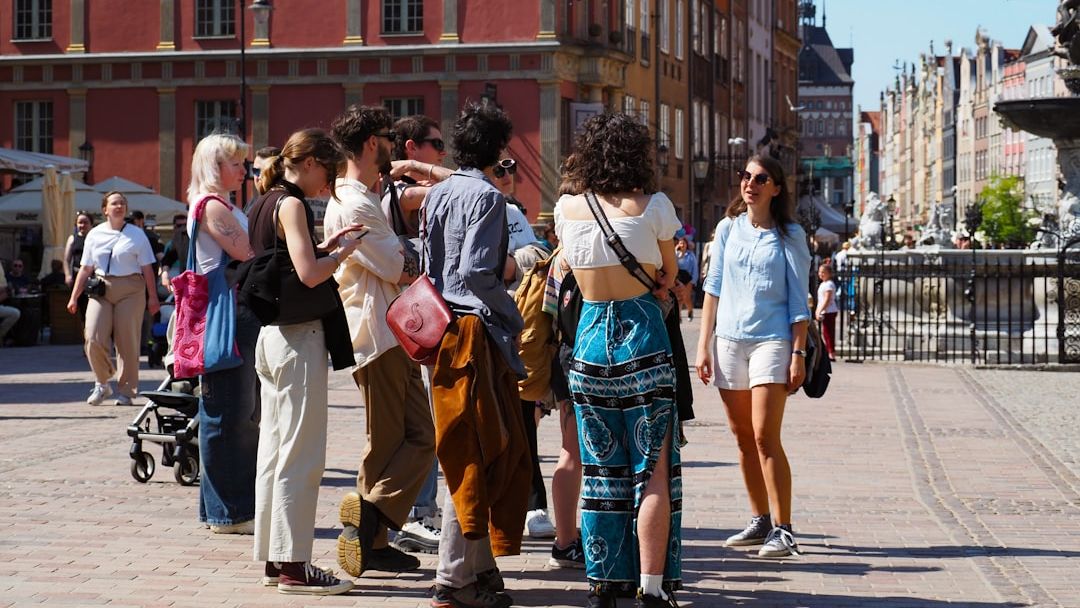
Summer 2025 went down in history as the season when Europe turned against tourism. Locals unable to walk through Barcelona’s clogged streets sprayed visitors with water guns. From Paris to Venice, tensions between residents and travelers reached a breaking point. People who have lived in these cities for generations found themselves priced out of their own neighborhoods, surrounded by selfie sticks and rolling suitcases.
Let’s be real. This isn’t just some random outburst of local grumpiness. The numbers tell a different story entirely.
The Numbers Behind the Breaking Point

In 2024, a record 747 million international travelers visited Europe, mostly throughout the southern and western regions. In France, Spain, Italy, Greece, Portugal, and the Netherlands, more foreign visitors filtered through in a year than there were residents. Think about that for a second. Imagine waking up every single day knowing your city will host more outsiders than actual neighbors. Over the course of 2024, 94 million tourists visited Spain, compared to its 48 million population.
Spain received 42.5 million tourists in the first six months of 2024, reflecting increases of 11.5 and 13.3 percent from the same six-month periods in 2019 and 2023, respectively. The surge didn’t slow down after the 2020 pandemic recovery. It accelerated. The country welcomed 82.8 million international travellers in the first ten months of 2024, beating all previous records, according to the latest statistics from the Spanish Ministry of Industry and Tourism. And it doesn’t seem to be slowing down: tourism is expected to grow by 25 per cent in the winter of 2024/25 compared with last year, the Spanish Tourism Board recently revealed.
Housing Crisis Pushes Residents to the Edge

Space is naturally limited on islands, and the growth in tourism and the related renting of properties to tourists at inflated rates has caused a housing crisis. By 2024, about 1,000 residents of Mallorca lived in their vehicles, as did an unspecified number of Ibiza residents. Living in your car because tourists need somewhere to stay for three nights. That’s not a metaphor for displacement anymore. It’s literally happening.
Barcelona, which reported the most unaffordable housing market, reports the worst affordability crisis, reflecting Spain’s broader housing emergency. Other major metropolitan areas, including Amsterdam and Zurich, scored three or below, firmly placing them in the unaffordable category. According to Spanish property website Idealista, rental prices in Spain rose by 11.5% in 2024, reaching an all-time high in December with an average of €13.5 per square metre. In the capital, in just one year, the price of housing has risen by 20% in terms of purchase, and 15.4% in terms of rent.
In Lisbon, house prices soared by 176% from 2014-2024, leading to a 28% population loss in districts like Alfama as short-term rentals dominate. Traditional neighborhoods are emptying. Honestly, when your grandparents’ apartment becomes someone’s weekend Airbnb, the anger makes sense.
Water Pistols and Symbolic Resistance

The protests that grabbed headlines weren’t exactly violent revolutions. In July 2024, there was a protest in Barcelona of about 3,000 people. Some of the protestors used tape to seal hotel exits and cordon off restaurants and other tourist services in public squares, and some sprayed tourists with water guns. Those squirt gun incidents made global news because they struck a nerve. It was mischievous, yes. Playful even. Still, the message cut through.
On 26 May 2024, about 10,000 people protested in Palma de Mallorca, with up to 50,000 protestors taking part across the Canary Islands, according to organizers. Between 20,000 and 50,000 people across the islands took part in coordinated protests against the excess tourism, which campaigners argue has damaged the welfare of the population and the islands’ environment. These weren’t fringe groups. Environmental organizations, including Greenpeace and the WWF, backed the Canary Islands demonstrations.
The BBC reported that while overtourism has concerned residents of the most-visited locations for a while, in 202,4 it feels like something has changed. The anger among many locals is reaching a new level.
Government Responses Reflect Growing Pressure

Cities finally started acting after years of complaints. In Barcelona, the city council vowed to get rid of all Airbnb-style accommodation by 2028, and in December 2024, they took the first step when the Urban Planning Commission initially approved an amendment for stricter limits that can now be placed on short-term rentals. The national government ordered Airbnb to delist nearly 66,000 illegal rentals. Meanwhile, Barcelona announced plans to eliminate all 10,000 city-licensed short-term rentals by 2028 to preserve homes for residents.
Venice, meanwhile, limited tour groups and banned megaphones back in August. In 2025, the city extended its Access Fee for day visitors, charging up to €10 during peak days. The goal was to reduce the flood of cruise passengers and day-trippers who spend little but crowd the city. However, the trial ended on 28 July 2025.
Málaga barred new holiday flats in 43 city neighbourhoods, and the Canary Islands decreed that 90 per cent of residential areas must be allocated to permanent residences within the next five years. Amsterdam launched a Stay Away campaign, as well as an interactive quiz to test visitors on behavioural etiquette.
Economic Dependence Creates a Painful Dilemma

Here’s the thing that makes this whole situation so complicated. Tourism is massive for these economies. For the Canary Islands, 35 percent of the overall GDP and 40 percent of jobs in 2022 came directly from tourism and its related businesses, which contributed over 16.9 billion euros in revenue that year. For the entirety of Spain, which has seen many anti-tourism protests, 12.8 percent of the national GDP came from tourism in 2023.
Tourism remains a major economic activity for Europe, directly accounting for 10% of GDP according to the European Parliament. Tourism Economics estimates that in 2024 there were over 948 million visitors to Western Europe, a 6% gain year over year and a roughly 7% increase above 2019. You can’t just flip a switch and turn off that revenue stream. Millions of jobs depend on visitors showing up.
The number of Barcelona residents in favour of tourism development fell from over 90% in 2004 to only 40% by 2016. That’s a brutal shift in public opinion. When nearly everyone supports something and, within roughly a decade, more than half turn against it, something fundamentally broke down in the relationship between tourism and community wellbeing.
Cultural Identity Gets Swallowed by Souvenir Shops

Protestors asked for protection of natural resources, a limit on arriving flights and docking cruise ships, and to regulate non-resident accommodation, citing the escalating living costs, the overuse of resources, public spaces and public services by tourists, and a loss of cultural identity as the island becomes touristified, including things like previously traditional shops becoming multi-national chains selling ice-cream. When your neighborhood bakery closes to become yet another gelato stand catering to cruise ship passengers, that stings.
One Barcelona professor says mass tourism has changed dramatically over the last 10 to 15 years. It’s not seasonal anymore; it’s 365 days a year. And the visitors are much more than the number of inhabitants. Most of the shops, even food shops, clothes shops, restaurants, everything in the center is basically addressed to tourists.
Venice faces daily demands for strict visitor caps as citizens seek to reclaim their city and protect its cultural soul. In Barcelona, with 12 million visitors recorded in the previous year, many locals have seen property rents escalate dramatically, forcing long-term residents out of their neighborhoods.

Matthias a curious globetrotter who collects moments from night markets, coastlines, and tiny mountain villages. Plans trips around local food, scenic trains, and the best views at golden hour. If there is a hidden cafe or a weird little museum, you’ll find them there first.