
Published on
August 19, 2025
By: Tuhin Sarkar
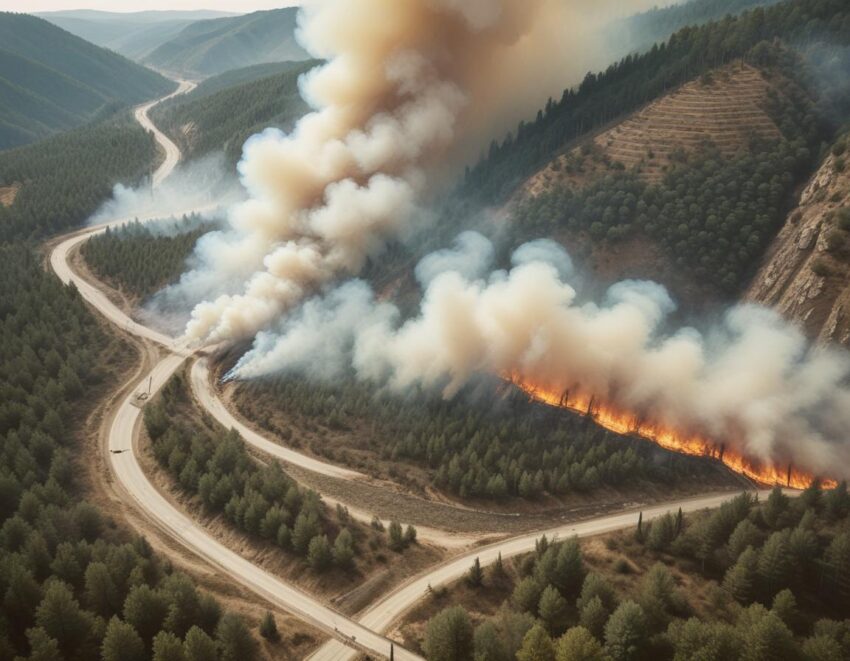
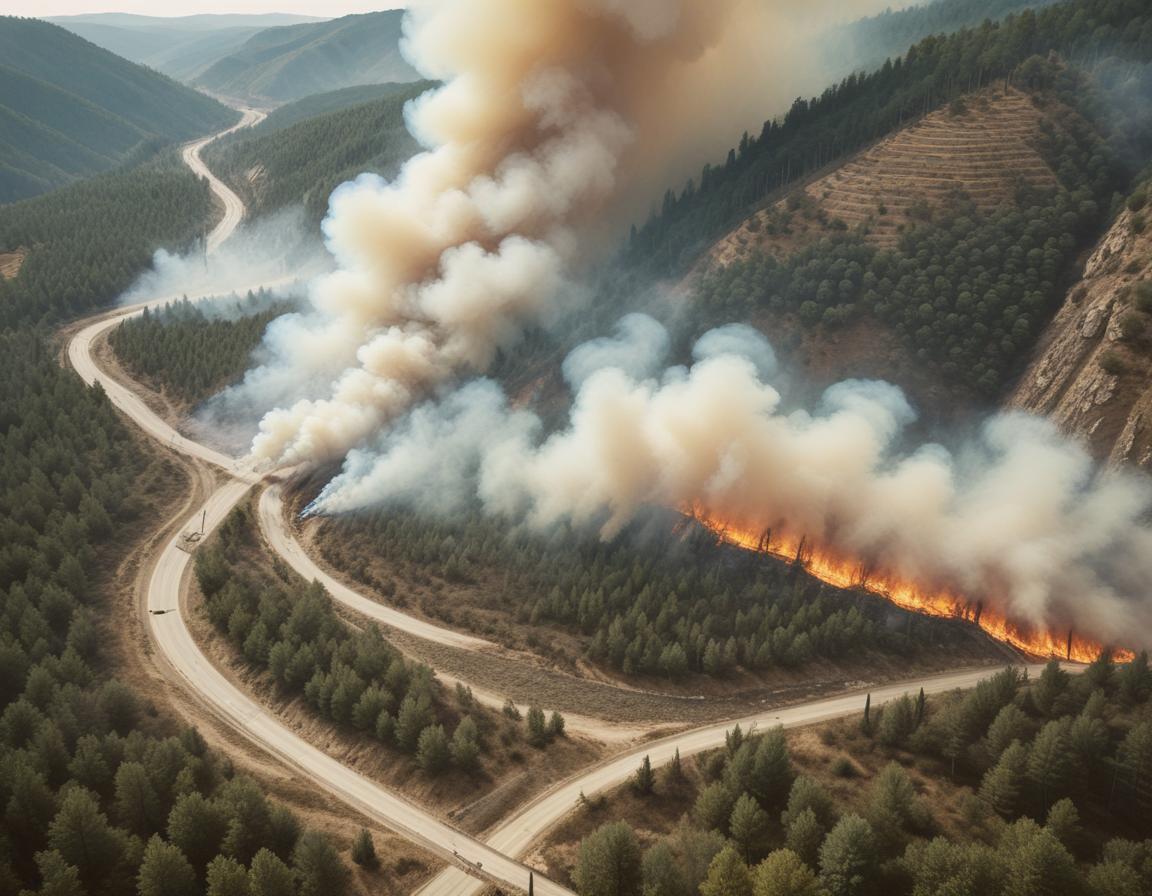
Wildfires sweep Spain at unprecedented intensity, delivering a blow to the tourism sector that extends far beyond longstanding overtourism critiques. Attraction closures now blanket the nation’s landscape, while the suspension of key rail services and the imposition of strategic road blocks further disrupt travel flows during the critical summer period. Spain’s tourism economy now confronts a rolling series of updates revealing the dual threat of environmental emergency and visitor mobility paralysis. The convergence of wildfire, site closures, rail outages, and road obstructions is effectively exacerbating the structural vulnerabilities that overtourism once epitomised.
Real-time railway stoppages engender cascading mobility failures, and simultaneous road closures layer further uncertainty. The result is a chain of tourism impacts that eclipses prior concerns about excessive visitor numbers. Heritage rail corridors, national parks, and emblematic cultural landmarks have all moved to emergency closures. Missing travel legs, blocked thoroughfares, and a tainted perceptive landscape compel agencies to dispense successive travel alerts. The macroscopic view is one of wildfires afflicting fundamentally interconnected systems, each iteration of incident updates revealing deeper and more costly repercussions for commercial and infrastructural planning.
Industry executives now contend that the narrative diagnosable risks has swiftly migrated from visitor saturation to severe climate-induced disruption. What once manifested as overtourism anxiety is accelerating into climate cavities and operational fractures, proof that the landscape’s severe dynamics are outpacing the capacity for ease. Regional agencies are now mobilising to recalibrate live risk assessments and visitor guidance, whilst stakeholders are tasked with weaving climate resilience into every operational fabric, from risk re-routing to messaging objectives. The new intelligence is available. Spain’s tourism landscape is urged to recalibrate.
Record wildfires hit Spanish tourism and Camino route
Spain is experiencing its worst wildfire season on record, and the impact is devastating both for residents and for the tourism sector. The latest wave of wildfires has forced the closure of a 50-kilometre stretch of the Camino de Santiago, one of Europe’s most iconic pilgrimage routes. The fires are burning across Galicia and Castile and Leon, where thousands of hectares of land have already been destroyed.
This crisis is no longer local. Spain’s tourism industry is facing its most serious environmental threat in decades. Travellers are stranded, rail services are cut, and global headlines are now focusing on the fragility of Europe’s summer travel season.
Climate change drives record-breaking fire season
Officials have confirmed that this is not a normal fire year. Spain has endured a 16-day heatwave with temperatures reaching 45°C, creating tinderbox conditions. The Defence Ministry has made it clear that climate change is driving extreme weather events. The European Forest Fire Information System reports that 344,400 hectares have burned in Spain this year. This is more than four times the seasonal average since 2006, and the largest area ever recorded.
Neighbouring Portugal has also been devastated, with more than 216,000 hectares destroyed, again four times the long-term average. Southern Europe is on the frontline of climate-driven disasters, and the consequences for tourism are profound.
Camino de Santiago closures disrupt global travellers
The closure of part of the Camino de Santiago is symbolic of the broader crisis. The Camino attracts thousands of international visitors every summer, many of whom book flights, hotels, and local tours months in advance. Cutting off 30 miles of the path disrupts itineraries and damages the confidence of future travellers.
Pilgrims who had planned to complete the full route are now facing cancellations, rerouting, and uncertainty. This disruption weakens Spain’s image as a safe and reliable destination. For a country that depends heavily on tourism revenue, the financial loss is immediate and significant.
Spain deploys army and receives European support
The Spanish army has deployed 3,000 troops and 50 aircraft to fight the fires. Support has also arrived through the European Civil Protection mechanism. France, Italy, Germany, the Netherlands, Slovakia, and the Czech Republic are all providing assistance.
The scale of the mobilisation highlights the seriousness of the disaster. Yet despite these efforts, more than 20 wildfires erupted in just one week across Galicia and Castile and Leon. Entire transport networks are disrupted. Rail services have been cut in affected areas, and tourist mobility is restricted. This makes it clear that the crisis is not only environmental but also economic.
Fatalities highlight the human cost of the fires
The fires have already claimed four lives in Spain, including a firefighter whose truck crashed during operations. In Portugal, at least two people have died in this season’s blazes. Beyond the statistics, these tragedies show the human cost of climate-related disasters.
Communities living along the Camino de Santiago and in rural Galicia and Castile are seeing homes, farms, and livelihoods destroyed. Tourism jobs are being lost. The closure of routes and attractions deprives small towns of vital summer income. The human and economic costs are inseparable.
Travel industry reacts to climate disruption
Tour operators and airlines are now re-evaluating their approach to southern Europe. Wildfire risks are forcing changes in itineraries and insurance policies. Package operators are under pressure to provide refunds or alternative routes to affected travellers.
The aviation industry is also feeling the strain. Smoke and weather conditions disrupt flight schedules. Airlines face complaints from passengers whose travel plans are derailed. Hotels and resorts are grappling with cancellations. Climate events are now a central factor in travel risk planning.
The scale of destruction compared with history
Since records began in 2006, Spain has never experienced a fire season of this magnitude. The area burned so far in 2025 is the size of Mallorca. That comparison makes it easier to understand the sheer scale of the disaster. The European Forest Fire Information System data confirms this year is more than four times worse than the 2006–2024 average.
For context, in the past two decades, Spain has suffered regular wildfires. Yet this year stands apart. It is a warning sign that extreme climate conditions will continue to escalate. This should push the tourism sector to prepare for repeated crises.
Tourism economy under pressure
Tourism contributes more than 12% of Spain’s GDP. Pilgrimage tourism along the Camino is especially valuable for rural communities, where visitor spending supports small hotels, restaurants, and local shops. The closure of even part of the Camino during peak season represents a huge economic setback.
In addition to the Camino, cancellations are spreading to other attractions in affected regions. Tourists are increasingly hesitant to book trips to areas hit by repeated fires. For Spain, this poses a long-term risk to its position as one of the world’s top tourism destinations.
European tourism faces wider climate crisis
The fires in Spain and Portugal are part of a wider European climate challenge. Italy, Greece, and Turkey have also seen devastating wildfires in recent summers. Heatwaves are lengthening, and infrastructure is not keeping pace with new risks.
European tourism boards must now adapt. Marketing campaigns will need to address safety concerns. Investment in early warning systems and climate-resilient infrastructure is critical. Without adaptation, summer tourism seasons will be disrupted repeatedly, damaging Europe’s reputation in global travel markets.
Policy response and calls for climate action
Spain’s Prime Minister has called for a national climate pact. The government recognises that climate change is no longer a future problem but a present danger. Defence and interior ministries are coordinating emergency responses while pushing for international cooperation.
For tourism policymakers, the key lesson is urgency. Tourism planning must integrate climate resilience. Seasonal adjustments, diversified itineraries, and safety protocols must be built into the industry’s long-term strategy. The Camino de Santiago closure is not a one-off event. It is a warning of future patterns.
Travellers adapt but confidence shaken
Pilgrims and tourists are adapting in real time. Some are shortening their journeys. Others are postponing trips entirely. Travel companies are offering rerouted experiences. Yet the disruption is leaving a lasting impact.
Confidence in Spain’s tourism sector is being shaken. Travellers need assurance that their safety will not be compromised. If climate events continue to disrupt iconic routes, Spain risks losing visitors to destinations perceived as safer.
Conclusion: Spain at a crossroads for tourism and climate resilience
Spain’s record wildfires in 2025 are reshaping the country’s tourism landscape. The closure of the Camino de Santiago route is a symbolic and practical loss. The destruction of more than 344,000 hectares reveals the scale of the crisis.
For the tourism industry, this is a turning point. Climate change has moved from theory to reality. The sector must adapt or face repeated shocks. Tourists will not continue to choose destinations that cannot guarantee safety and stability.
Spain, Portugal, and southern Europe now stand at a crossroads. Investing in climate resilience, supporting communities, and building adaptable tourism systems is no longer optional. It is essential for survival in a world where wildfires, heatwaves, and extreme weather will define the future of travel.
